
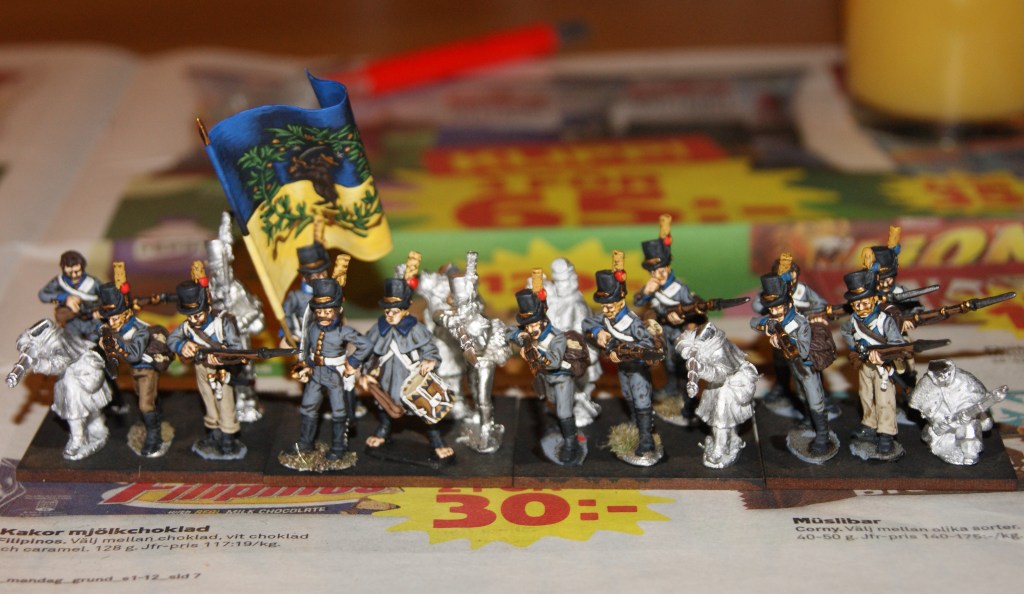
I am slowly working towards expanding my figures for the Björneborg regiment. I already had around 12 (now at 30!) painted figures, including one flag. As this is a regiment which featured in many important battles, both large and small, I will be needing many more, at least two battalions. For the additional figures, I am doing a few simple conversions and variations in the paint schemes to make the soldiers look more varied in appearance, and also appropriately worn and tattered.

When not worn, it sometimes happened that coats were carried slung over the shoulder in the Prussian/Russian fashion. Coats were in high demand in Finland, understandably. However, only about half the soldiers had been issued an overcoat and many of those were of older, sleeveless types, which were much less practical. Historians tend to assume that various civilan coats were also used, but that is of course difficult to determine in detail. Especially officers used variant clothing; in Västerbotten in 1809, towards the very end of the Finnish war, this was especially evident. The multitude of variation does leave some room for artistic license when modelling these figures.

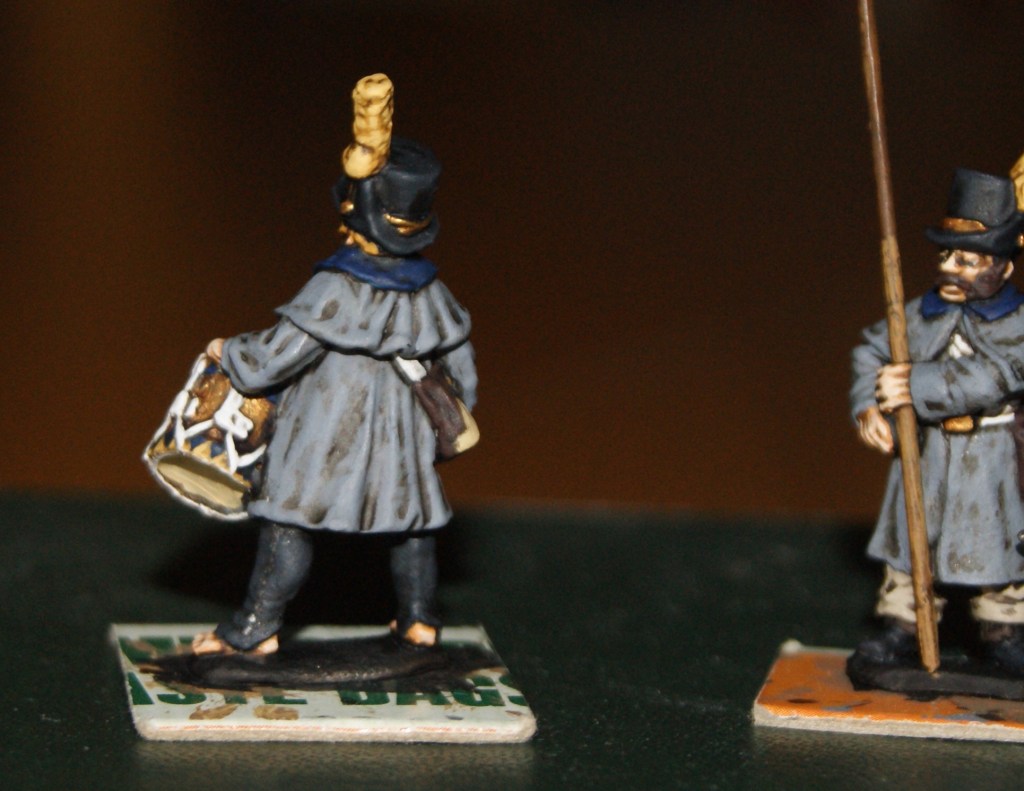


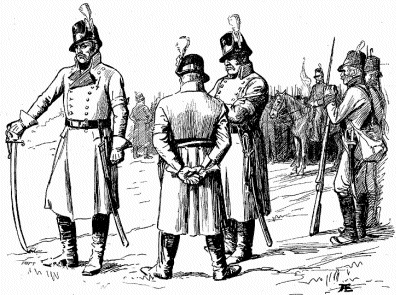
The officer seen above was made from the body from a Perry French guard grenadier pack. The head was swapped but little else was altered. With these figures, I am only trying out the feasibility of making Swedes in overcoats. Ill do 8-10 and mix them in with the Björneborg regiment. Later on Ill try doing a full unit entirely in overcoats, maybe even two.


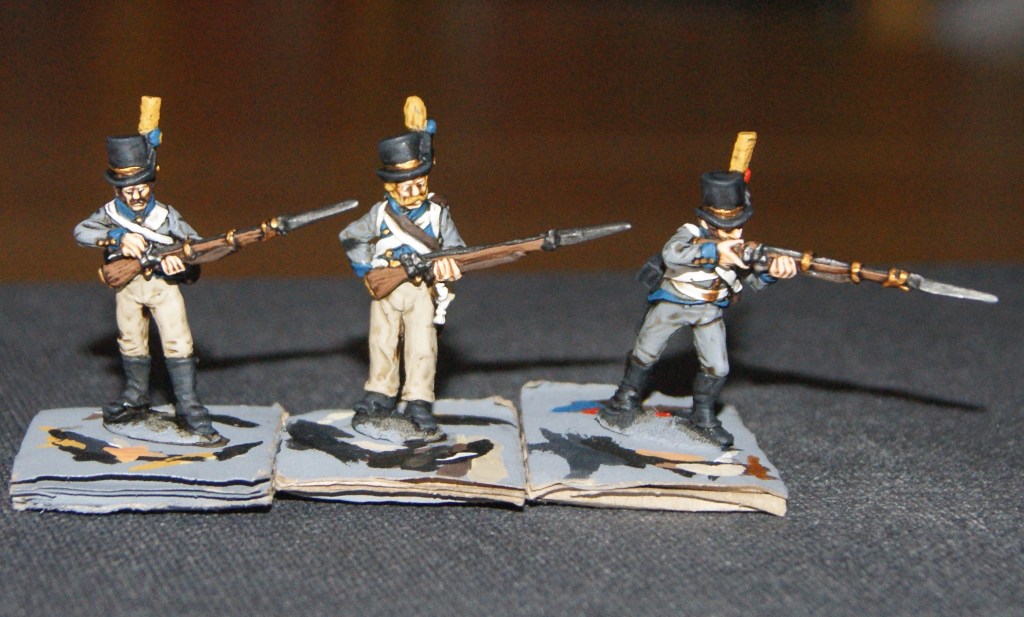

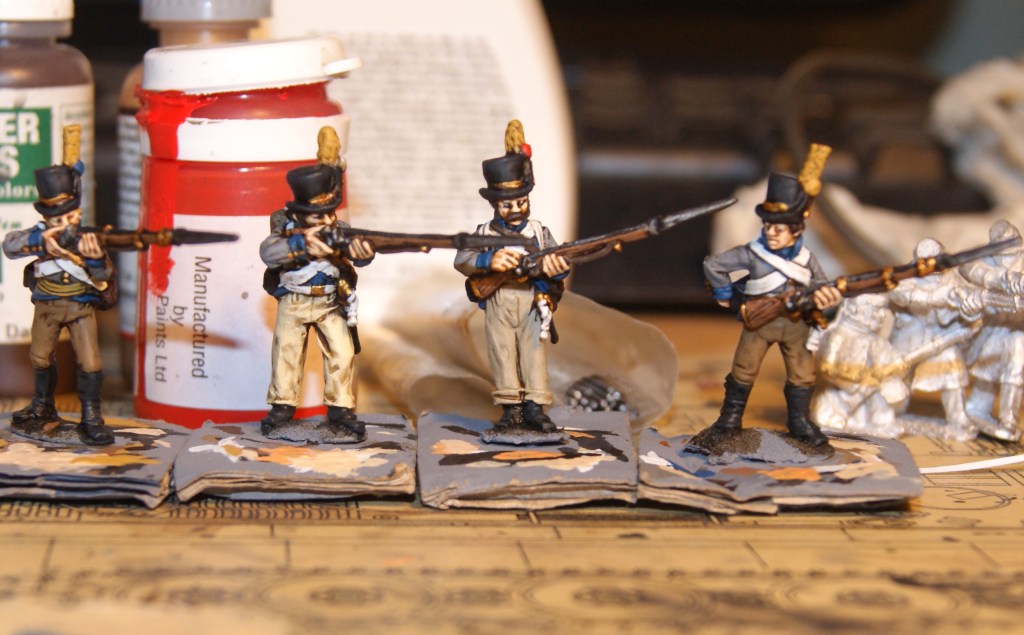

Half of the above figures are made from Perry Spanish infantry, which wear jackets very similar to the Swedish uniforms in use in 1808. Even the hats are similar enough so that only very minor additions in green stuff was necessary. Some of the figures also wear backpacks, which is good as backpacks were used by the Finnish troops, although none of the Perry figures have them. To some of the soldiers I have also added short swords (leftovers from Warlord’s plastic Russians). The Swedish army abolished their short swords in the years before the war, but I imagine that some may have still been in use.
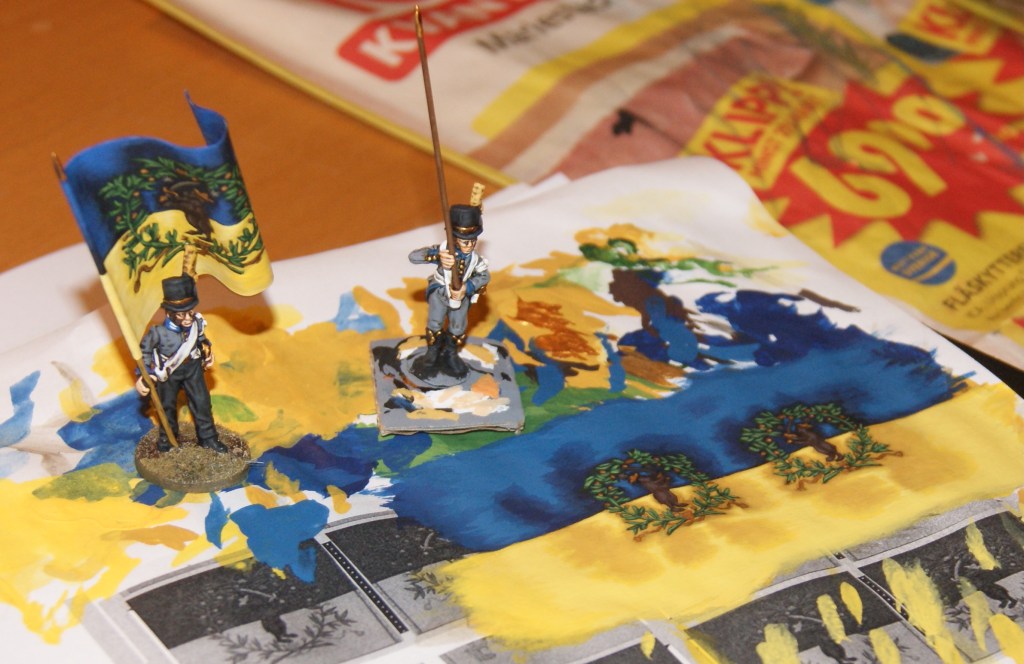
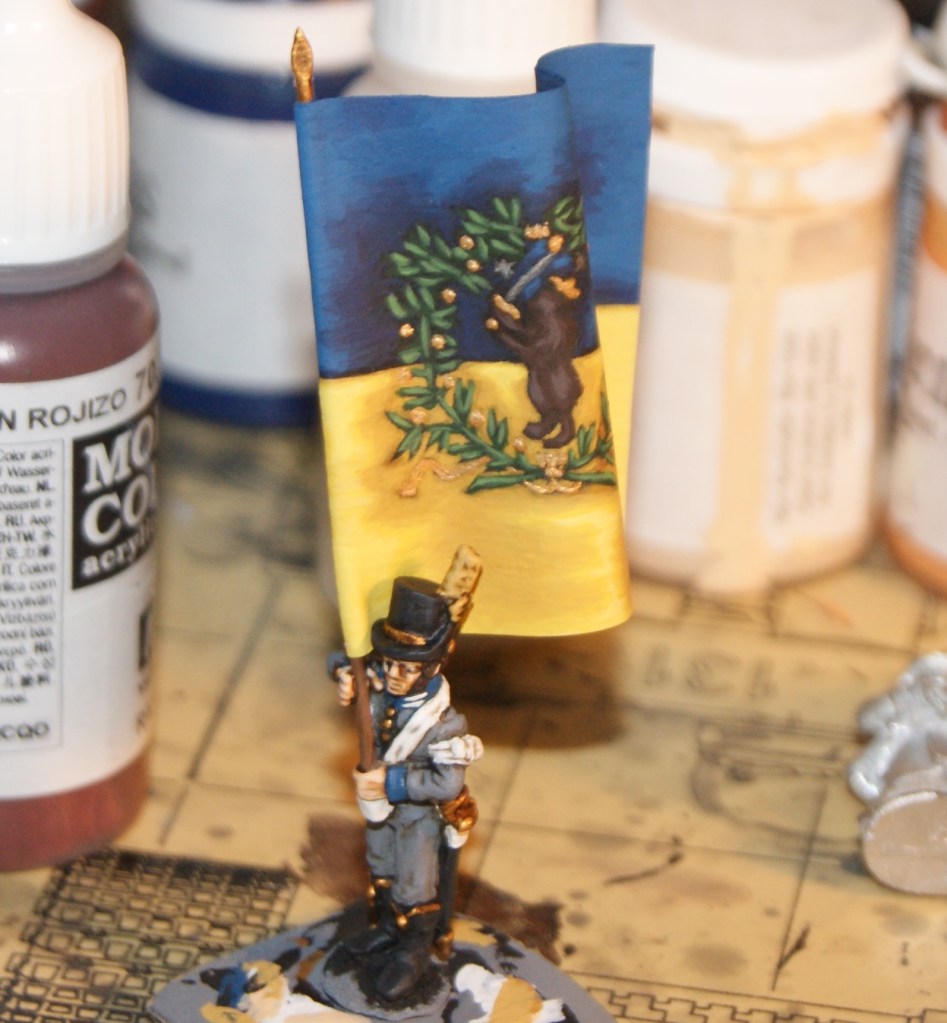
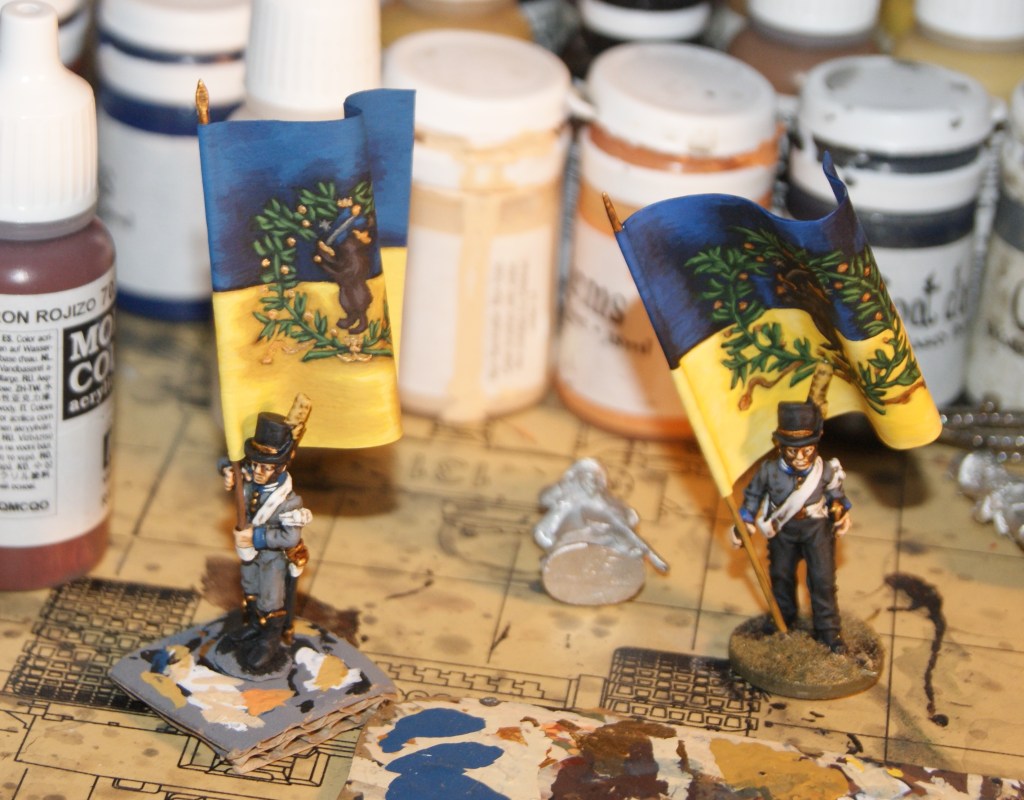
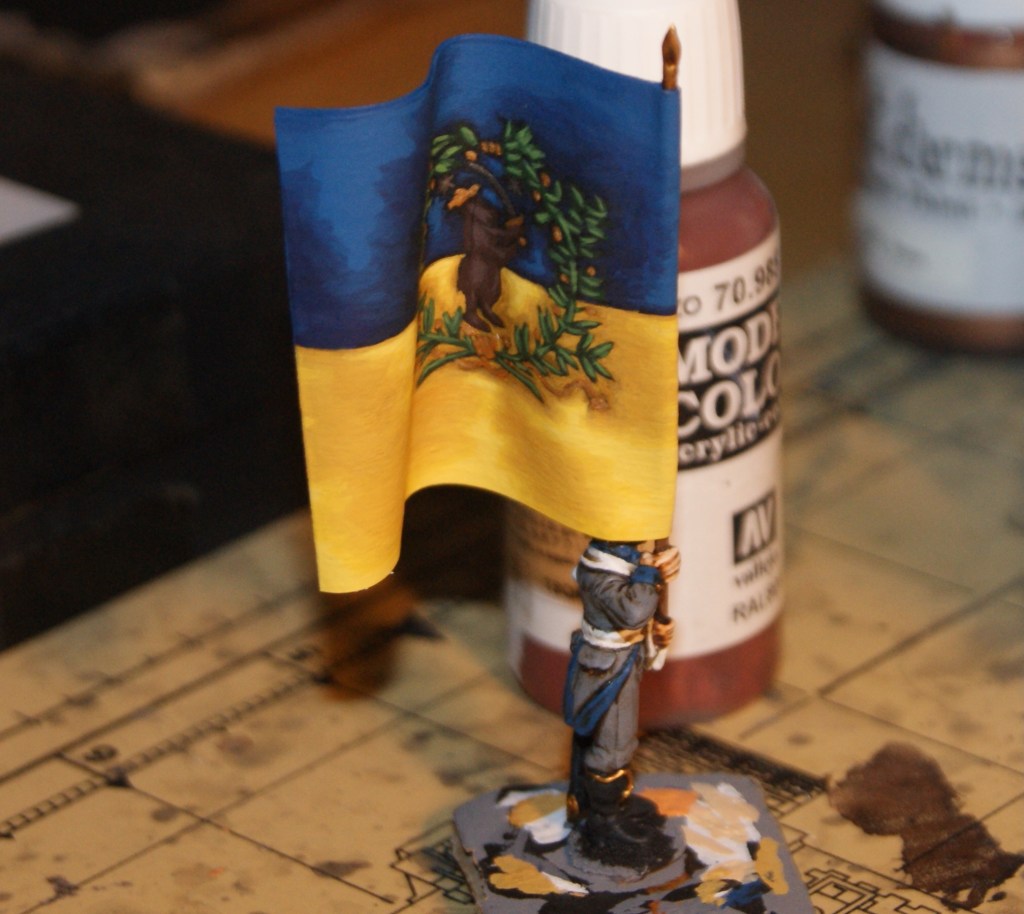
I have also painted a new flag for the Björneborgers. The old one I did a couple of years ago, so it was difficult to make the new one exactly the same. In this case, that is not a huge problem, as this particular regiment actually used flags of different models at the same time. They received one model 1766 flag in 1794, while the three remaining, including the king’s colors, were still of the old 1686 model. Even though the two flags shown below are a relatively good match, I may decide to put them in different battalions, pairing them with the king’s colors and the 1766 model respectively. A scan of the recently painted flag can be found in the flag post: https://pancratist.com/2024/09/14/swedish-infantry-flags-for-the-finnish-war-1808/
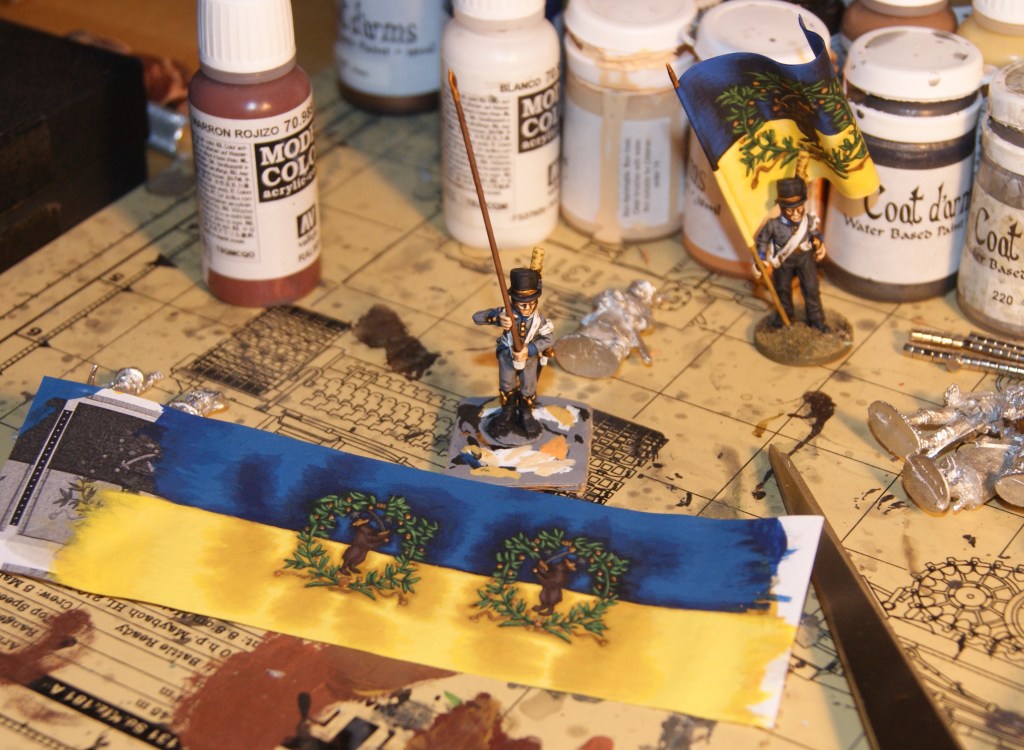
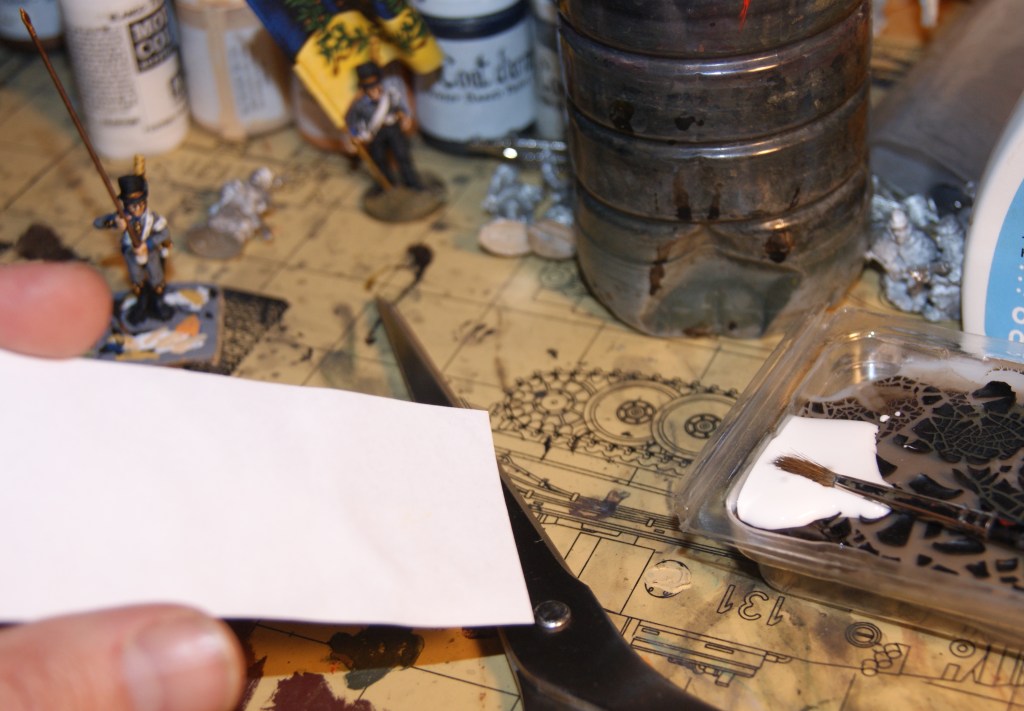

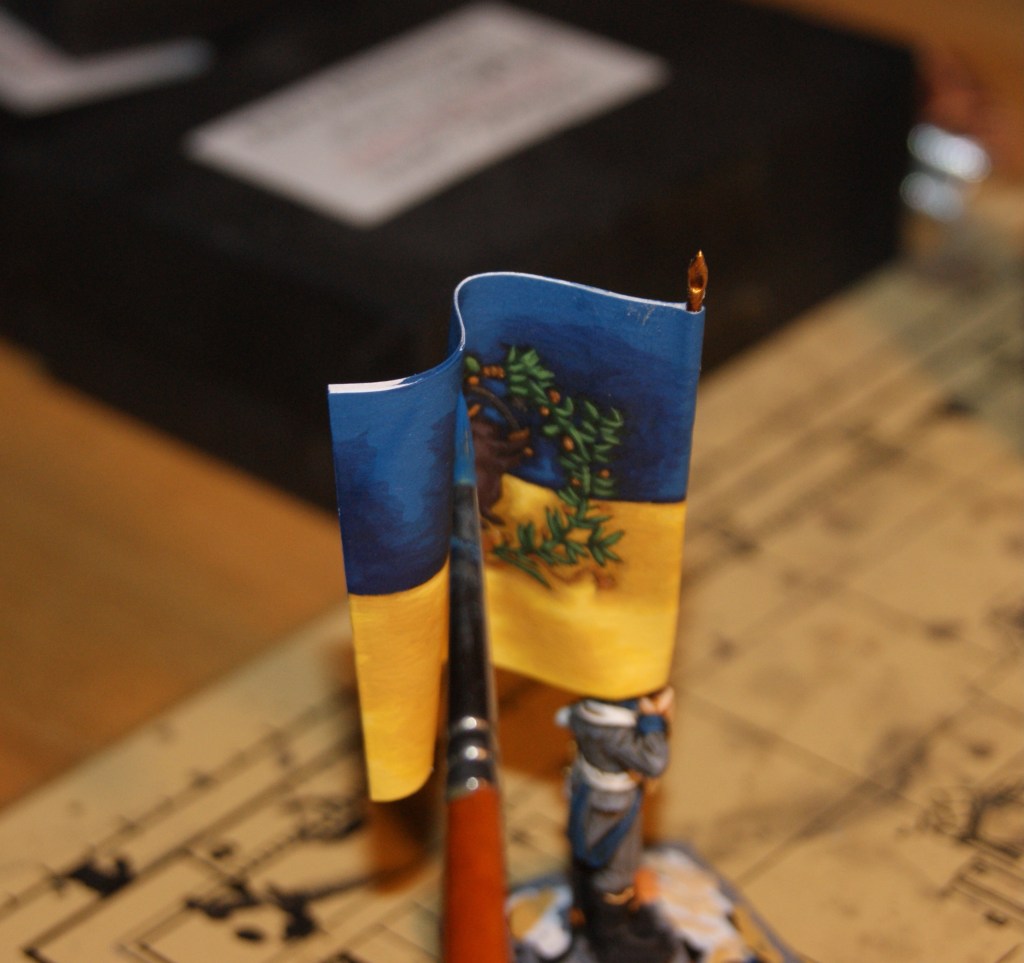
The pictures show something of the process involved in mounting the flag on the figure using PVA glue. In addition, you can see how it is a good idea to retouch the edges, as there will inevitably be some white showing from the back of the paper, when the two sides are glued together around the pole. In this case I also needed to cover a couple of spots where I had accidentally smudged the outside of the flag with glue.


 Pancratist