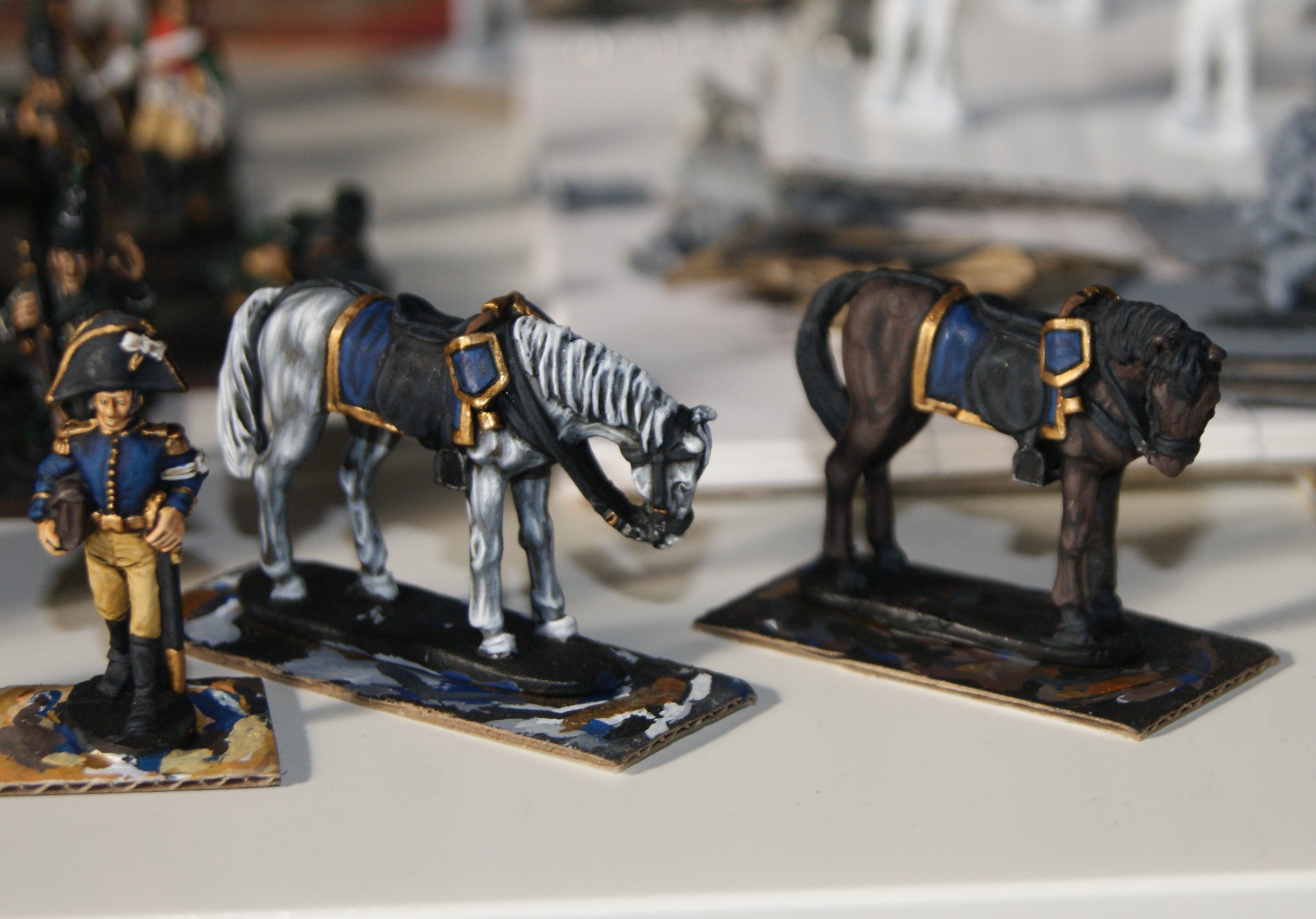
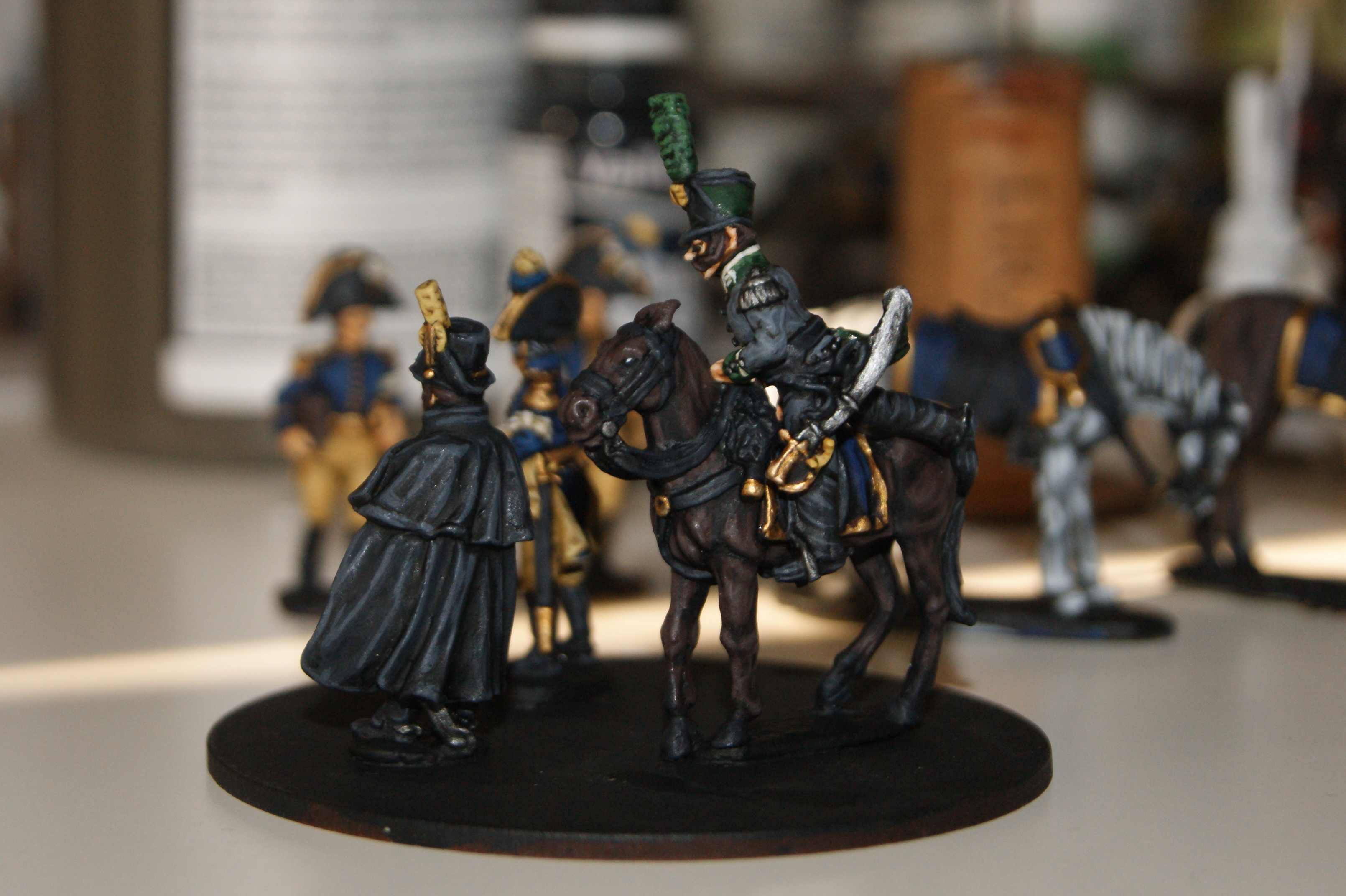


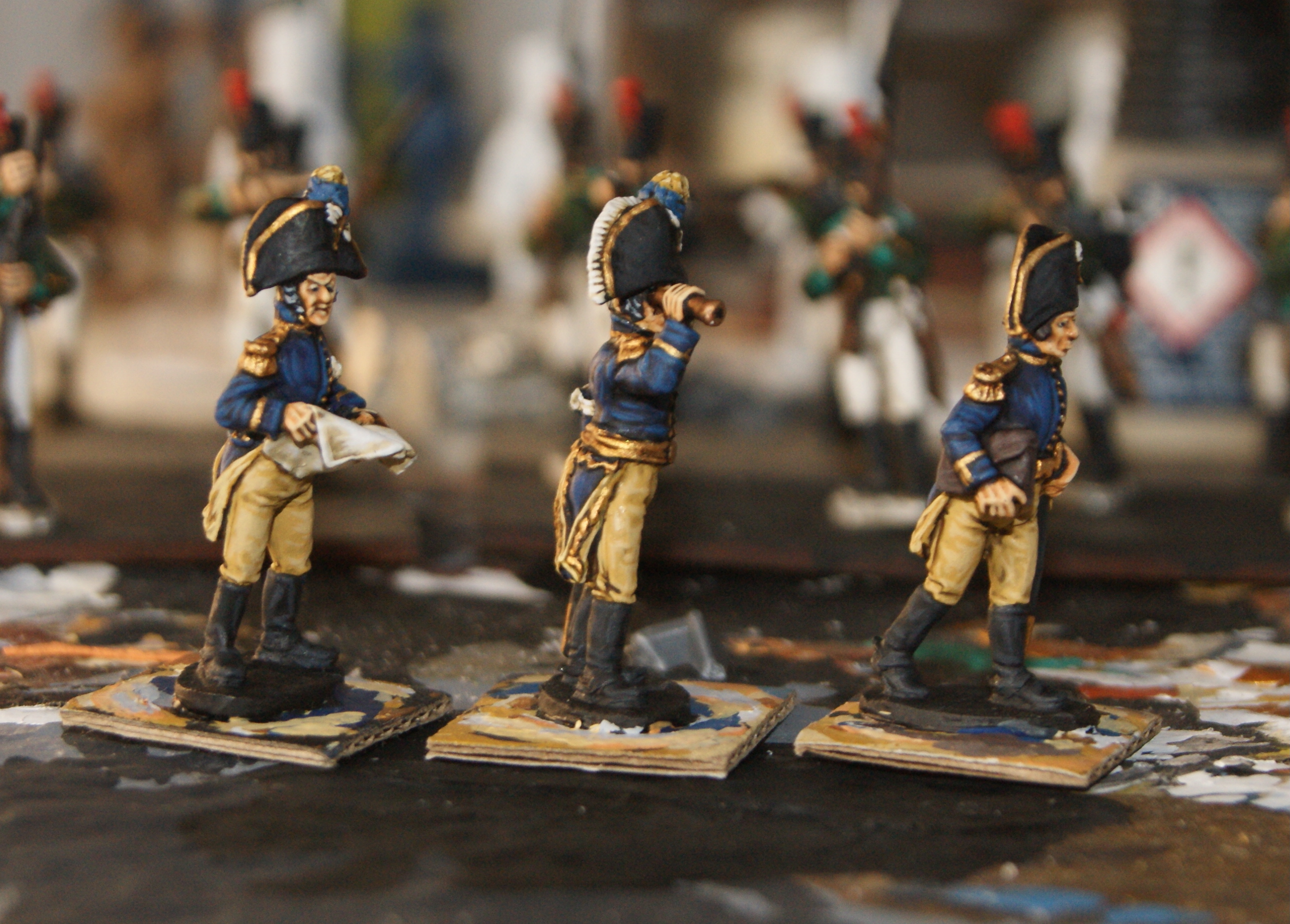

As most of you who are reading this will know, the Perry miniatures range of (very excellent) Swedish figures does not (yet :-)) include generals or colonels. I have converted various figures for this purpose previously, as can be seen in older posts. However, those have been single mounted figures, meant as brigade commanders. In most rules systems, a main HQ or overall commander of the army is represented by a base of a small group of figures. These would correspond to a commander-in-chief with some adjutants or other attendants.
Now, I have been contemplating the possibilities of creating a command base of this kind for a while. A couple of years ago, I came across the exquisite Saxon divisional command set produced by Black hussar miniatures: https://blackhussarminiatures.de/produkt/napoleonic-saxon-divisional-command. These were sculpted, I believe, by the very skilled Paul Hicks, who also did the Russians I use for the 1808 setting. It was immediately clear that these figures wear uniforms which are similar enough to the Swedish model 1801, which was an exclusive form of dress worn only by the top brass, staff officers and a few other categories, but not the regular infantry or cavalry officers. Therefore, the set is well suited for conversion into a Swedish high command group.


There are only three significant differences between the Saxon figures’ uniforms and the Swedish 1801 model. First, Swedish officers generally wore their swords in a waist belt and never used the sash which most other nations’ officers wore. On these figures, the higher ranking officer with the telescope is wearing a sash, but the others wear waist belts, partly underneath the jacket. The sash therefore needs to be removed and some cutting is needed before a waist belt in the Swedish style can be added in green stuff.
Second, all Swedish officers wore a white arm band commemorating the coup d’etat of 1772. This continued until 1809, when king Gustav IV Adolf was deposed. Adding an arm band like this with green stuff is not very difficult, especially after some practice (by now I have done it a few times).
Third, Swedish bicorne hats had a slightly different cockade, which looked more like a rosette. They also had a blue and yellow plume above the rosette.
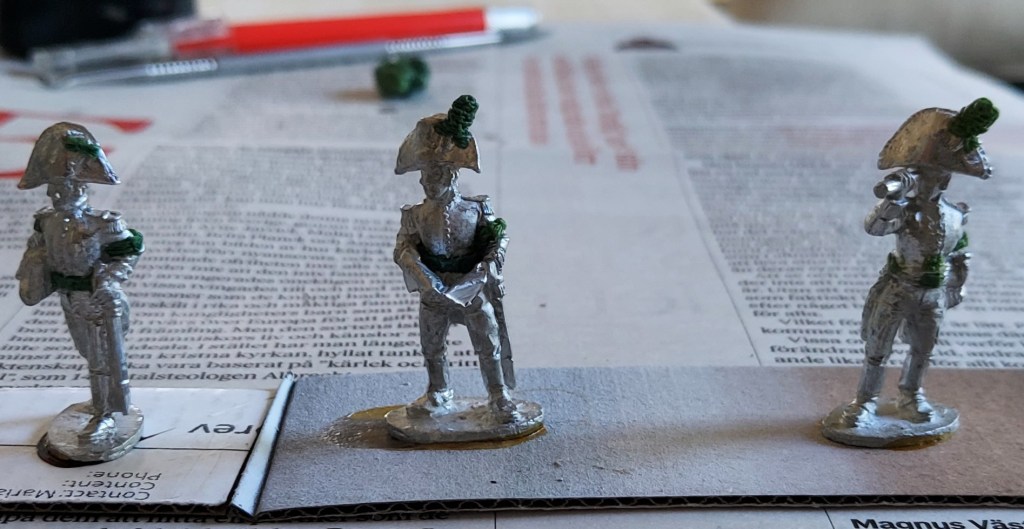
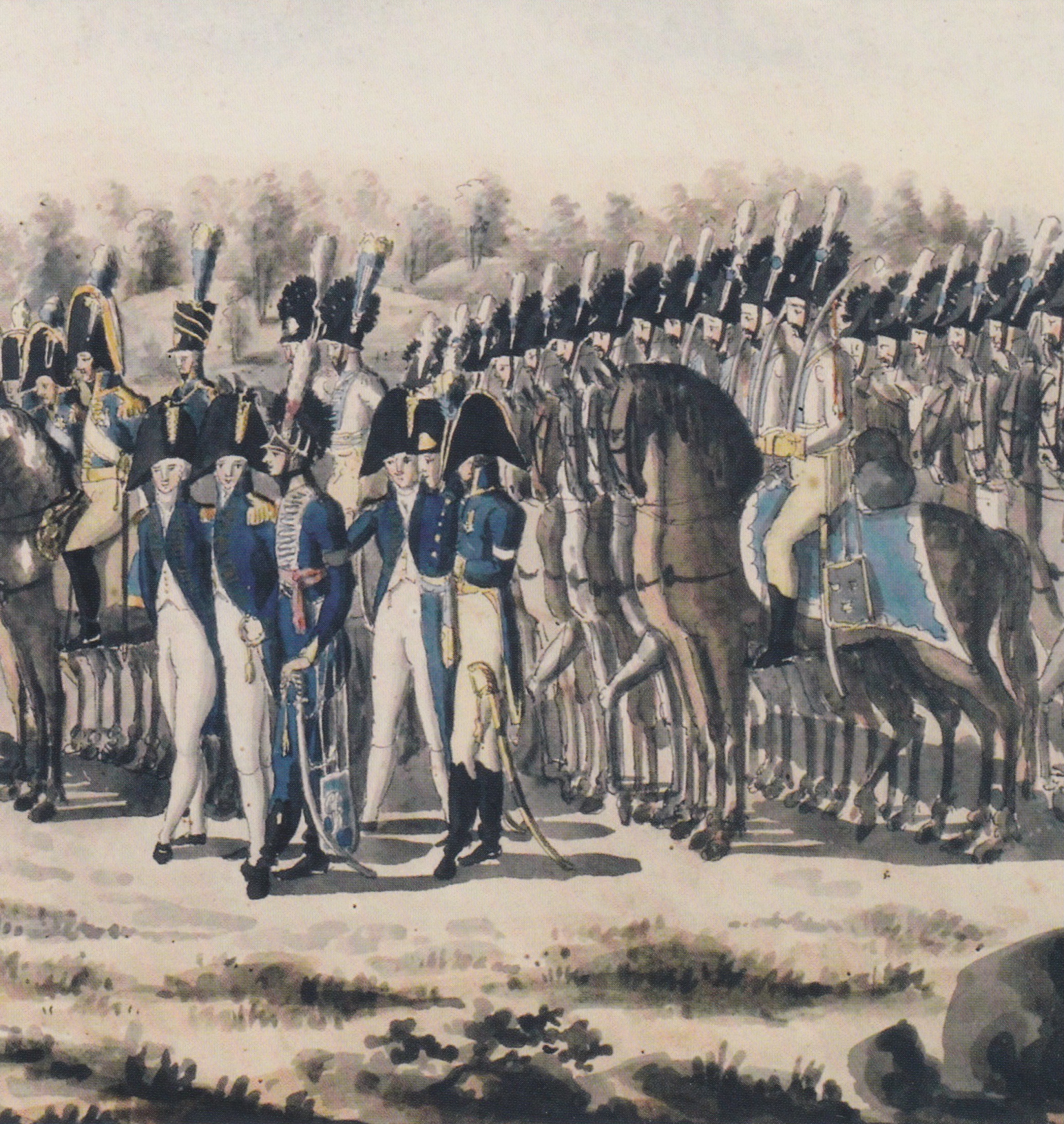
Otherwise, the uniforms of the Saxon commanders were remarkably similar to those of their Swedish counterparts. The jackets had decorations in gold lace on the collar, cuffs and around the chest buttons, according to the logic of opulence: the higher the officer’s rank, the more gold lace they sported! Epaulettes had, as I understand it, officially been abolished for generals by this time, but as can be clearly seen in the painting which portrays the troop review on Åland in the summer of 1808, some officers still wore them.
The Black hussar set includes some horses and an attendant holding them for the top brass. I may or may not include these, and am currently pondering what sort of figure/figures to include as attendants, bystanders or guards. A Nyland dragoon or Horse Life guard would be appropriate, as these troops commonly performed guard duties at HQ as well as working as messengers etc. But the men serving as adjutants to the various generals were from a variation of different regiments, including some that took no other part in the actual fighting and whose uniforms I would therefore not have the opportunity to paint.
The only problem with using the beautiful Black hussar set is that the main figure, the field marshal, becomes problematic when you consider the fact that command of the army in the field was pretty much never exercised by anyone of that rank. Klingspor, who was the commander-in-chief, was never actually present on the field at any of the major battles. At one of them he was in fact having a cup of coffee at some manor house at a good safe distance away as the battle was being fought! However, I am happy to ignore that in order to make a good looking HQ set for my troops…
 Pancratist