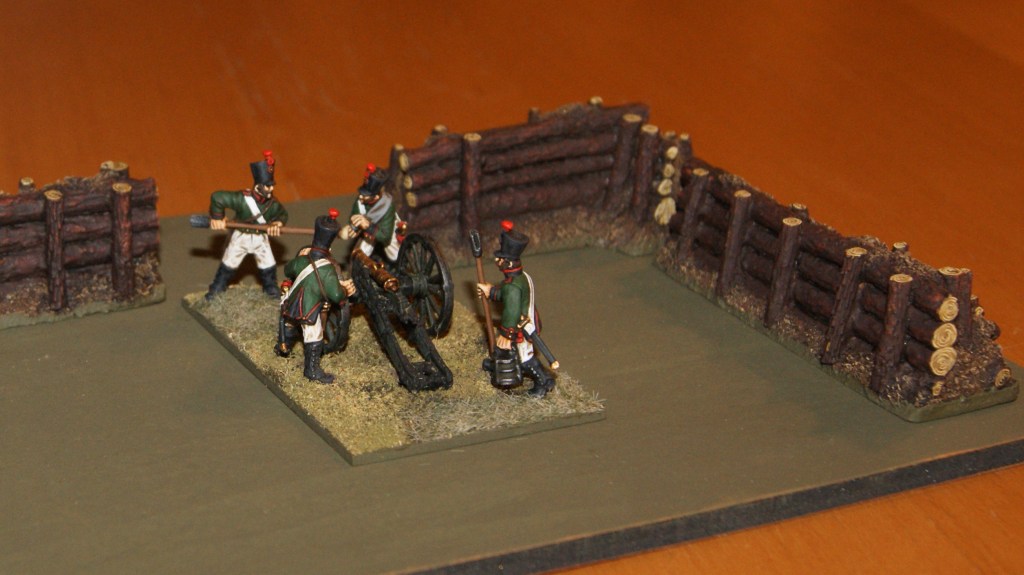
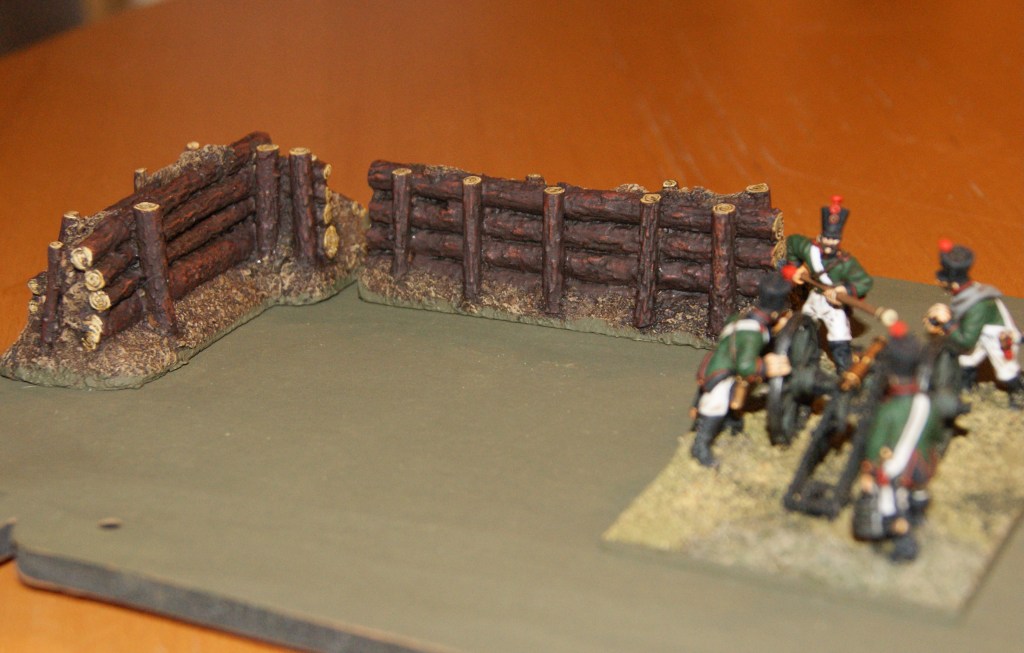
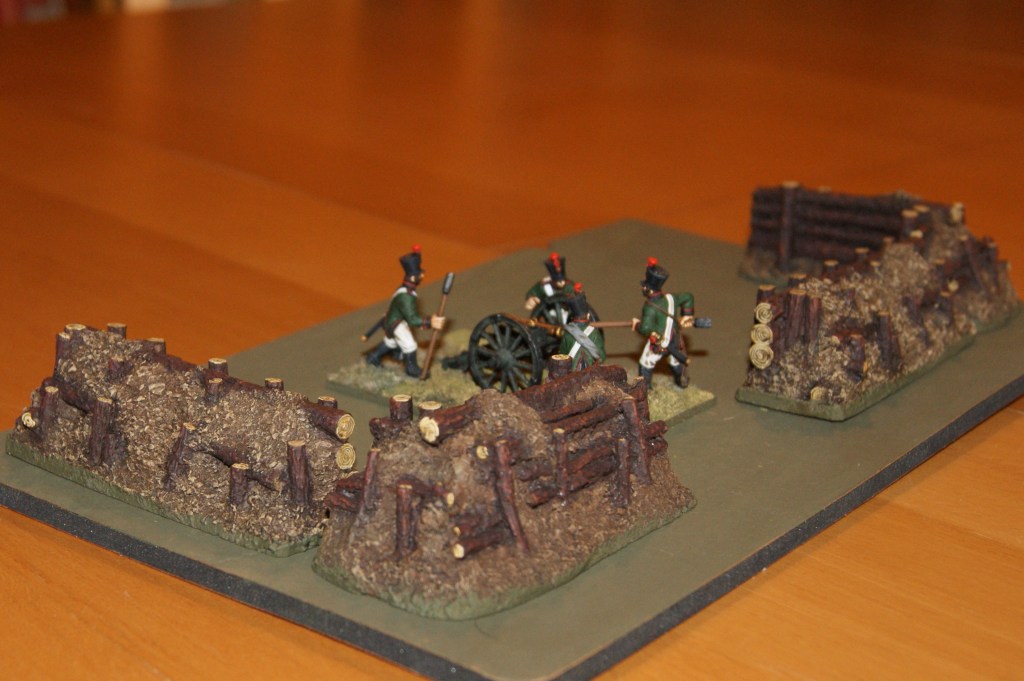
Ive recently finished these resin pieces by a maker called Baueda. They are very nicely detailed and of great casting quality. I do have some more fortification type pieces in the pipeline, so Ill do some more hopefully soon. These were easy enough to paint, with the sawn off short ends of the logs requiring some detail work. But even that was surprisingly quickly done and adds very nice detail to the pieces.
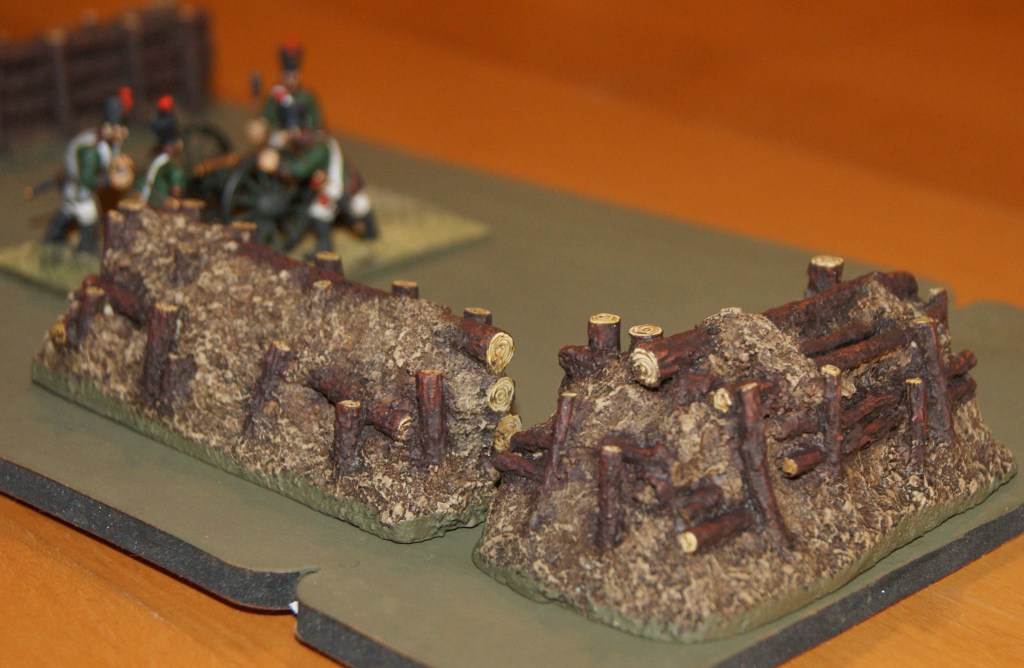
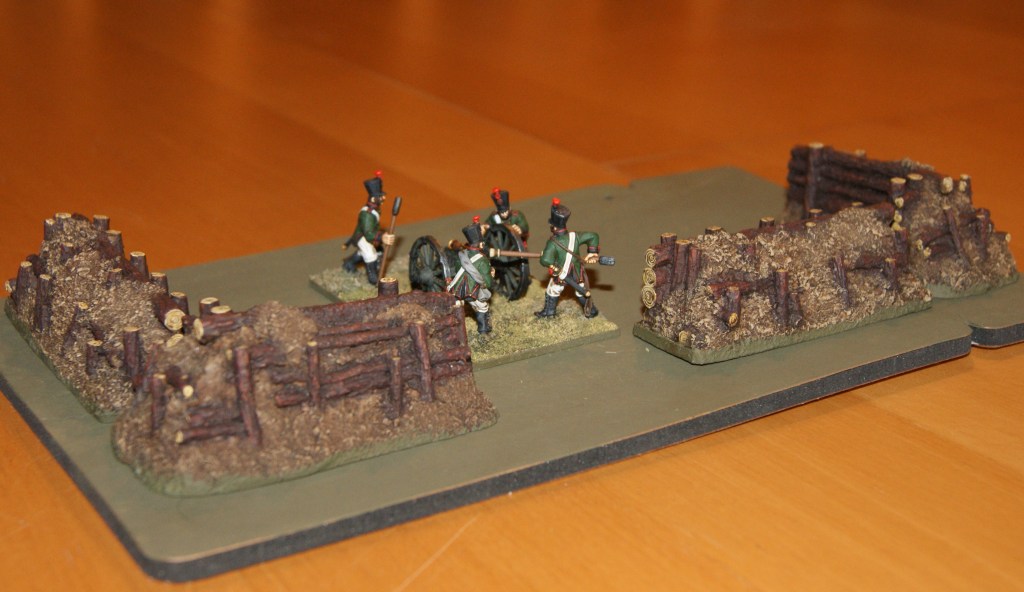
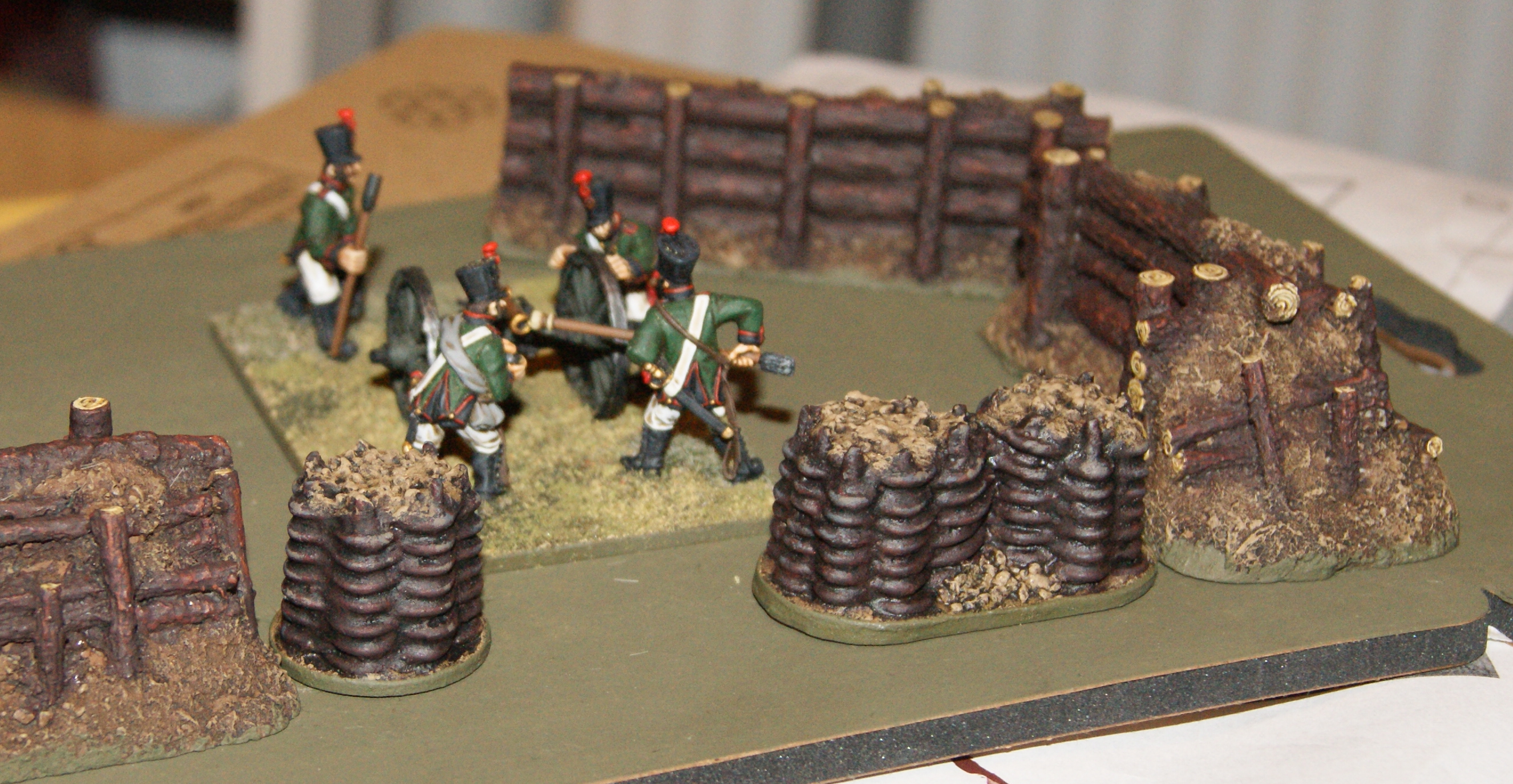
The models are sold as WW2 pieces, but I think that fortifications like these were in use earlier – at least they are similar enough to Napoleonic fortifications. Ill combine these with some gabions, which are more typical of the period.
In the bottom picture, you can see some gabions with the Baueda pieces. The gabions are made by Warbases. They are made of resin just like the Baueda stuff. However, the Warbases gabions are, unfortunately, not of the same quality. Not only are they less well sculpted, they also came with many air bubbles which had to be filled in with green stuff before I could paint them. Because there were so many, this did take quite some time. That is also why there are only two small pieces. I have many more, but the air bubbles put me off finishing the others. I should say that once they were properly prepared, they were easy to paint and very quickly done. They were also relatively cheap.
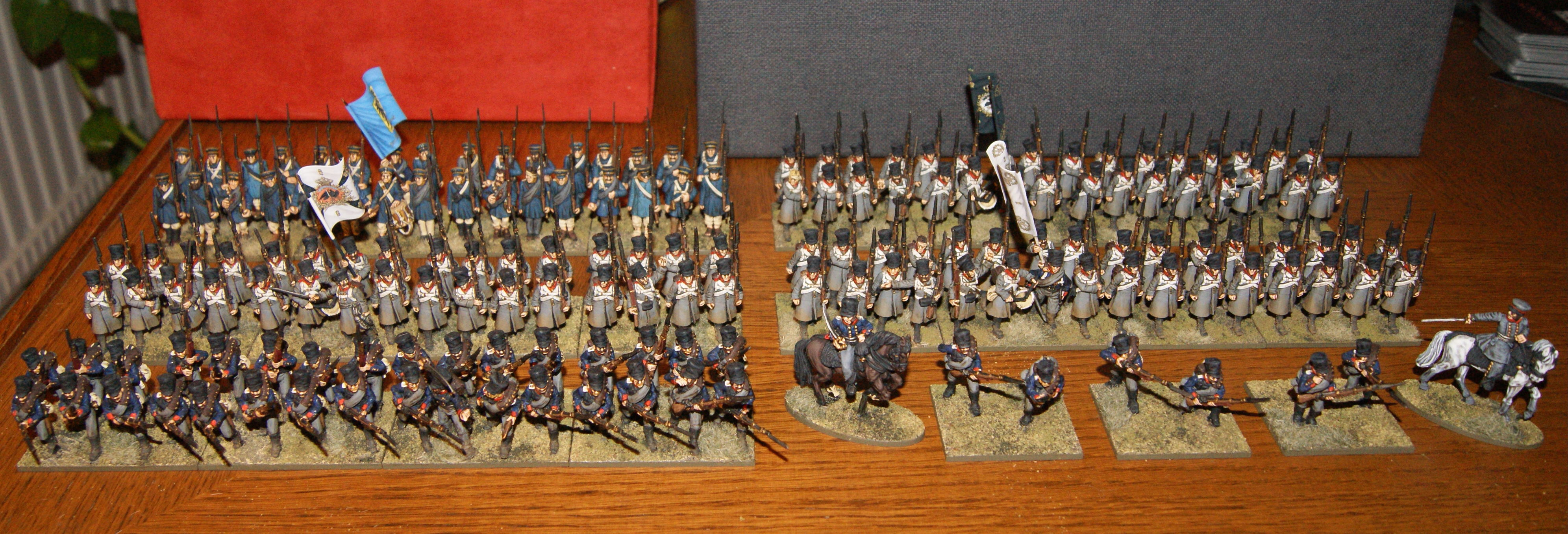
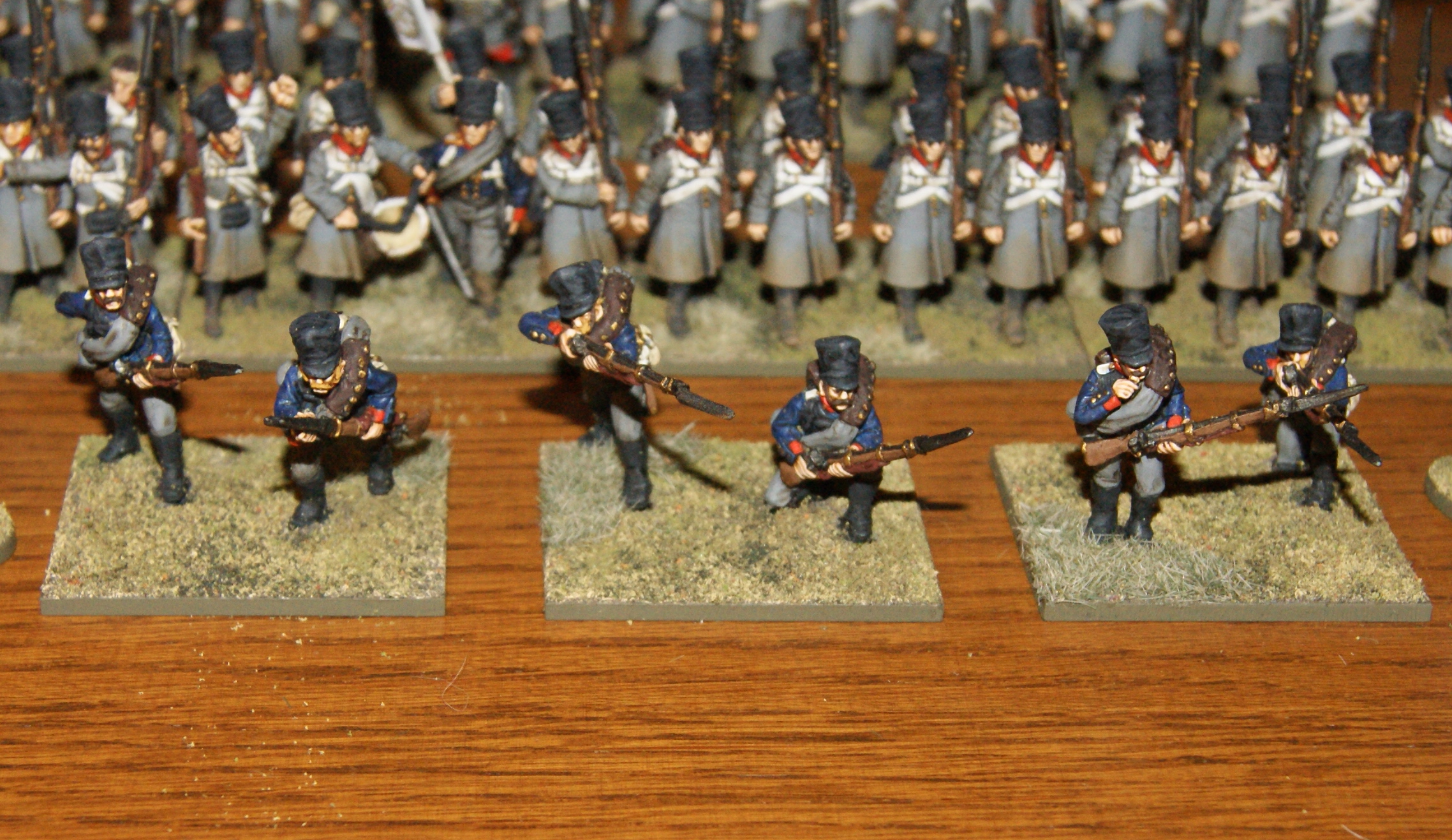
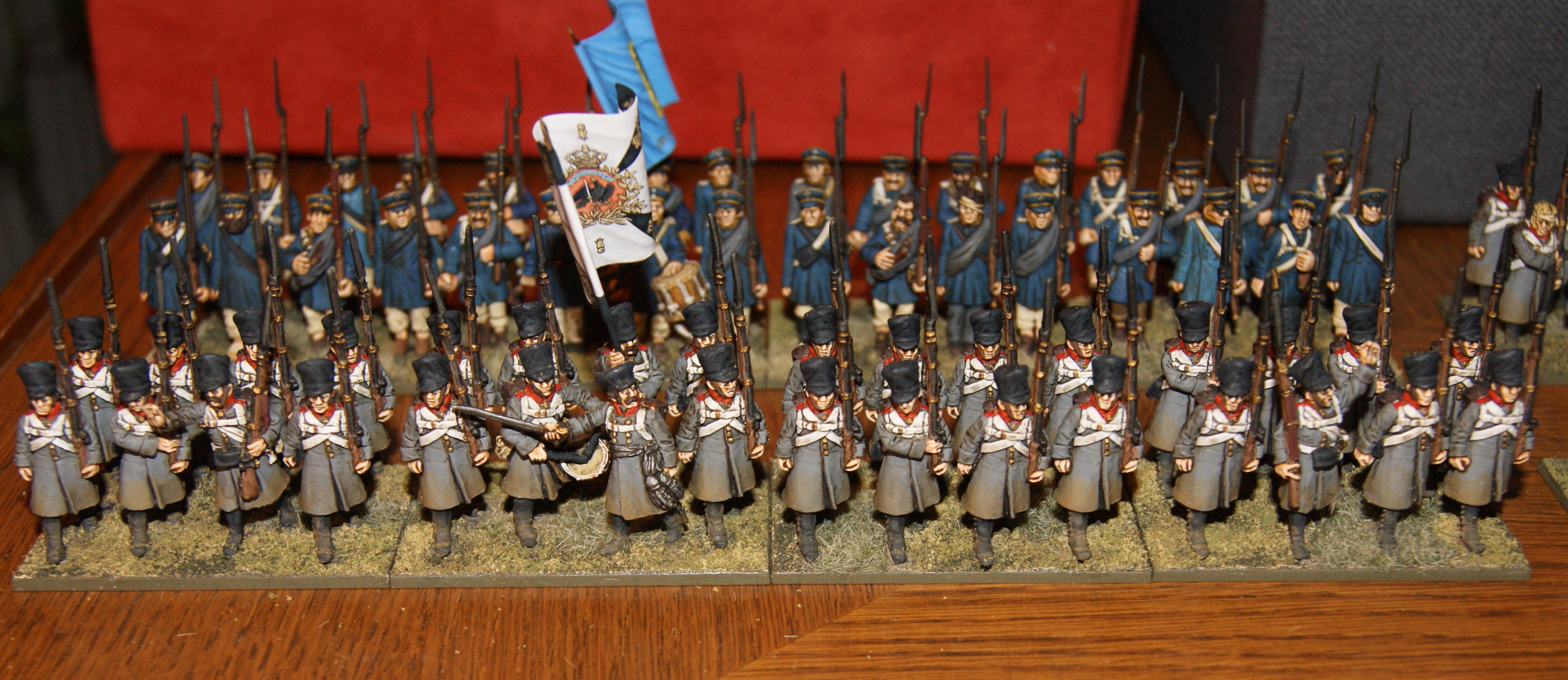
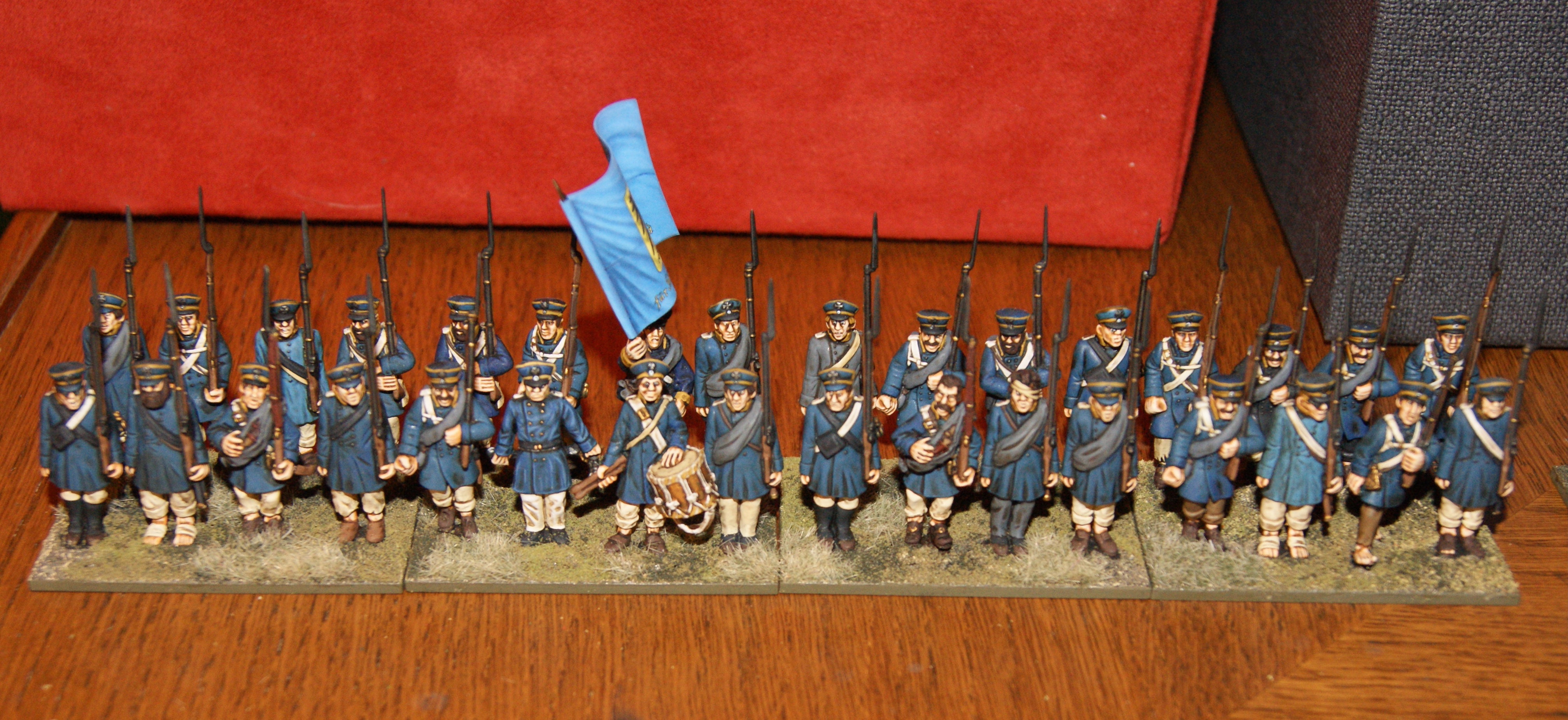
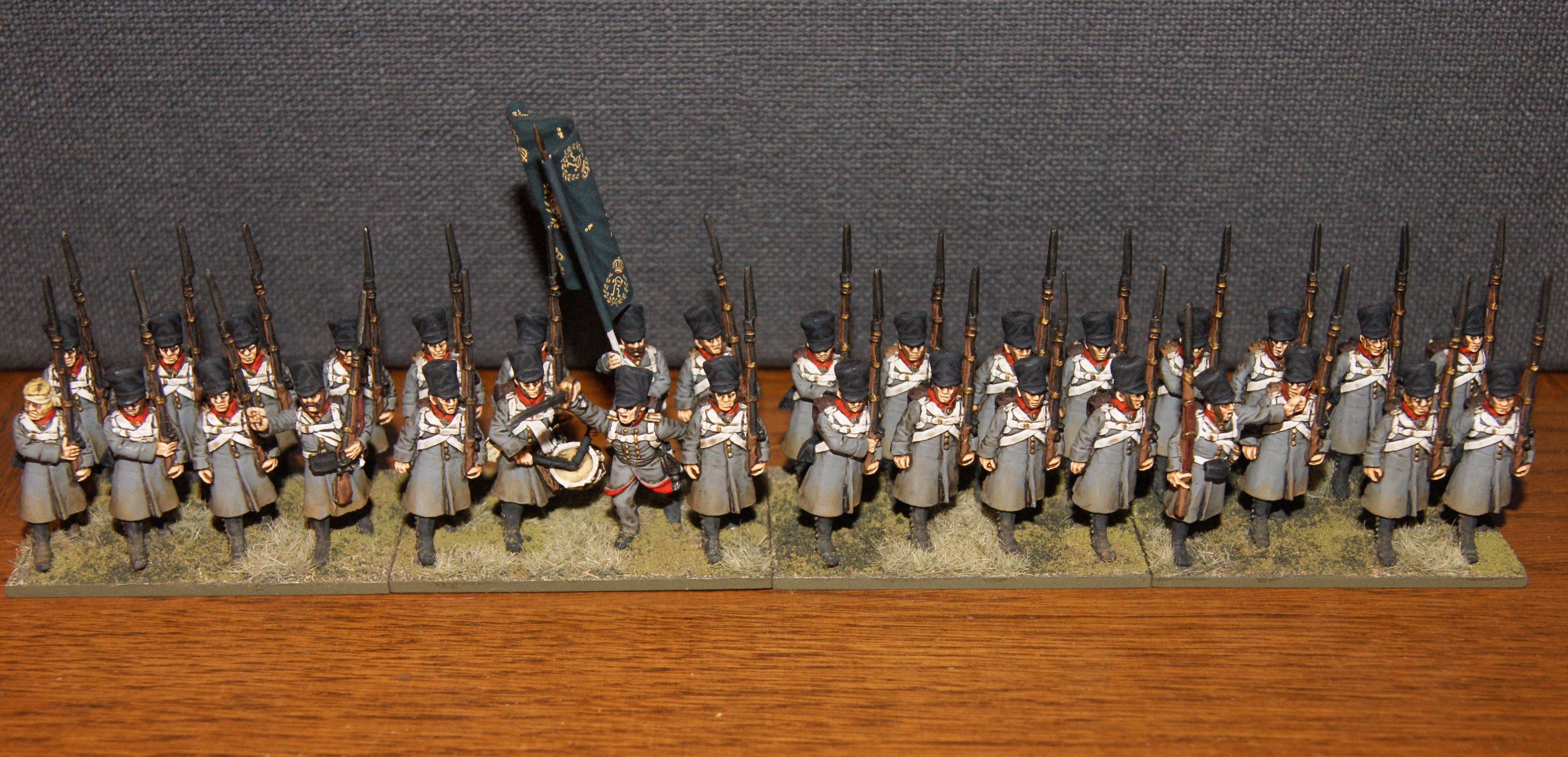
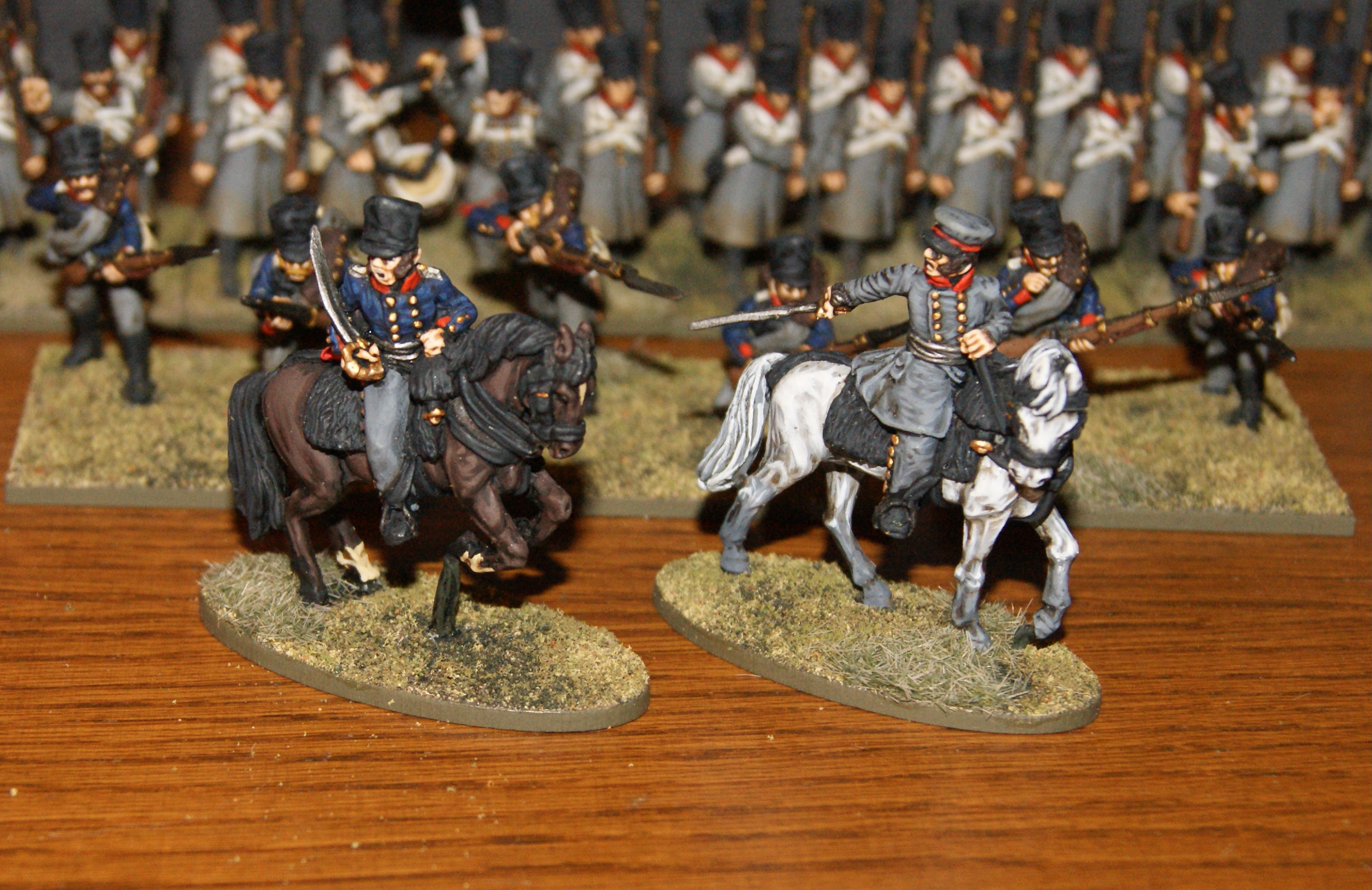
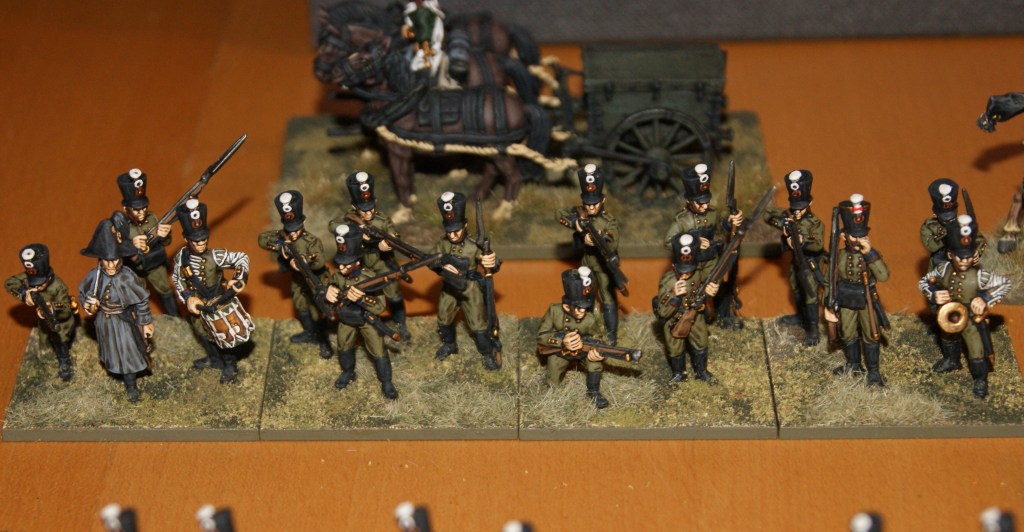
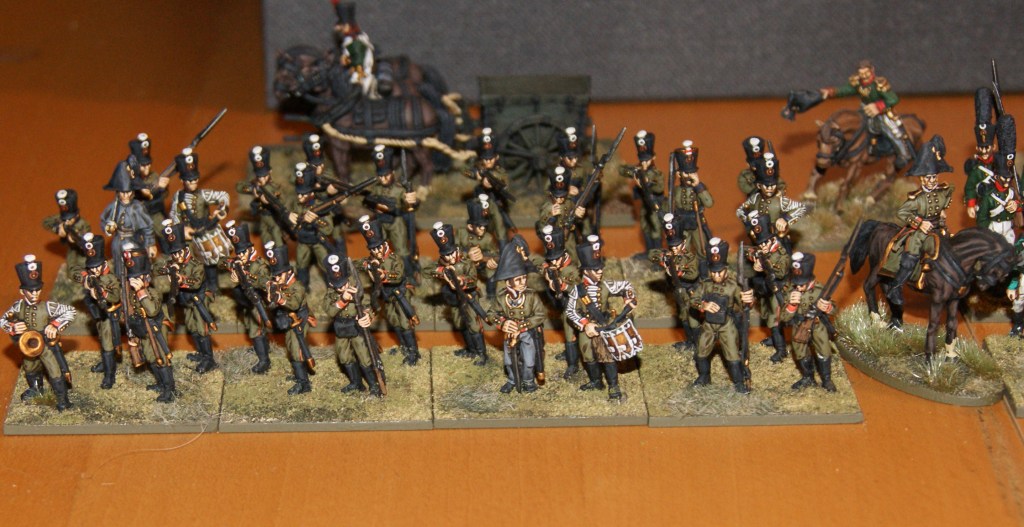
As my inaugural post for the new year, here are some pictures of my 1813 Prussians of which about half of the infantry is now done. Ive been busy completing the basing of miniatures I have painted during the past year or two. It has turned out that I had accrued quite a mass of figures which were on queue to be properly based, including a lot of re-basing. In fact there are quite a few more figures still to finish.
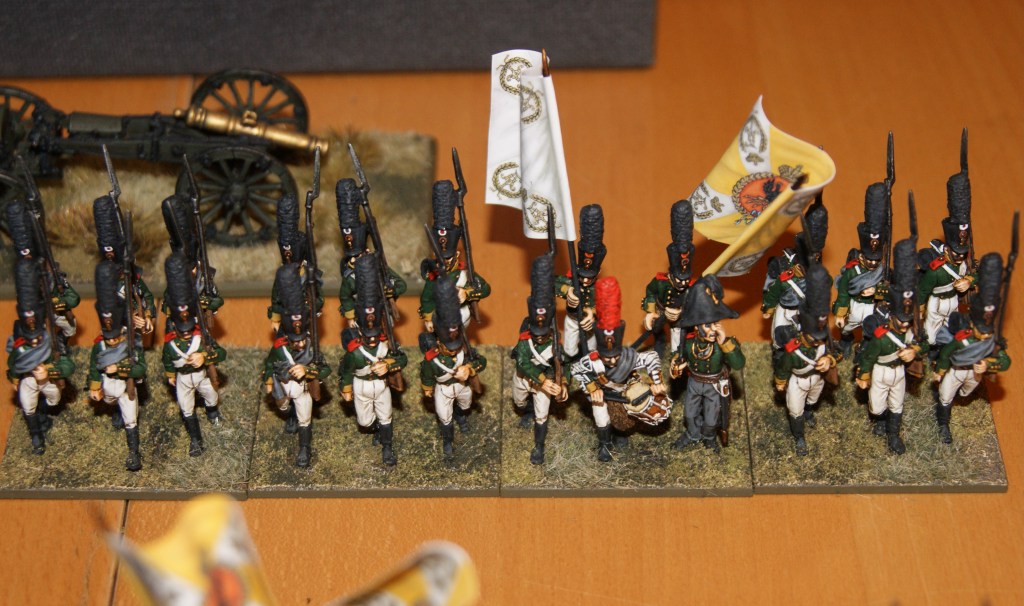
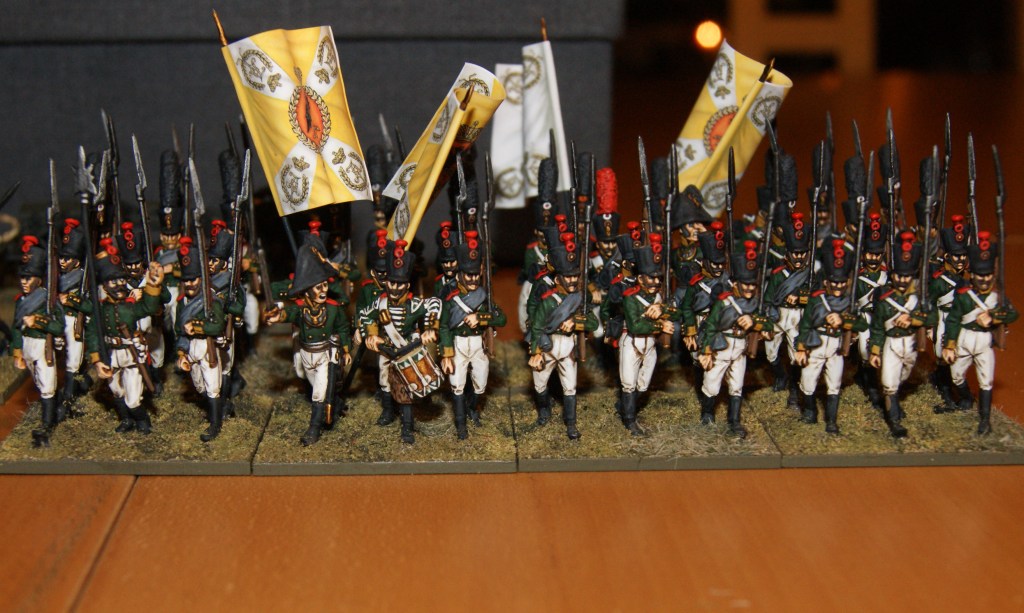
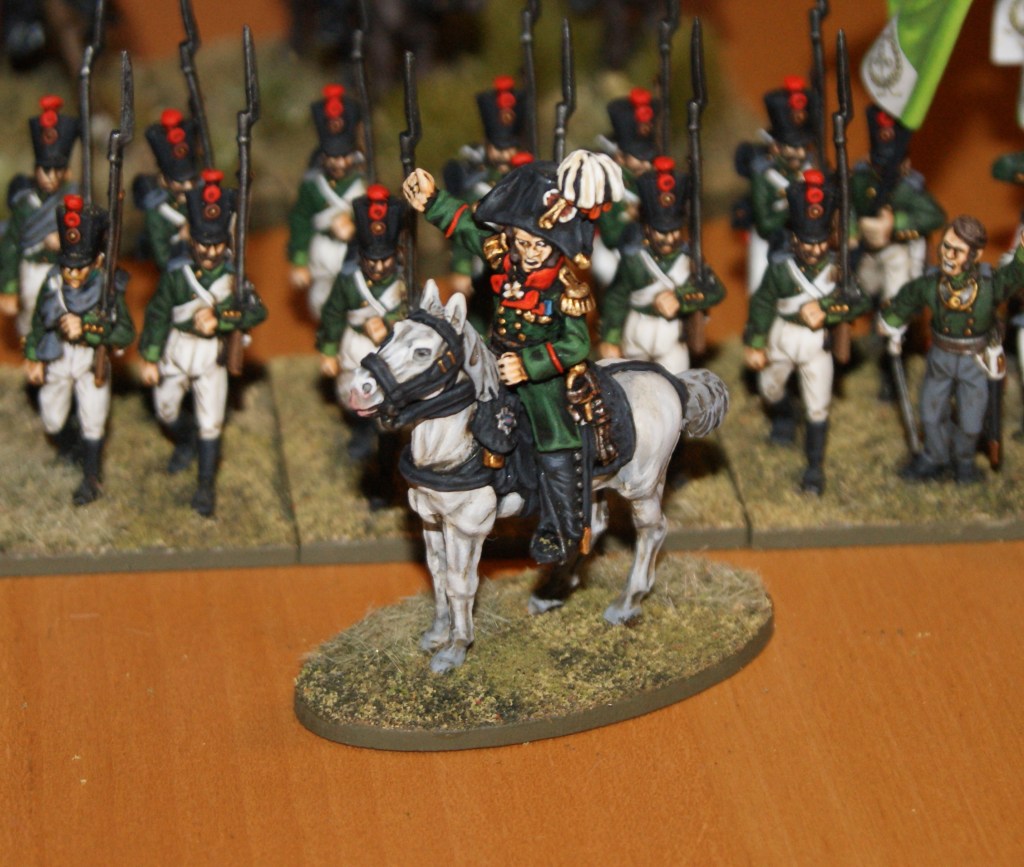
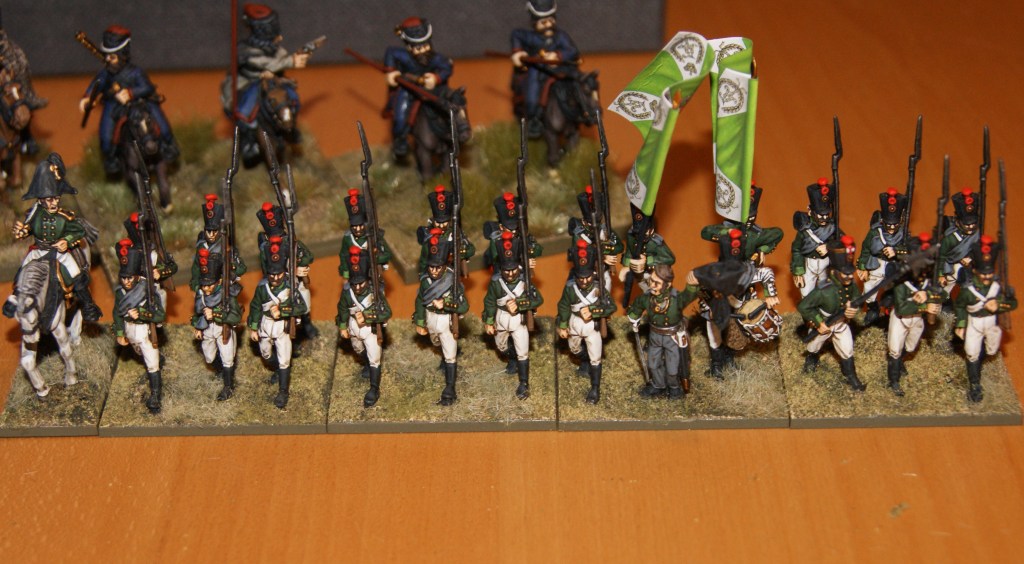
As I have already mentioned in previous posts, I have been working on re-basing my Russians for the 1808 setting. This has included expanding some of the units, so that all line infantry is in 24 man units, and the jäger units of 16. I have now come as far as rebasing all of the infantry, excluding some skirmishers – of which I plan to do a lot more btw. The basing is now on bases of 45x40mm for the infantry. Marching close order infantry will be six figures per base, jägers four and skirmishers two, all on the same size of base! The cavalry will be three horses on 60x60mm. This is of course the same sizes I have used for the Swedish-Finnish army. The bases have been ordered from Warbases, who provide a huge range of different sizes and shapes of bases, at a decent price. However, if ordering (as I do) from Europe, it will be a good idea to try to make one large single order all at once, as they will suffer import fees because of the Brexit nonsense.
Ideally, I would say that 60x40mm bases with eight figures per base is even better. However, if one is doing a large battle on a small table, narrowly based 24-man units of four bases per unit is pretty good. They can then still be expanded to 36-man units if (or when) I feel up to it. The Finnish war had many smaller actions in which only one brigade was engaged on each side. In such cases, larger units might be nice, as it does look better.
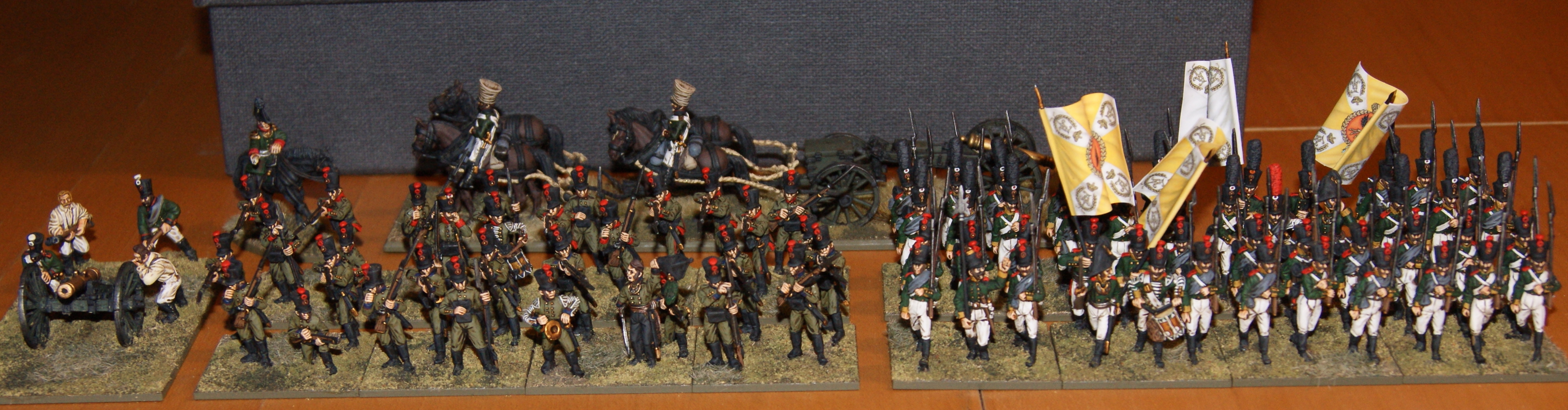
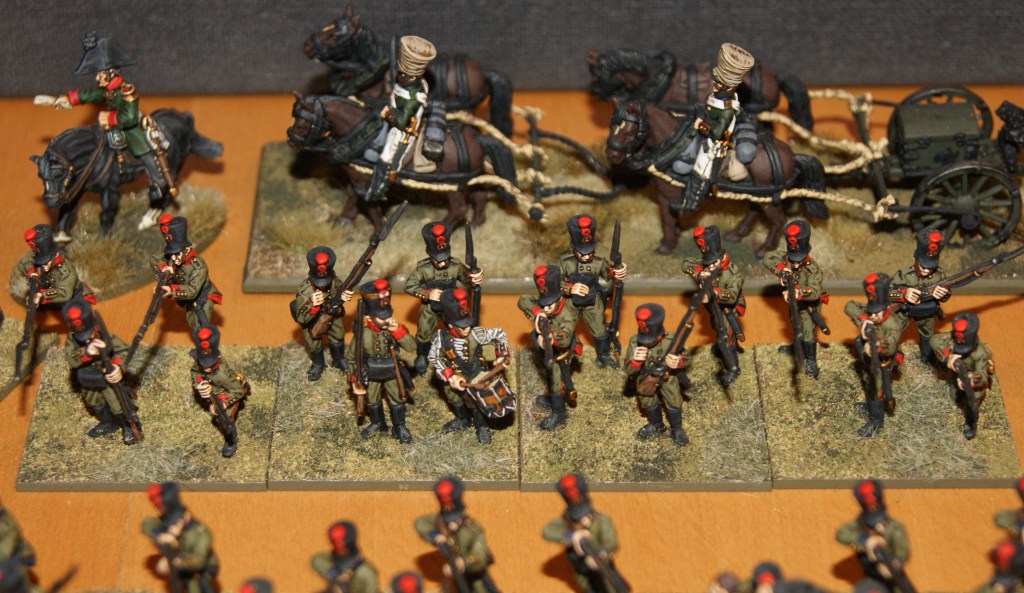
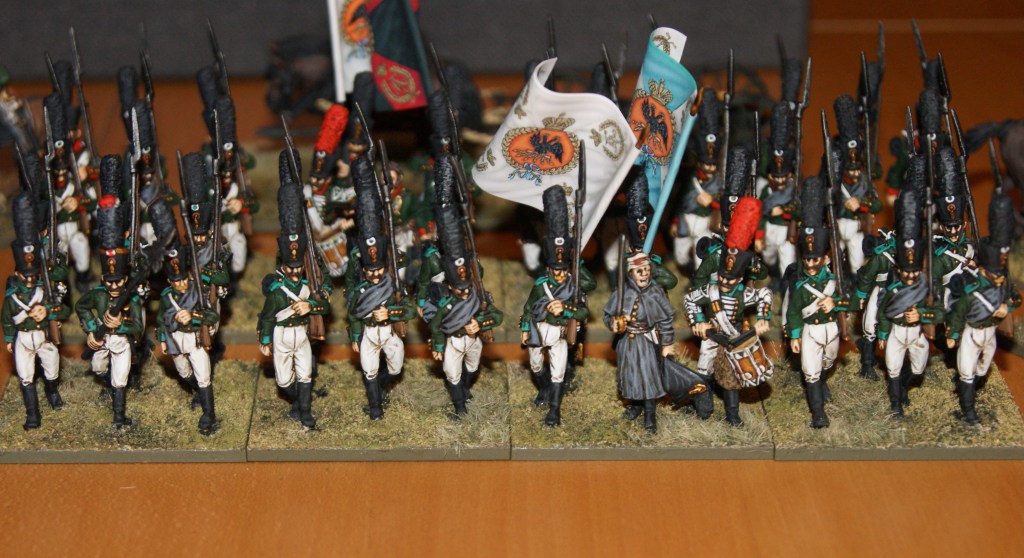
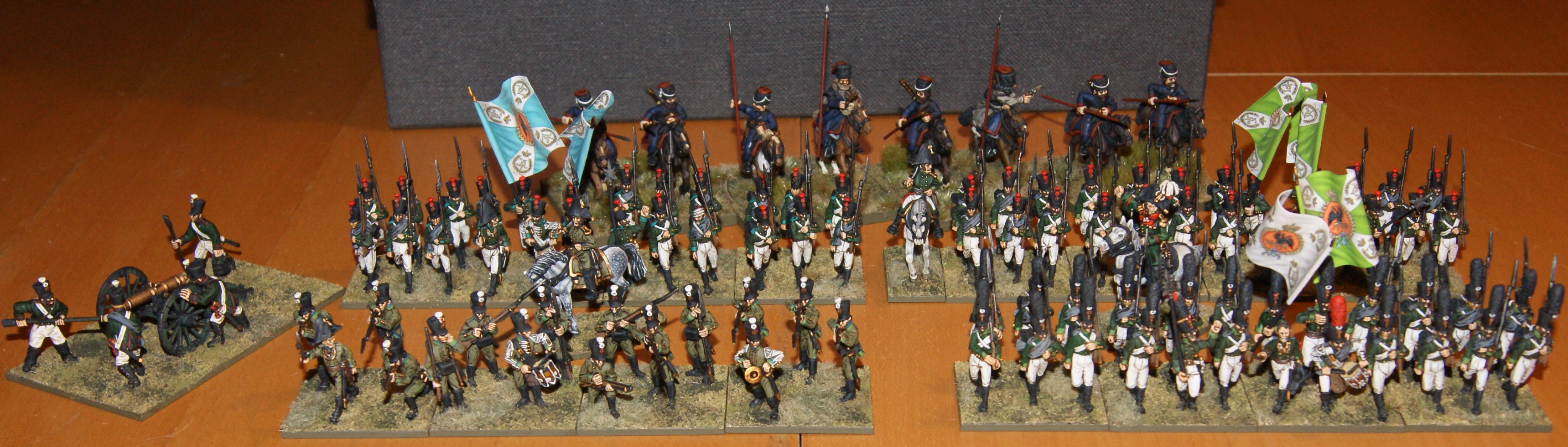
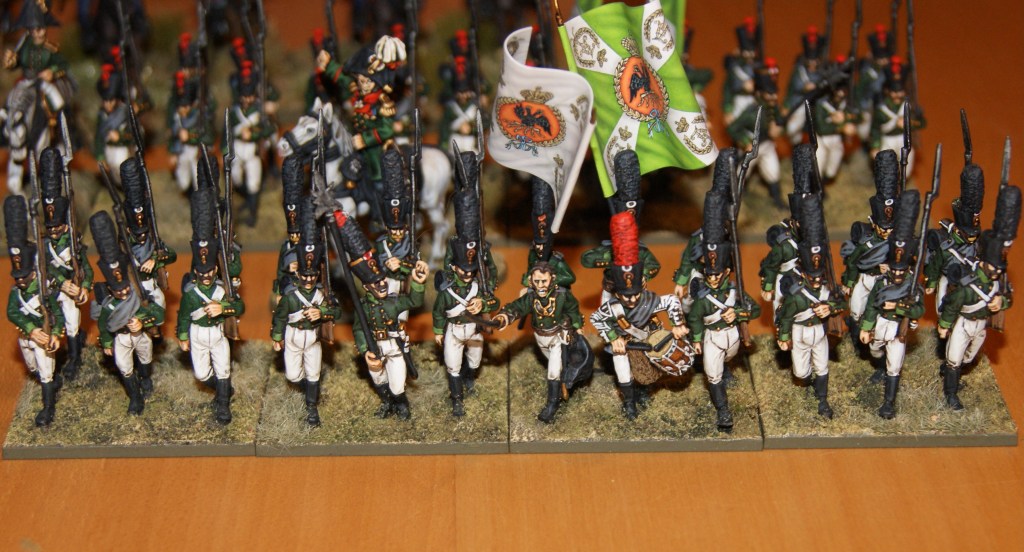
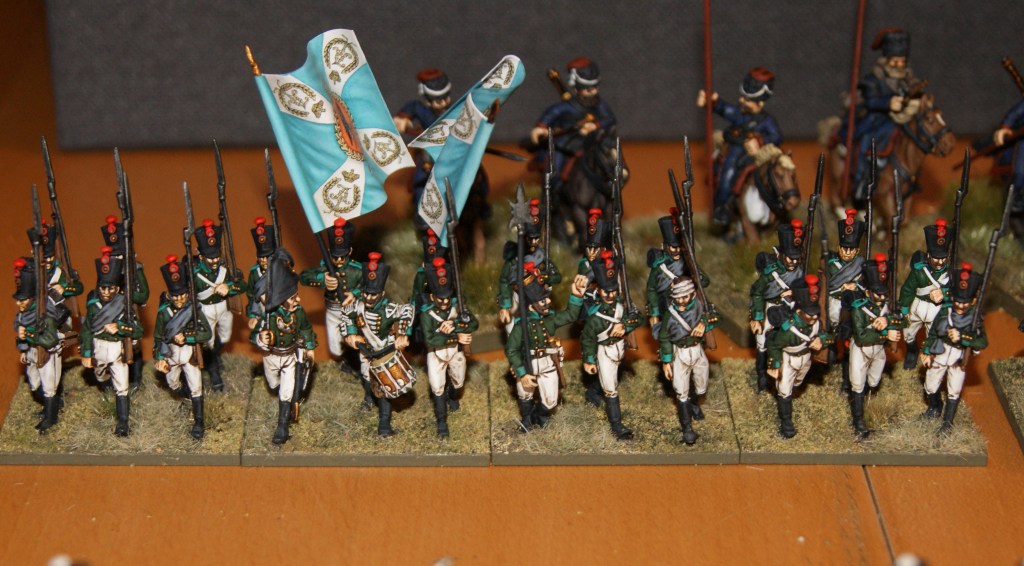
I took some pictures of the finished lot. Ive organized them into brigades, although these are not historical, but rather generic. They just include four infantry units, an artillery piece and one or more commander figures. The idea is that each brigade will fit into one storage box, so it is a practical thing as much as anything else. However, with three brigades this does amount to a division. A neat brigade and division structure was not upheld in practice in the summer of 1808, but this is a good basis for the type of army one would field for such a scenario.
First brigade
These are a good foundation, but a number of additions will hopefully follow soon. As I said, I will paint more skirmish figures soon (Ive already prepared them). One artillery limber is also missing (it sits unfinished in a box…). The plan is also to do two artillery pieces in each brigade rather than just one, although one is probably enough for many games. The artillerymen are already primed and ready for painting. The cavalry is also almost done. For them, the plan is to expand into 9 man units. The cossacks only need rebasing, and the hussars are almost there as well, still lacking a few finishing touches and basing. I also have plans for a command vignette, like the ones Ive already done for the Swedes. Again, the figures are already primed and ready to be painted.
Second brigade
Third brigade
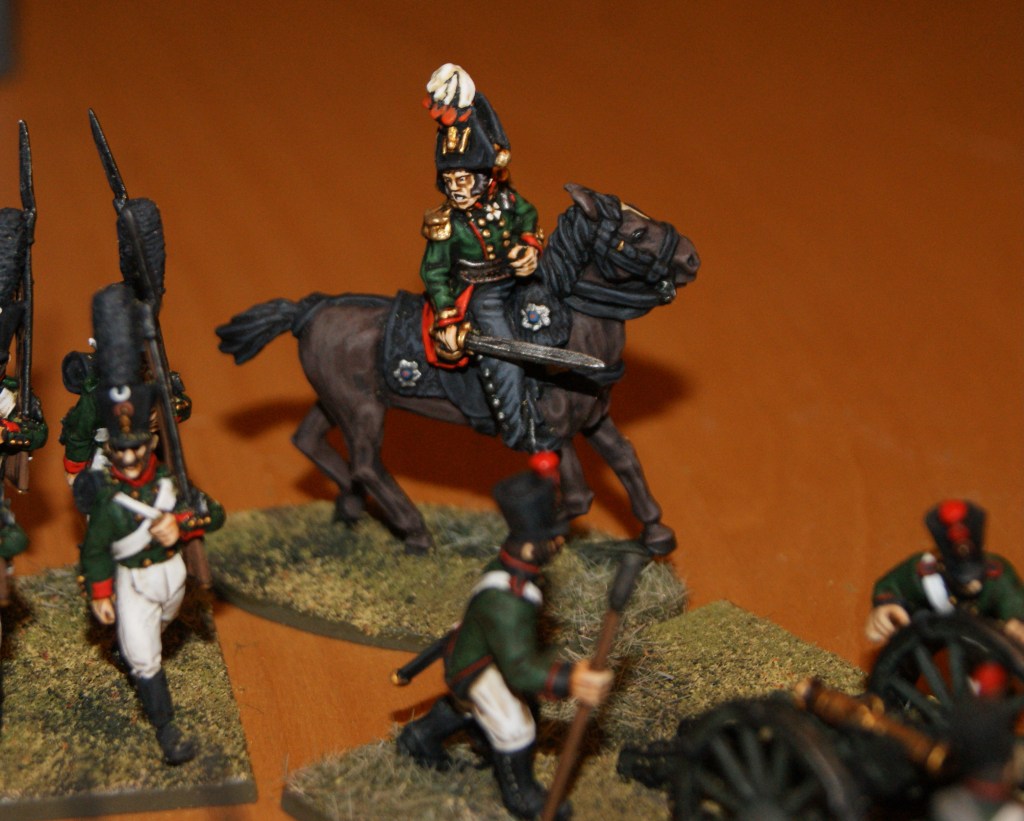
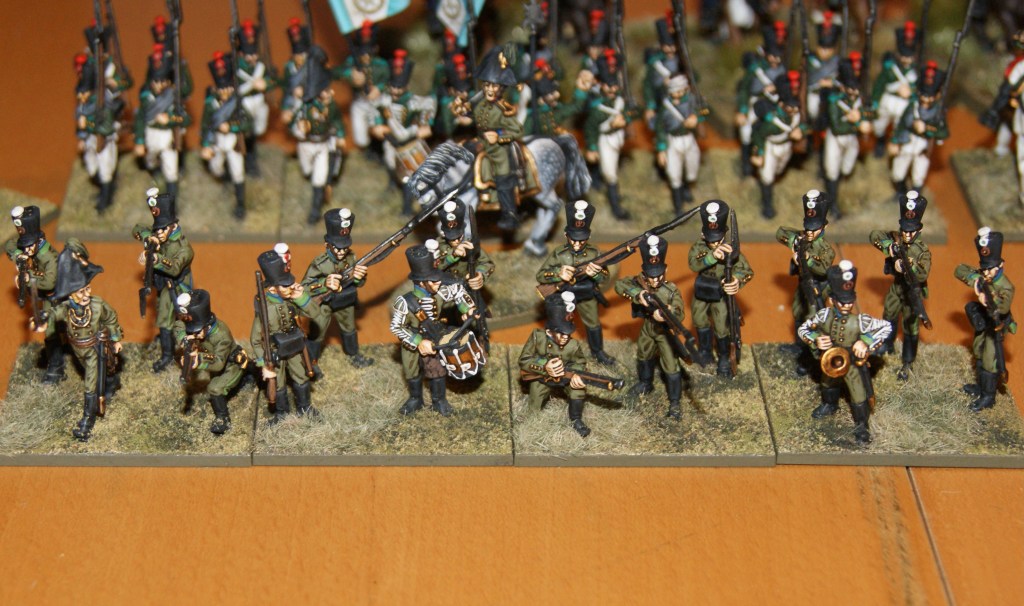
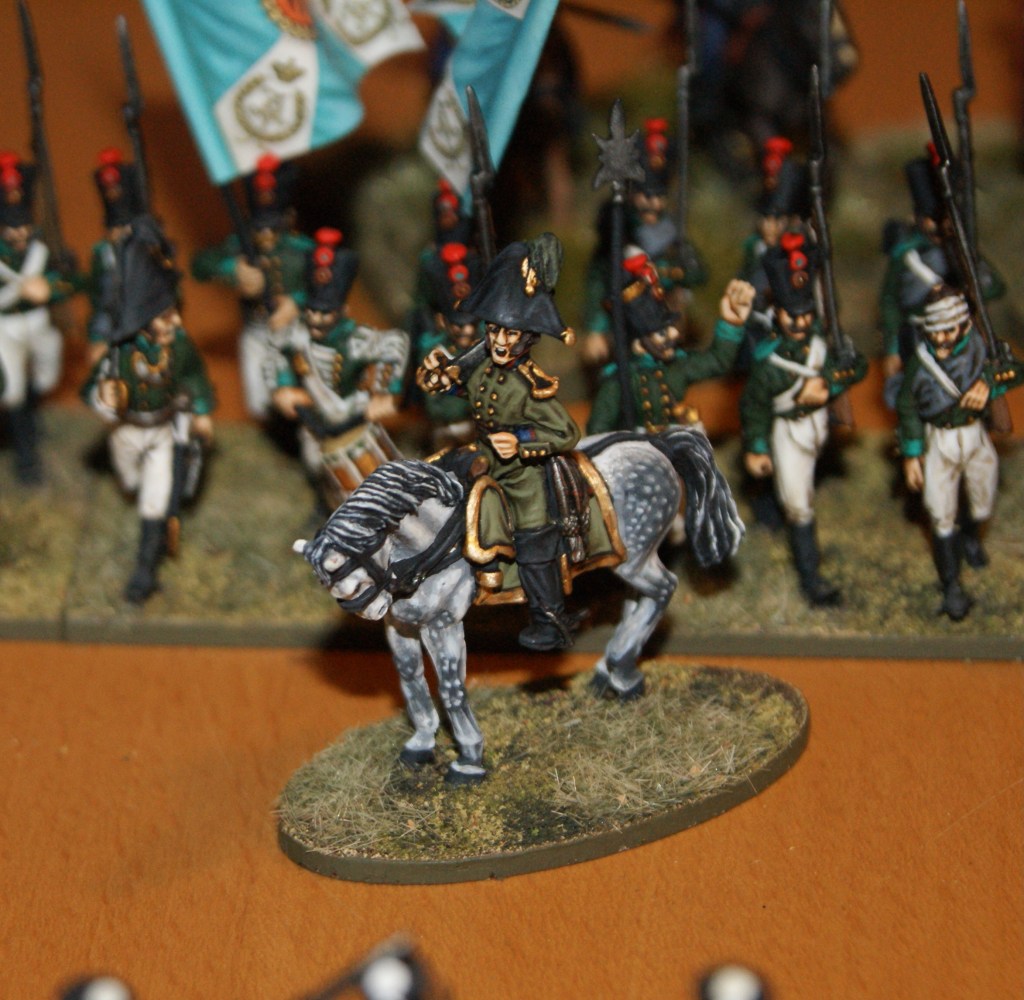
As you can see, the basic infantry figures are all Brigade Games figures (of the old Victrix range). The colonels are also by Brigade. Some commanders are Perry figures and some of them are Warlord figures. The artillery crew pictured here are all Warlord, with Brigade heads; the limbers and artillery pieces are all by Perry.
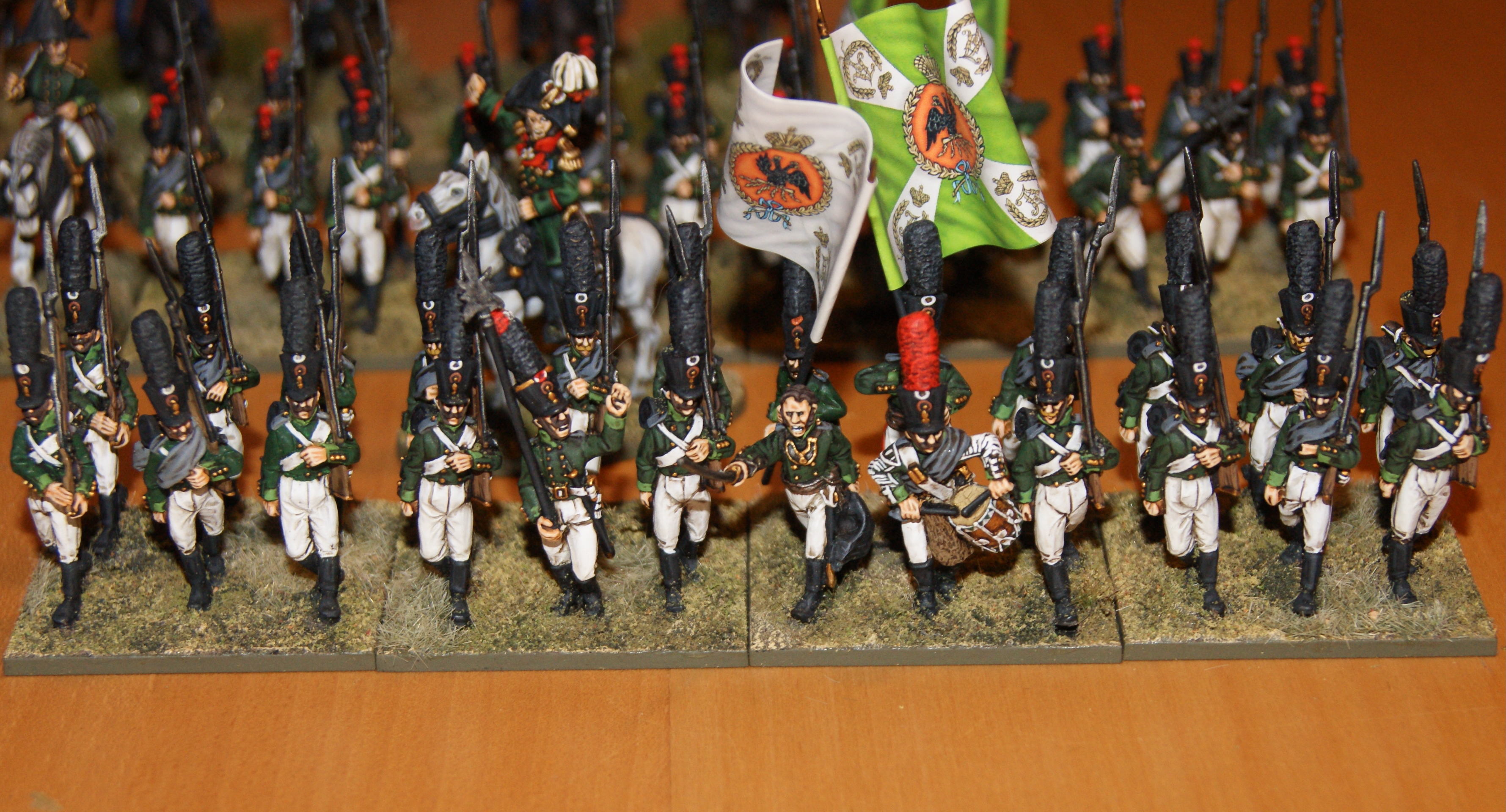
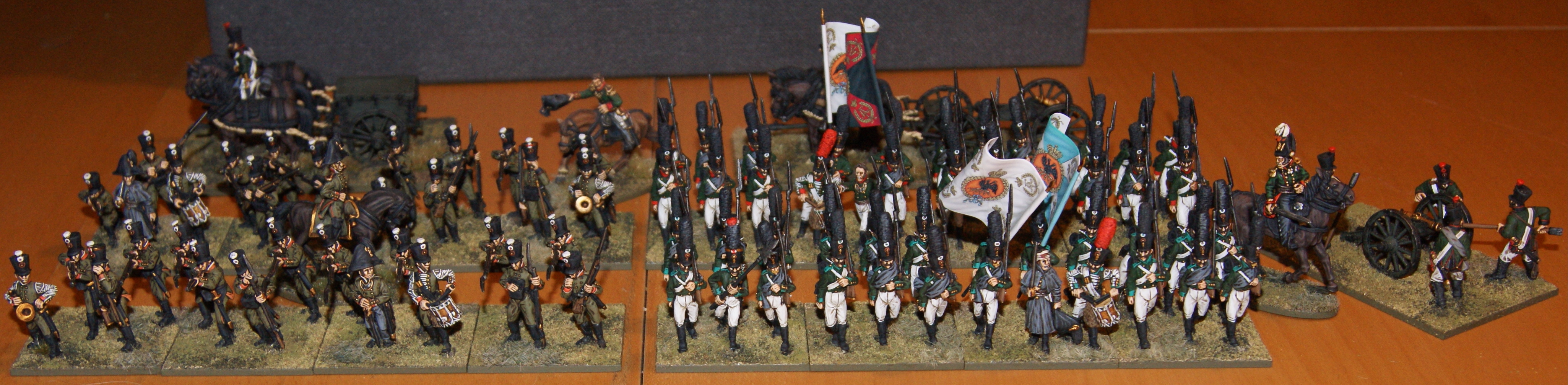
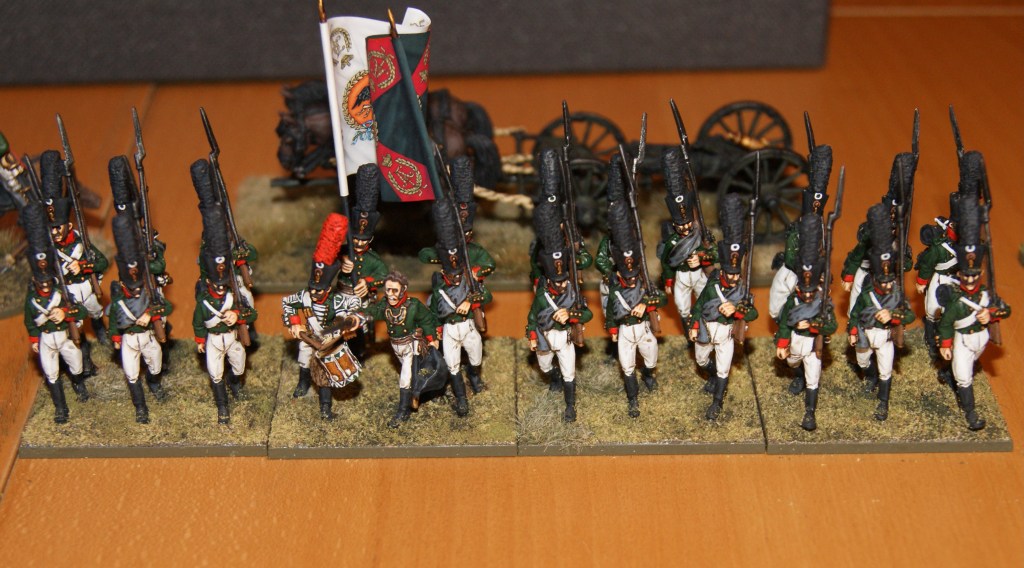
I have been working on rebasing my 1808 Russians for way too long. But now everything is at least mounted on the new type of bases and I have applied the Vallejo texture goo, which is the more time consuming part of the process. After that I will drybrush the bases and paint the edges. In the final step I will apply some flock and static grass. Pictured is half of the total Russian force, the other half I have already finished basing.
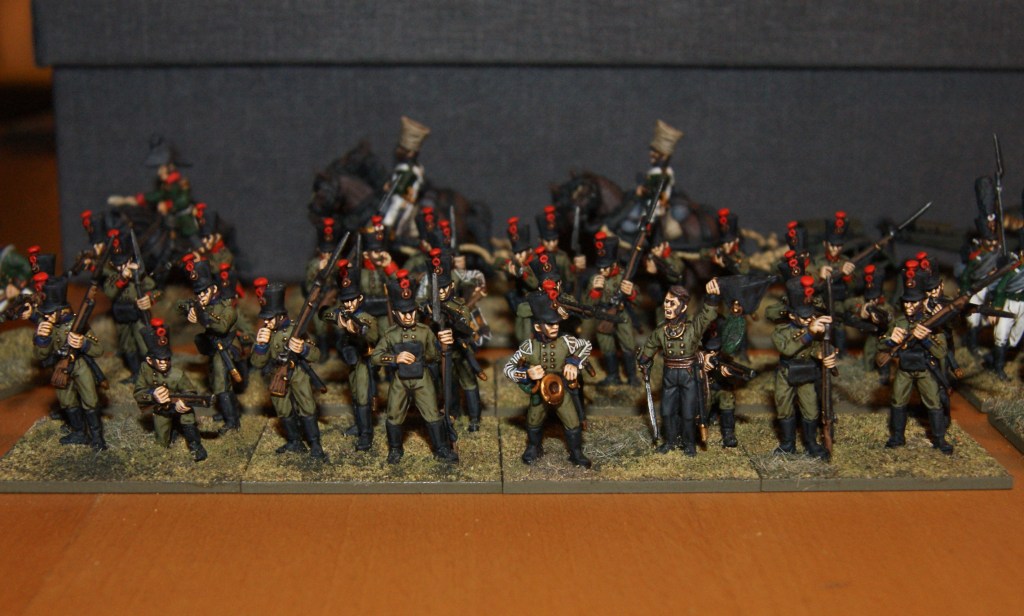
As you can see, I have a few skirmishers, of the Sevsk and Mogilev regiments. The plan is to have three skirmish bases of jägers and three of musketeers for every brigade. My main goal right now is to get to a position where I have a fully useable army of three brigades of four battalions and one artillery piece each. Cavalry is not a priority for this setting, but I have painted (but not yet re-based) one cossack unit of 9 figures and will need to paint a few more hussars to get them to the same strength. For the Finnish war, one will rarely need more than two cavalry units, although there is certainly room to paint both uhlans and dragoons – although dragoons only participated in one or two battles and they were not present at any of the major engagements. Uhlans however, were a bit more commonly seen. Also, it should be said that the Russians often did field slightly more cavalry than the Swedes.
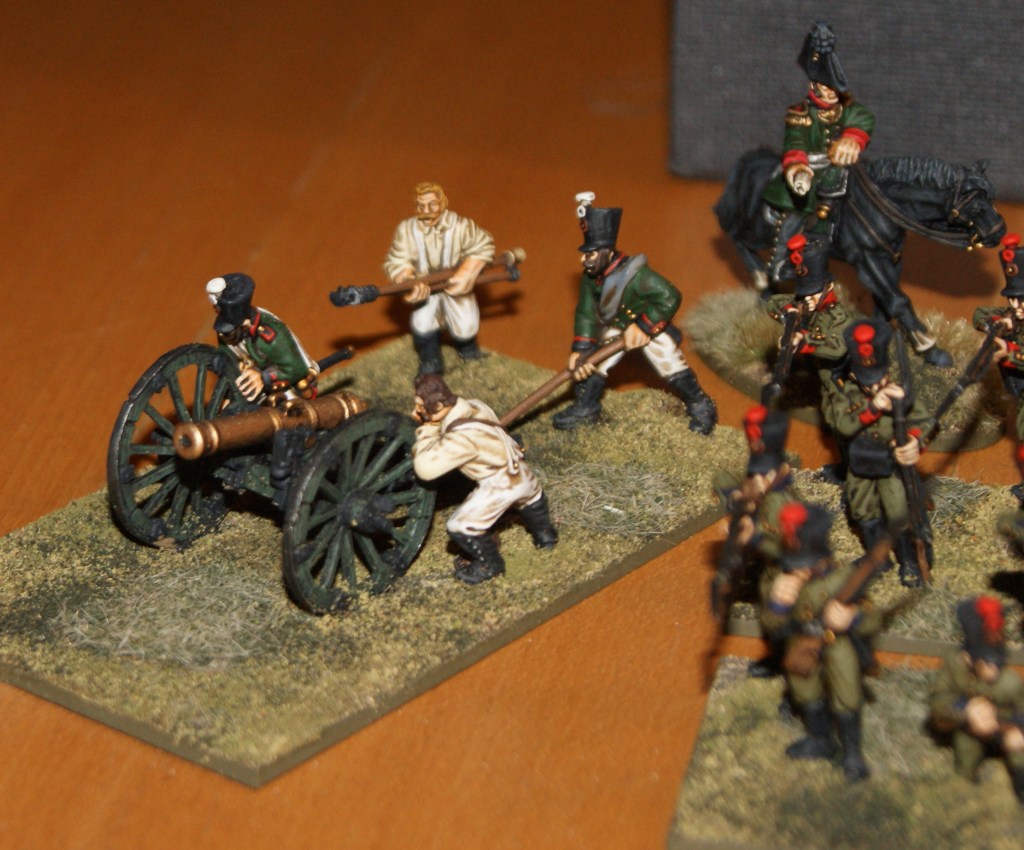
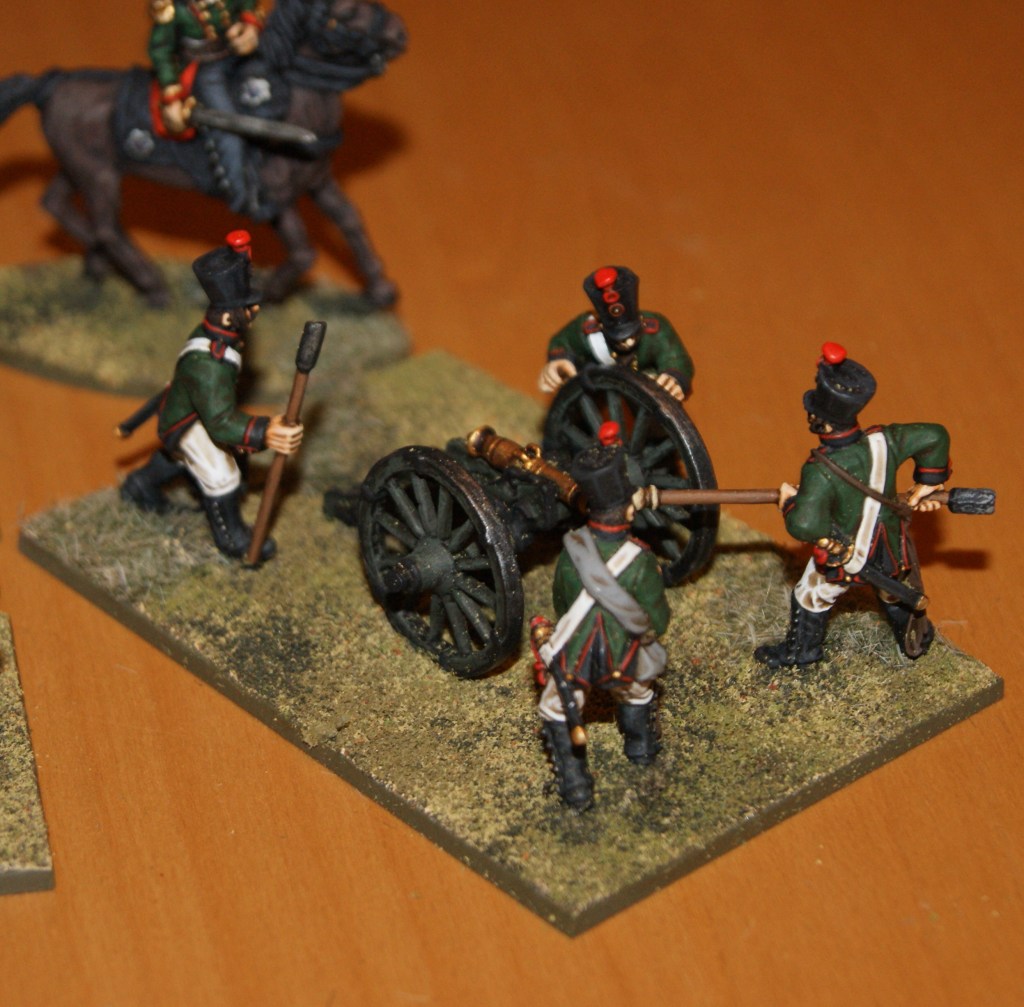
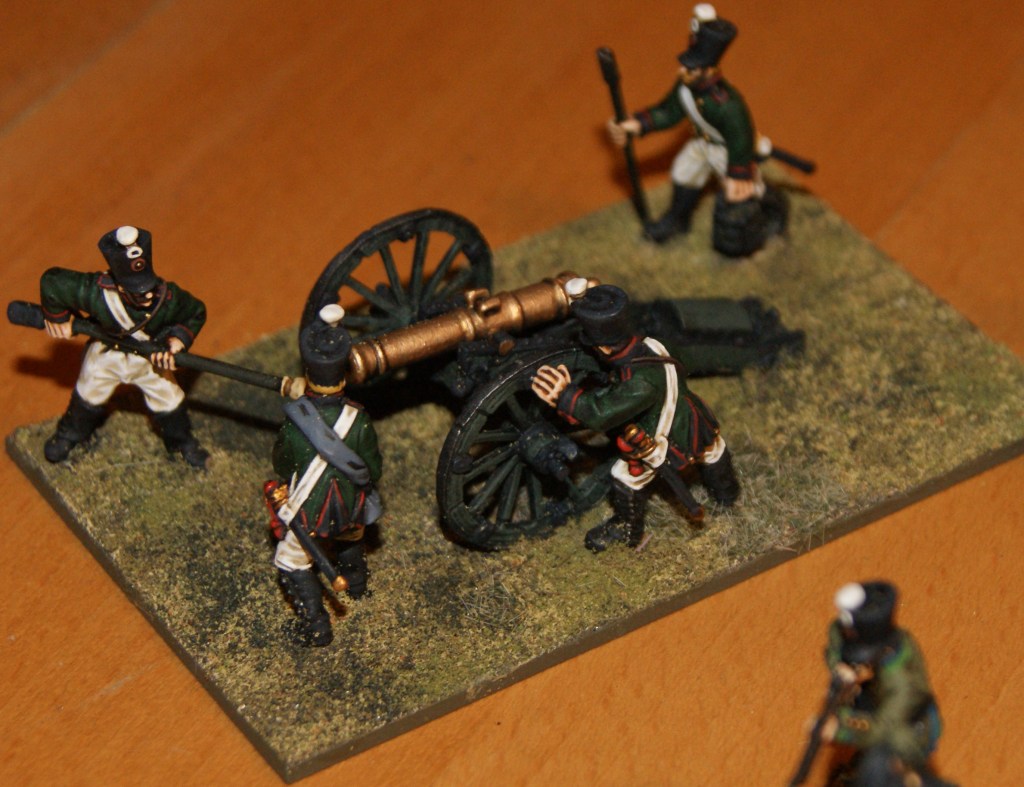
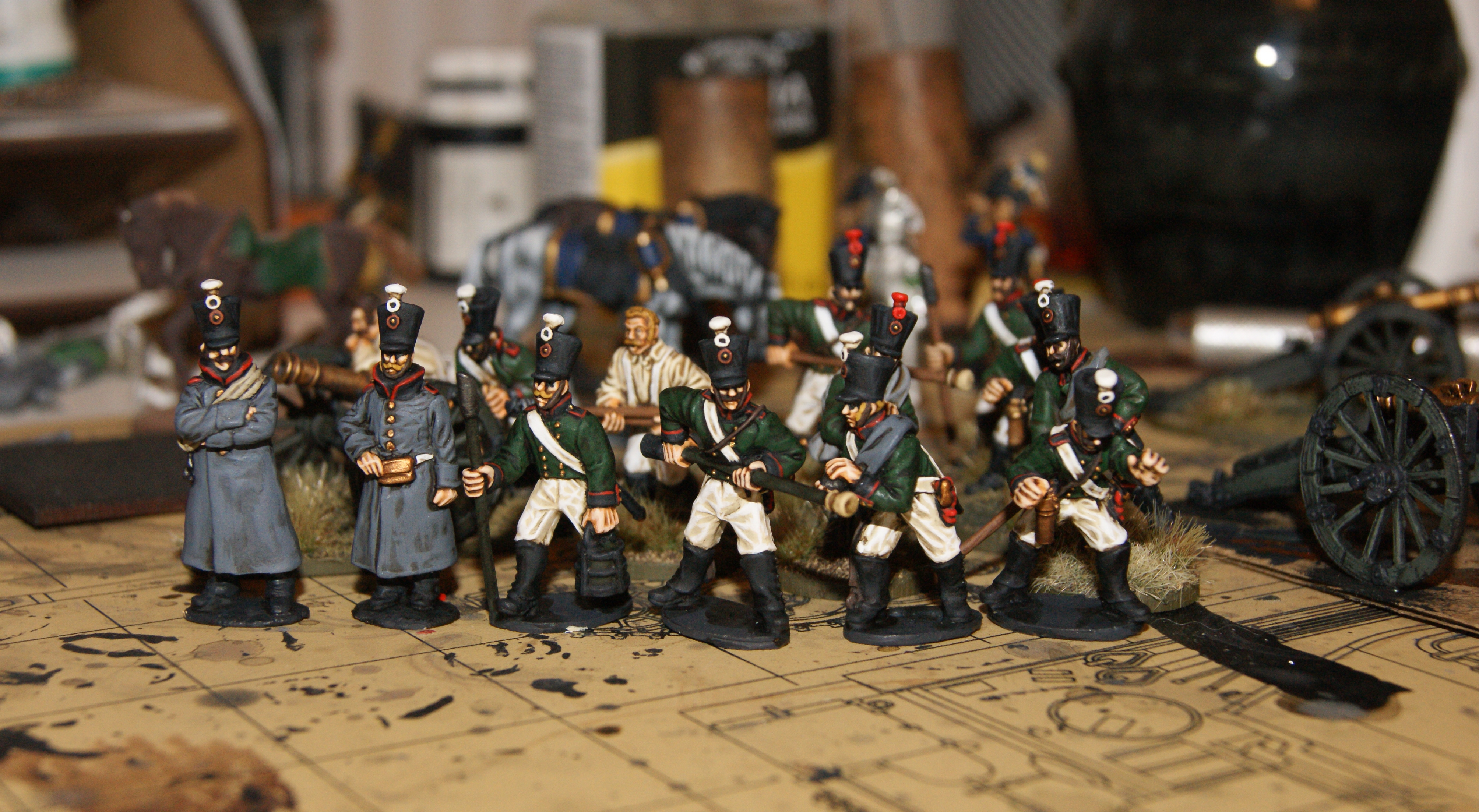
With little painting time, I have at least finished some additional figures and guns for the Russian army of 1808. I have prepared many more. The primary goal is to be able to field a battery of two guns for each of the three brigades. Two of these will be 6-pounders, the third a 3-pounder battery. At the moment I have finished three guns and crew, which is fine in itself. One gun per brigade can be good enough in game terms. I already have three limber sets, although one of them still needs some finishing touches.
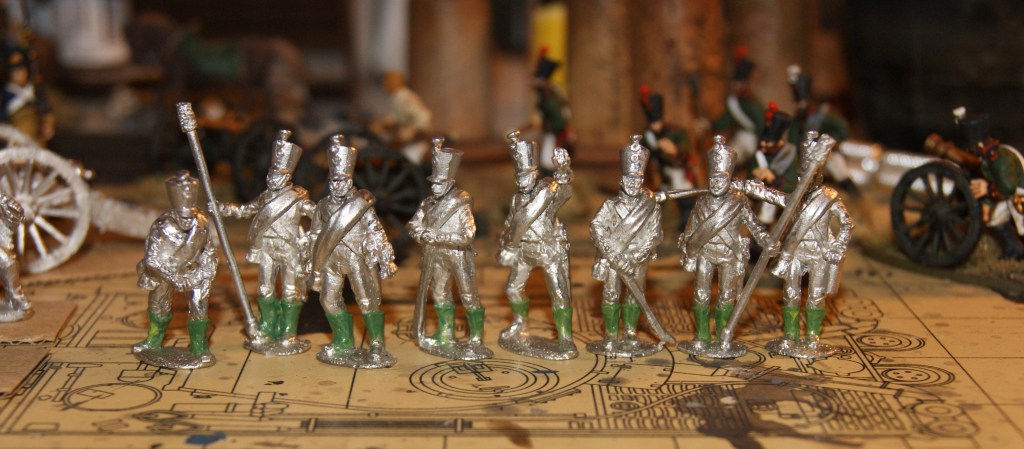
The figures are conversions from Perry and Warlord figures, with the heads of Brigade Games infantrymen. On the Perry figures in summer dress, I sculpted boots, which I think may be more appropriate. But the long white gaiter trousers which they wear were already in use in 1808 as far as I understand, so this wasnt strictly necessary. I get the feeling that such elegant white trousers would have been useless in Finland though.
In the future, it would be nice to add a battery of 12-pounders to this collection as well. But thats about it, as I dont see me ever fielding more than three brigades at once.
Russian 12-pounders played an important part in the war in Finland, as the Swedish army never fielded any equivalent artillery and could not match their range. Exactly why no Swedish heavy artillery was used in 1808–1809 is unclear, as heavy guns were available in Finland. It may just be that those guns were considered to be no better than the new model 1804 6-pounders, which were light and mobile, yet had decent range. For that reason 12-pounders may not have been considered worth the effort. I cant recall any discussion of this in what I have read of either in primary sources or secondary literature. Theoretically, one would assume that heavy guns would have been useful at least in defending some of the prepared positions that the Swedes constructed at various places, such as Rouna, where the Russian 12-pounders seem to have been very effective. As was the case with this war in general, it seems that the Russian army proved more capable in the logistics department if nowhere else, despite the fact that the Swedes were on home ground.
Anyone who has ever tried to understand Swedish army uniforms of the war in Finland of 1808–1809 knows that this is a very diffcult subject indeed. Shortly before the war, uniforms were changed several times in rapid succession. At the same time, old uniforms were still in use. It is therefore not easy to know how a particular unit would have been dressed at any given time.
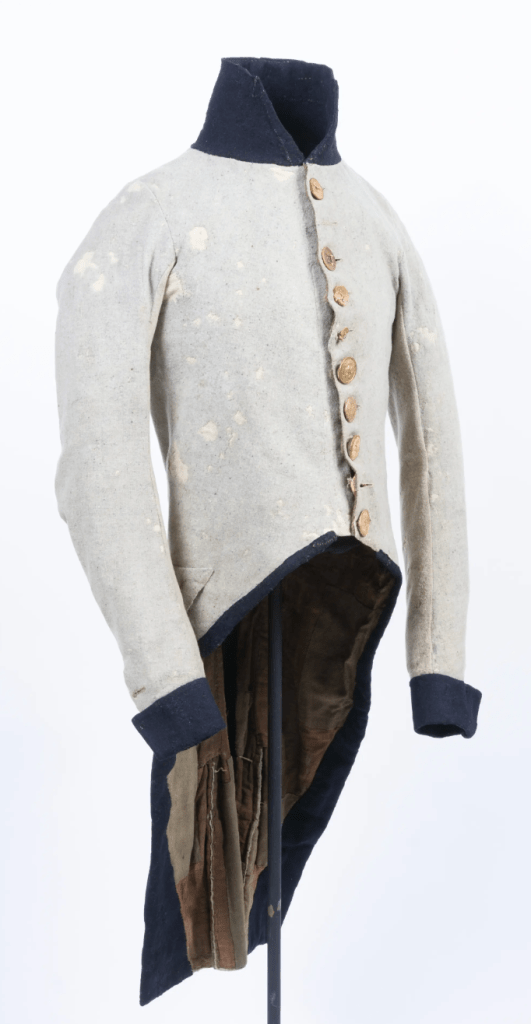
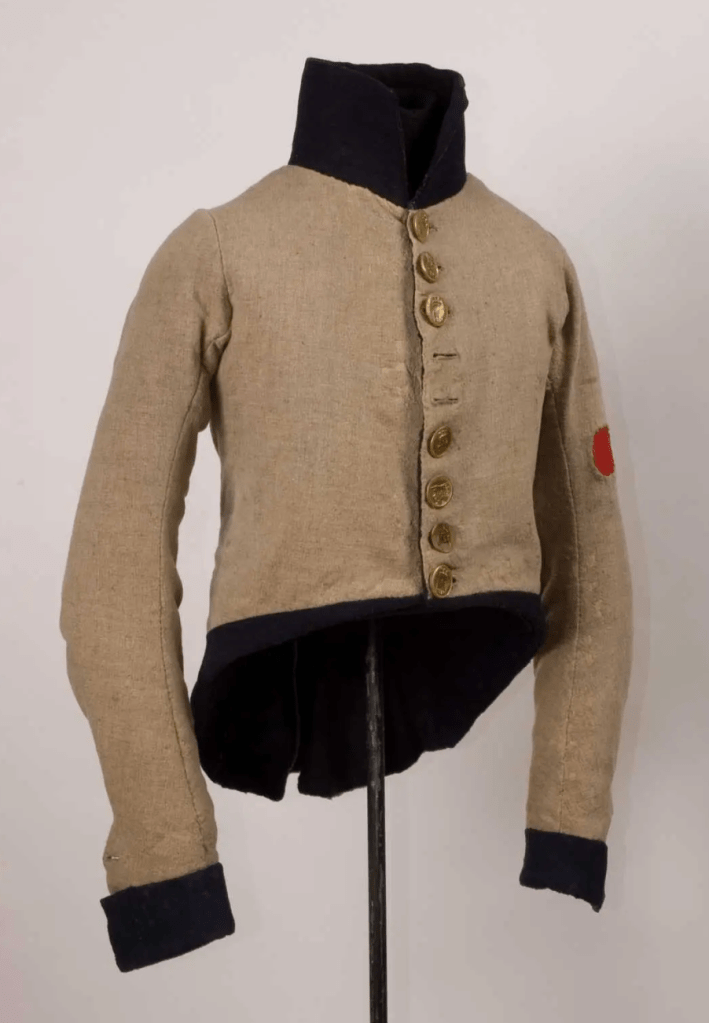
Portrait of Henrik Gustaf von Qvanten, ensign of the Björneborg regiment, who died at the battle of Lapua in 1808. This portrait is particularly interesting because it is so detailed: we can even see the bears (the emblem of the regiment) on the buttons. It is a rare depiction of a Finnish uniform of the 1808 war. It confirms that the plastron had been removed by this time. The number of buttons (10) and the light grey shade of the jacket identifies it as the m/1806.Preserved uniform jacket of the Åbo regiment, with buttons showing the regimental emblem (the Finnish lion, as seen on the present day Finnish hockey teams’ jerseys!). Note how the the number of buttons (10) is the same as in the portrait above.Jackets of the m/1807. Left: NCO’s jacket; right: officer’s jacket. Note the dissimilar shade of grey and number of buttons. Both jackets have belonged to men of the same regiment, Jönköpings. The 1807 was meant to be darker than the Finnish grey uniforms, but apparently the exact shade seems to have varied (one must of course also allow for some fading with time).
It used to be commonly assumed that the uniform of the 1802 model, which featured a plastron with two rows of buttons over the chest, was still used by many, of not most regiments in 1808. Indeed, there are a number of old illustrations of this uniform which give this rather misleading impression and they also circulate widely around the internet. The 1802 uniform jacket was blue with yellow, red and white facing colors, in different combinations for different regiments of the Swedish army. For example, the Hälsinge regiment had all white facings, while the Västerbotten had red collar with white turnbacks, plastron and cuffs. Södermanland had all yellow facings, while the Jönköping regiment had yellow turnbacks and plastron, but red collar and cuffs. The Finnish regiments wore grey uniform jackets, with different facing colors in parallel to the Swedish regiments, so that Björneborg had light blue turnbacks, cuffs, collar and plastron. Örjan Magnusson has provided a more than excellent overview of these uniforms here, including photos of the official model drawings for the uniforms (highly recommended): https://tacitus.nu/karoliner/kallor/1802.htm
However, when the war started in 1808, some things had obviously changed. The difficulty lies more in trying to establish which new regulations were carried out in practice, and when. In early 1806, it was ordered that the jackets should have just one row of buttons and the plastrons be completely removed. In late 1806 it was ordered that all jackets be grey (Swedish as well as Finnish), with different facings for different regiments, but in January 1807 this was again changed to grey with dark blue facings for all regiments. This latter, standard uniform model is called the m/1807.
In theory, all Swedish infantry (with the exception of the guard) should have worn the 1807 model uniform in 1808. However, as often happens, this was certainly not the case. It is sometimes said that m/1807 was an unpopular model among Swedish troops, because of its unglamourous grey color. Indeed, it was abolished soon after the revolution, in the summer of 1809. However, it seems that several regiments wore this uniform at the battle of Sävar in August of that year; we know for certain that the Västmanland regiment received it late in 1808 and there is a preserved example belonging to an officer of the Jönköping regiment, for example. The author and participant in the war Ljunggren describes how and when the new uniform arrived to his regiment (Västmanland). He seems to have appreciated it, if nothing else because it was sorely needed as a replacement for the sad remains of a uniform that his regiment had used for almost two decades by that time, repaired and re-sown several times. Apart from Västmanland however, it is not clear (as far as I know) that any other regiment wore the m/1807 in Finland in 1808. On the contrary, for most regiments there is clear evidence that they had not yet received it yet. In one sad case, the Södermanland regiment, we know that their old uniform was so worn out that it was unsuable. But because there were no new uniforms available, they seem to have had to fight wearing a simple fatigue uniform at the battle of Sävar in 1809.
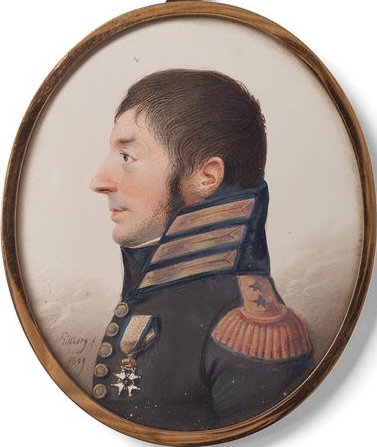
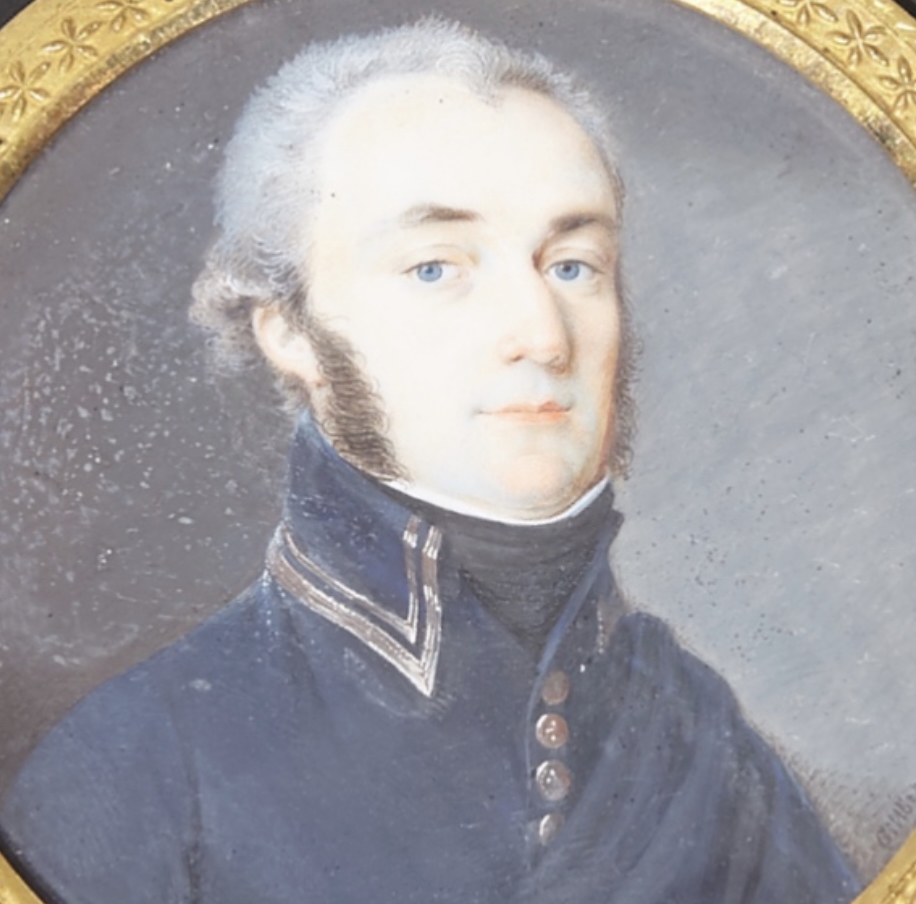
An officer of the Svea artillery regiment, miniature portrait dated 1808.
In recent years, it has been clearly shown (by Martin Markelius at the Armemuseum in Stockholm, among others) that the most common pattern in 1808 was the m/1806, i. e. a uniform jacket with blue main color and the older variable facings, but without the plastron. Markelius studied the archival sources of the regiments of the Swedish division which arrived in Finland in August and subsequently participated at the battle of Oravais and other engagements. He found letters in which the removing of the plastrons from the old uniforms is explicitly mentioned for some units, and that it can be reasonably assumed that the same was done for the others. The color of the uniforms is confirmed by the eye witness (and keen uniform buff) Ljunggren. In other words, we are now largely agreed that most regiments wore the old uniform jackets, resown to the new standard (commonly called m/1806). This is also, thankfully, the model worn by the Perry miniatures Swedes, although at that scale, it is indistinguishable from the 1807, so that the figures can easily represent either variant.
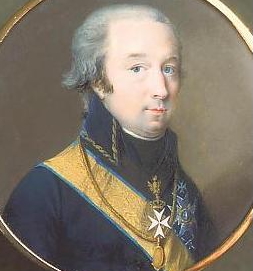
Gustav Magnus Adlercreutz, miniature portrait dated 1809. This is a very rare example of an officer depicted wearing the despised m/1807 uniform – I think…
Some uncertainty remains. I have only seen few references to the situation with the Finnish regiments. There is some conflicting evidence: there is a color drawing by another eye witness, Adelborg, who was himself an officer in the Nyland dragoons. He depicts one particular soldier who looks like he could belong to the Björneborg regiment (light blue facings), wearing a plastron on his jacket. However, it is not clear what the date is for this drawing. It may have been drawn from memory at a later date. It is not certain that this is a representation of a scene that he witnessed, it may rather be an idealized illustration of the magnanimity of the de facto commander of the Finnish troops, Adlercreutz. It may portray an event some years previously – I dont know.
This blog entry https://kaponieeri.blogspot.com/2018/11/suomen-sodan-sotilaspukuja.html gives an example of a preserved Åbo regiment uniform with plastron, which is in a Finnish museum. I dont read Finnish, but as far as I can tell by the efforts of Google translate, there is no exact date given. However, by biographical data I was able to surmise that the man who is supposed to have owned the jacket was discharged from the regiment as early as 1802. As a side note, I learned that automatic translations from Finnish leave much, indeed very much, to be desired, despite recent supposed advances in that field…
Being of a curious nature, I have been doing some digging after sources for Finnish uniforms myself. This will hardly be revolutionary, but I have looked at a source which is not so often mentioned in the literature, but is very interesting: portraits (mostly miniature portraits). There are a great number of miniature portraits from this period by great artists, such as Gillberg. They tend to depict officers, but sometimes of relatively modest ranks. This way they can tell us something of the uniforms as actually worn – and the artists often seem to have captured many fine details. On top of that, they are often dated by year, which is also very useful.
While searching various museum databases and auction catalogues, I have found that the model 1806 uniform is easily identifiable in many portraits from the years 1807 and 1808. I have not found a single example of the 1802. However, examples from the Finnish regiments are fewer (prestigious Swedish guard regiments are very much over-represented though). I did find one interesting example of such a portrait and it does confirm that at least the officers (some officers?) of the Björneborg regiment wore the m/1806 uniform in 1808. This particular portrait, of Henrik Gustaf von Qvanten, is perfectly detailed. I only wished I had access to a color image – as I understand it, the painting is in a private collection in Finland. Nonetheless, we can identify the uniform as m/1806: the color is lighter than the dark grey of the m/1807; we can count 10 buttons, where the 1807 had only 9 buttons. There are also preserved uniform jackets from both the Åbo and Nyland regiments, and both those examples have a single row of buttons. I have yet to see an example, either in a comtemporary image or a preserved jacket, of the Tavastehus, Savolax or Österbotten regiments. From the preserved examples, there seems to be little noticeable difference between the Nyland and Åbo regiments – in theory, Nyland would have had mid-blue facings, Åbo dark blue. Björneborg had a light blue facing color. Eben’s 1808 uniform plates show Åbo in the m/1806 and also Savolax jägers and Finnish artillery regiment wearing the same model (no plastrons). Indeed, from what evidence that exists, there is very a good case for Finnish uniforms being of the m/1806 without a plastron in 1808.
There are a couple of further things one could mention here. First, I would not rule out the possibility that plastrons and single button row coats could have been worn by members of the same unit. In particular, one could imagine that officers would have had acquired new uniforms sooner than the men. Markelius argues against this and he has a point: officers would probably try to see to it that the regiment was as uniformly dressed as possible. Furthermore, there is evidence (JEO Screen mentions this) that officers, especially in Finland, would make orders for new uniform cloth collectively, in order to get a better price. However, one can still imagine that officers and men had different model uniforms, indeed there is evidence of some complaints that officers, as it were, customized their kit quite liberally.
It shold be noted though, that miniatures wise, this does not matter all that much. On the Perry figures, much of the chest of the figures are covered in belts, so that a plastron can be imagined to be obscured. For some units, like Österbotten, the plastron was also in the same color as the jacket, which makes the plastron issue a minor thing, at least on the common soldier figures. As has been stated already, having officers in the 1806 model will hardly be wrong, even if you would believe that the men still wore a plastron.
Finally, it can be worth mentioning that there are a number of reenactor groups who have created their own uniforms, a couple in Sweden and at least one in Finland. The Finnish reenactors, of the Österbotten regiment, actually seem to be wearing a mix of uniform jackets, some with two, some with just one row of buttons. I dont know the reason for this, but one can assume that they have done their homework. The Swedish reenactors who wear the uniforms of the Uppland regiment include Martin Markelius himself, and consequently, they all wear one row of buttons on their jackets. The reenactors of the Västerbotten regiment do the same.
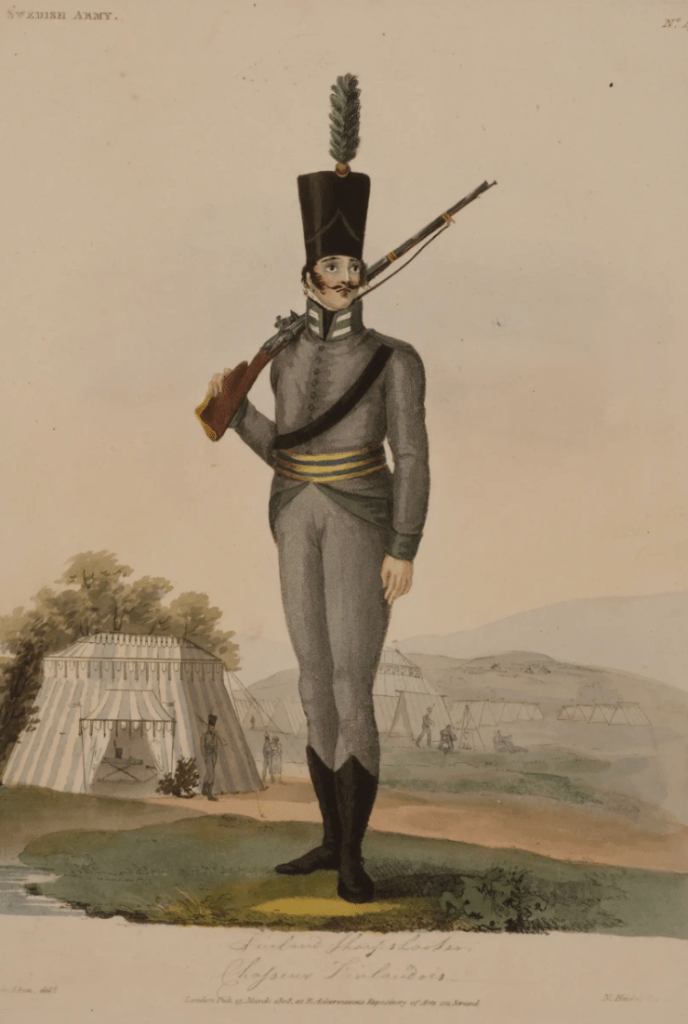
Savolax jäger, Åbo läns infantry regiment, Finnish artillery. Plates from Frederic Eben, The Swedish Army (London, 1808), digitized by Armémuseum (Digitalt museum). Eben does not include any other Finnish regiments.
While I was searching, I also came across something I had never seen before – a portrait which seems to show an officer wearing the m/1807. The portrait is not surprisingly dated to 1809, which as I understand it was the only time when a relatively large part of the Swedish army was actually wearing the m/1807 in battle. Ironically, by the time of the last offensive in Västerbotten, when the new uniforms had actually reached the troops – who surely needed them – this model had already been abolished in favor of a new blue jacket model (subsequently called m/1810).
Rank insignia of officers
Collar distinctions
Captains and lieutenants wore stripes on the collar of their uniform jackets. A captain wore three stripes, a lieutenant two and a sub-lieutenant one stripe. As far as I can understand, these stripes were in the button color (which means that I have painted most of mine wrong).
Generals wore stripes of oak-leaf around the edges of their collars: a field-marshal (4 stripes), general (3), lieutenant-general (2) and major-general (1).
Left: Major general (Cronstedt). Right: Over-adjutant (Nordforss).
Adjutants, who wore the same uniform jacket as generals (m/1801), had straight lines instead of oak-leaves, otherwise in a similar way differentiating between ranks with varying numbers of lines.
Epaulettes
According to the regulations enacted in 1795, epaulettes for officers were distinguished by rank with a system of crowns and stars, and with different quality of the fringes. The color of the epaulettes was according to the button color of the uniform. In some portraits, it looks like silver fringes are worn with gold epaulettes. This doesnt seem to correspond to the regulations, maybe the thin fringes just looked lighter than the epaulette itself and therefore seem silver in comparison.
The lower officers (kompaniofficerare) wore epaulettes of silk, but they had no fringes. A captain wore two stars on the right shoulder, and one on the left. A lieutenant wore one star on each shoulder and a sub-lieutenant one on the right; an ensign wore no stars on his epaulettes.
Regimental officers (regementesofficerare) all wore fringed epaulettes, with fringes made out of silk. A colonel wore three stars on each shoulder, a lieutenant-colonel three on the right, two on the left. A major would wear two stars on each shoulder.
Generals wore crowns on their epaulettes instead of stars. Their fringes were made from metal. A field-marshal wore three small crowns with a large crown over them on each shoulder; a general three small crowns on each shoulder. A lieutenant-general wore three small crowns right and one large crown left. A major-general wore one large crown on each shoulder. Looking at the portraits above, it is easy to see that these guys wear fringes on their epaulettes together with stripes on the collar, which they really shouldnt have!
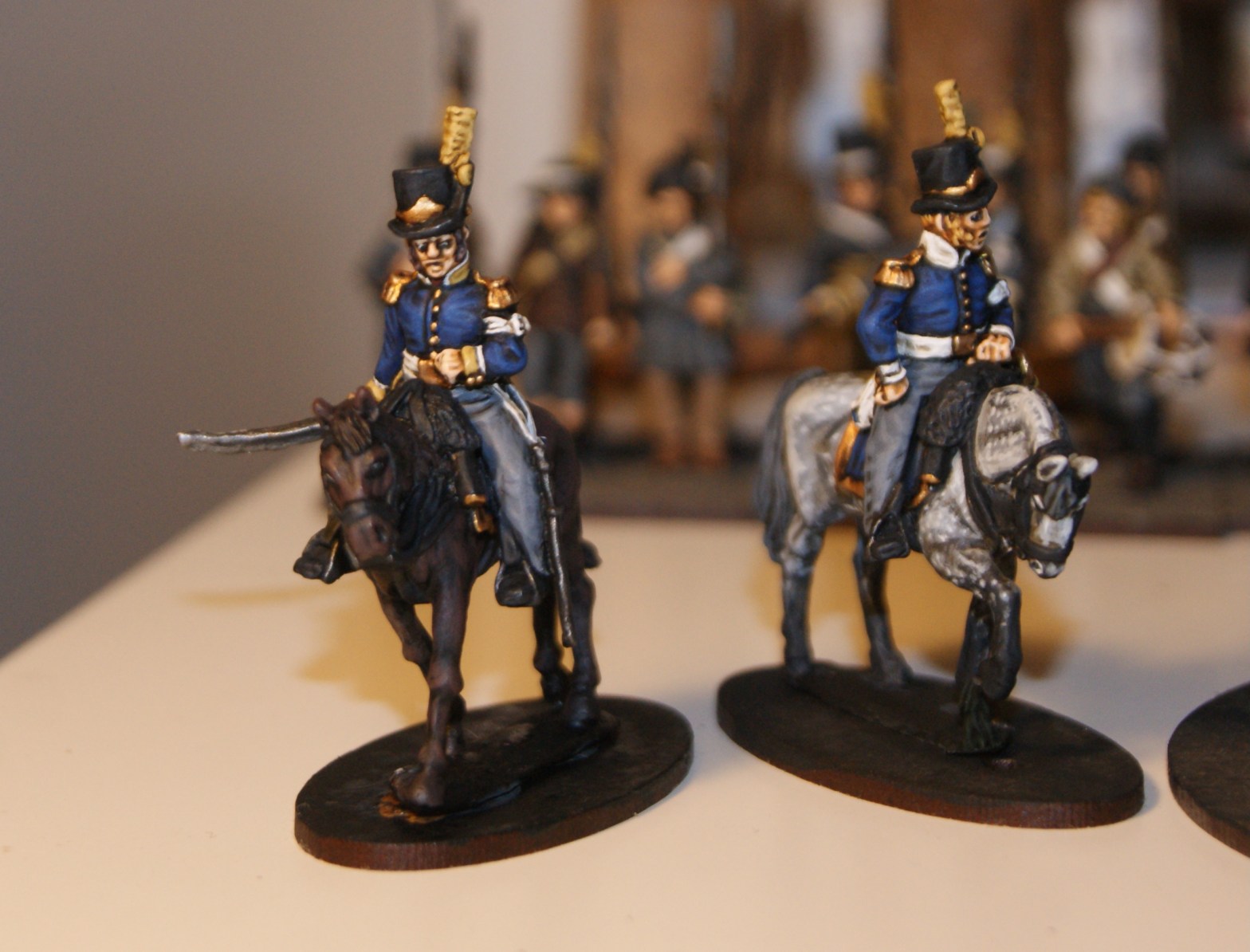
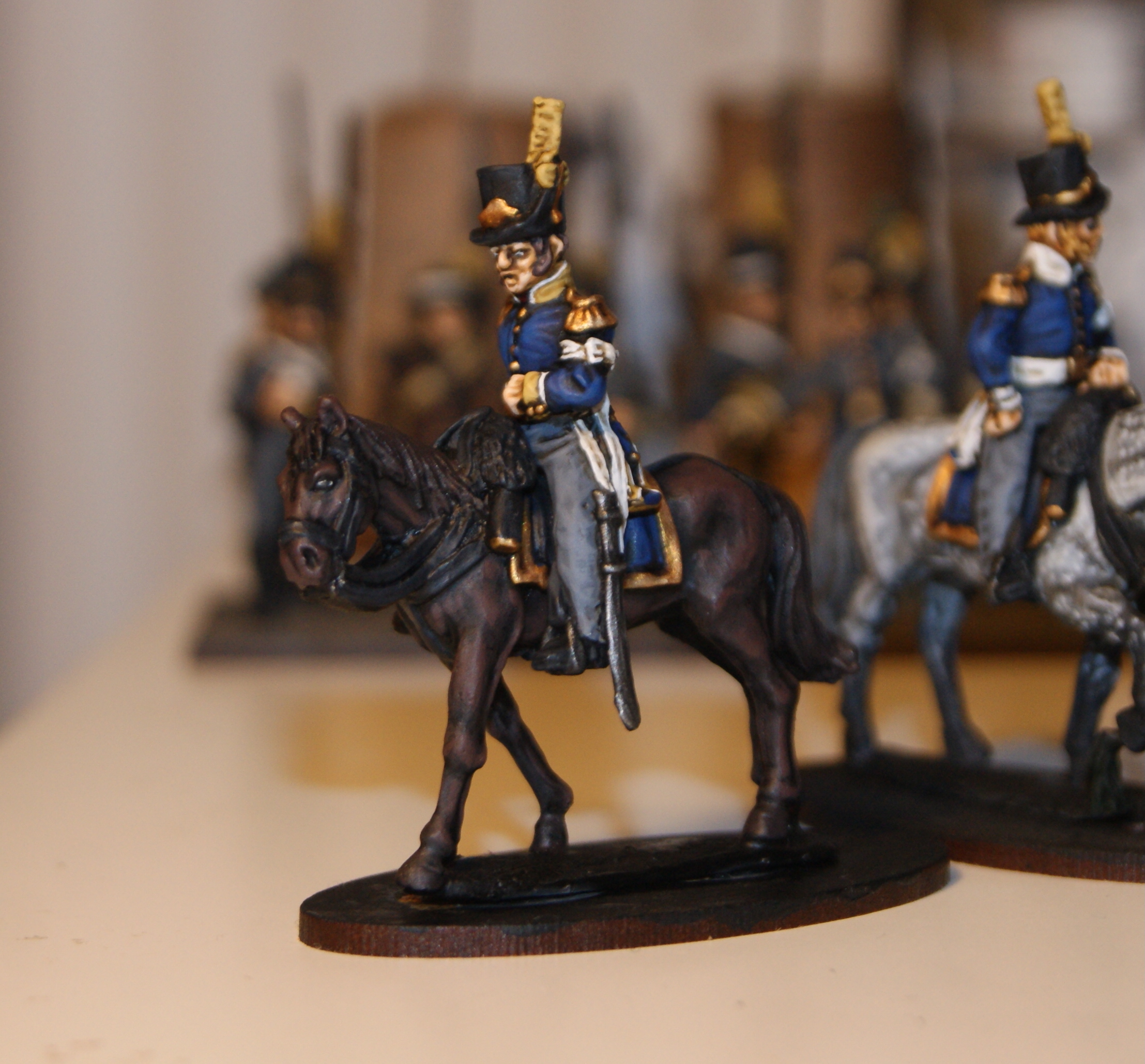
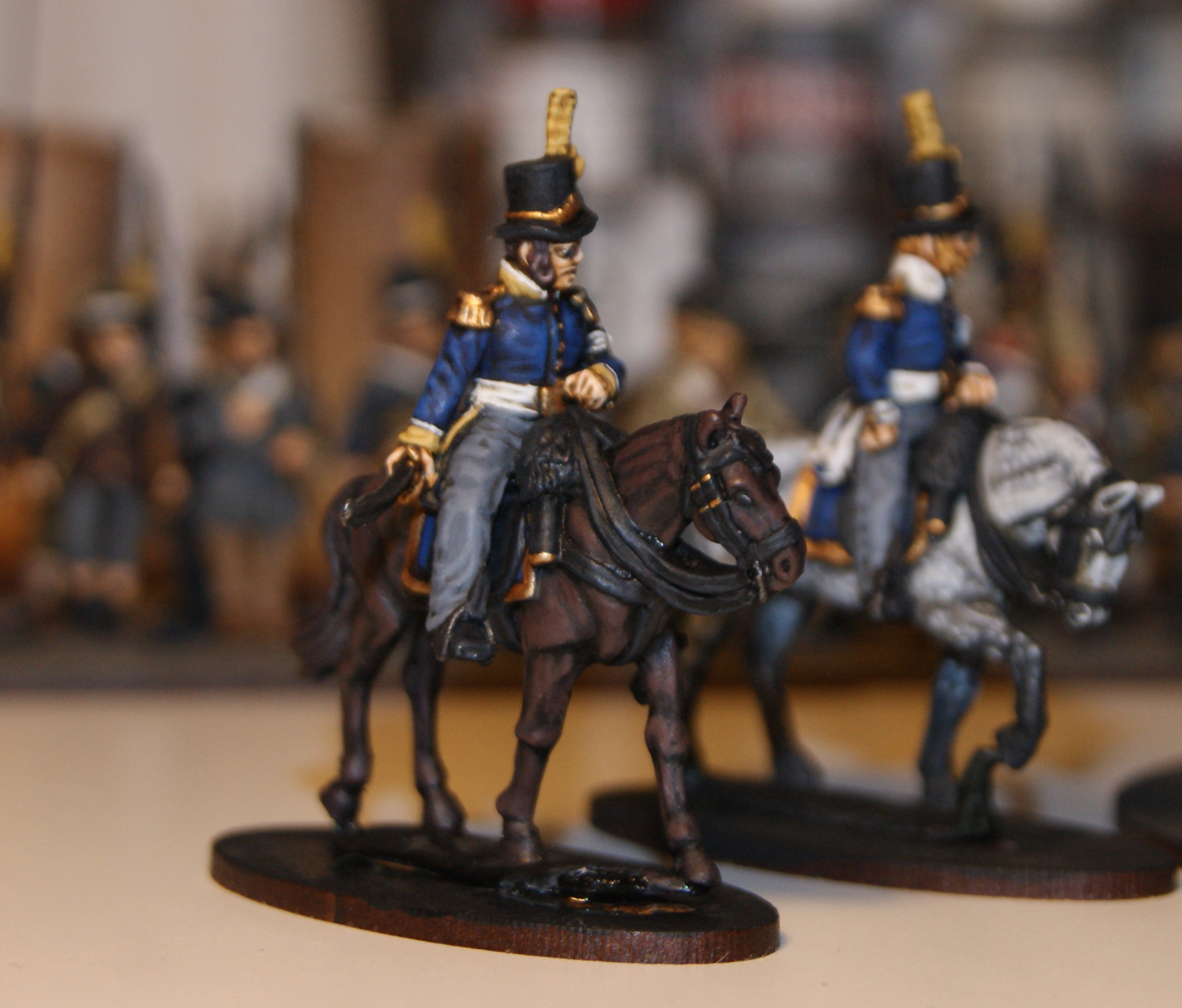
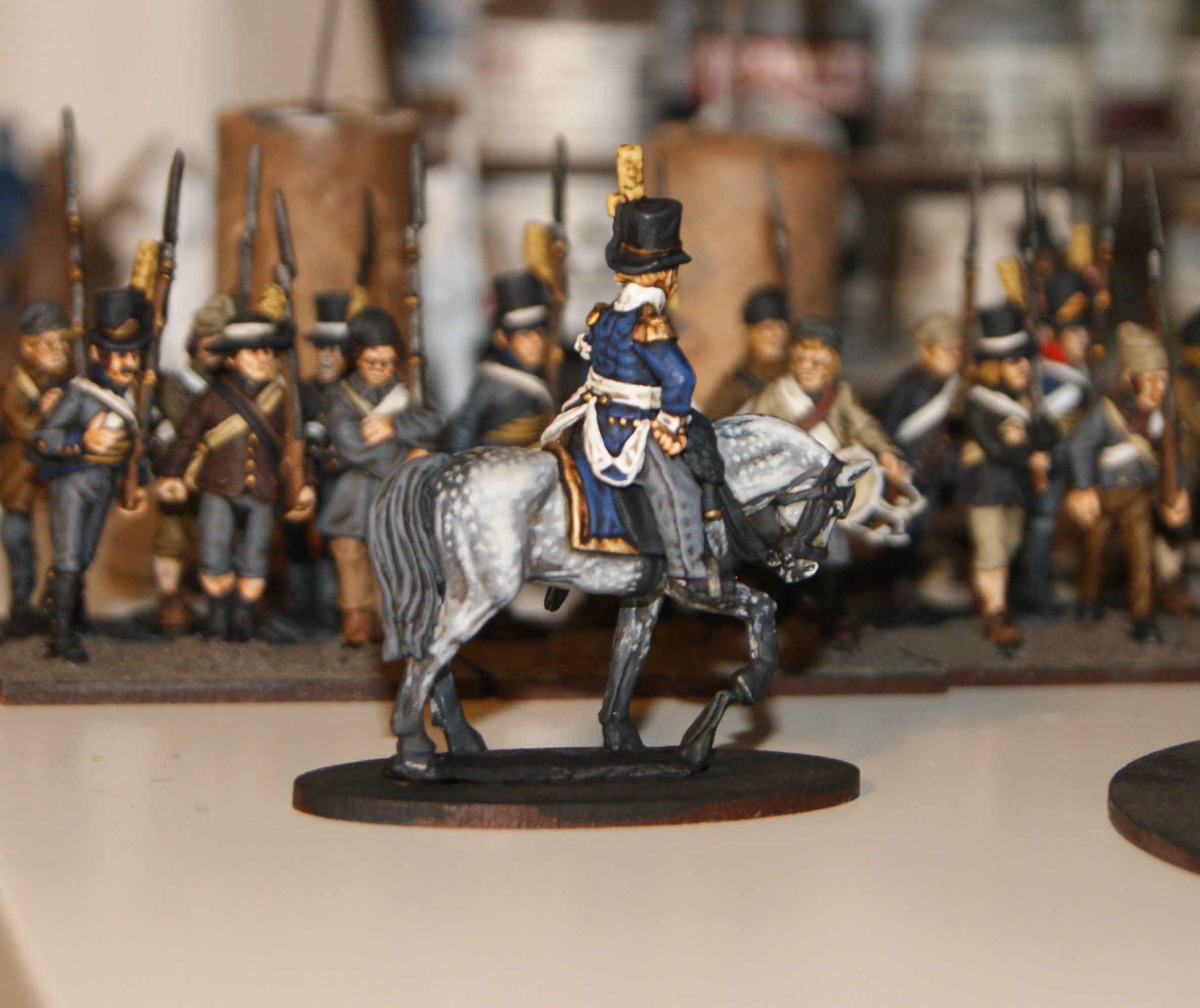
Just finished these colonels of the Västmanland and Hälsinge regiments. They will represent brigade commanders of the Swedish brigades at (for example) the battle of Oravais.
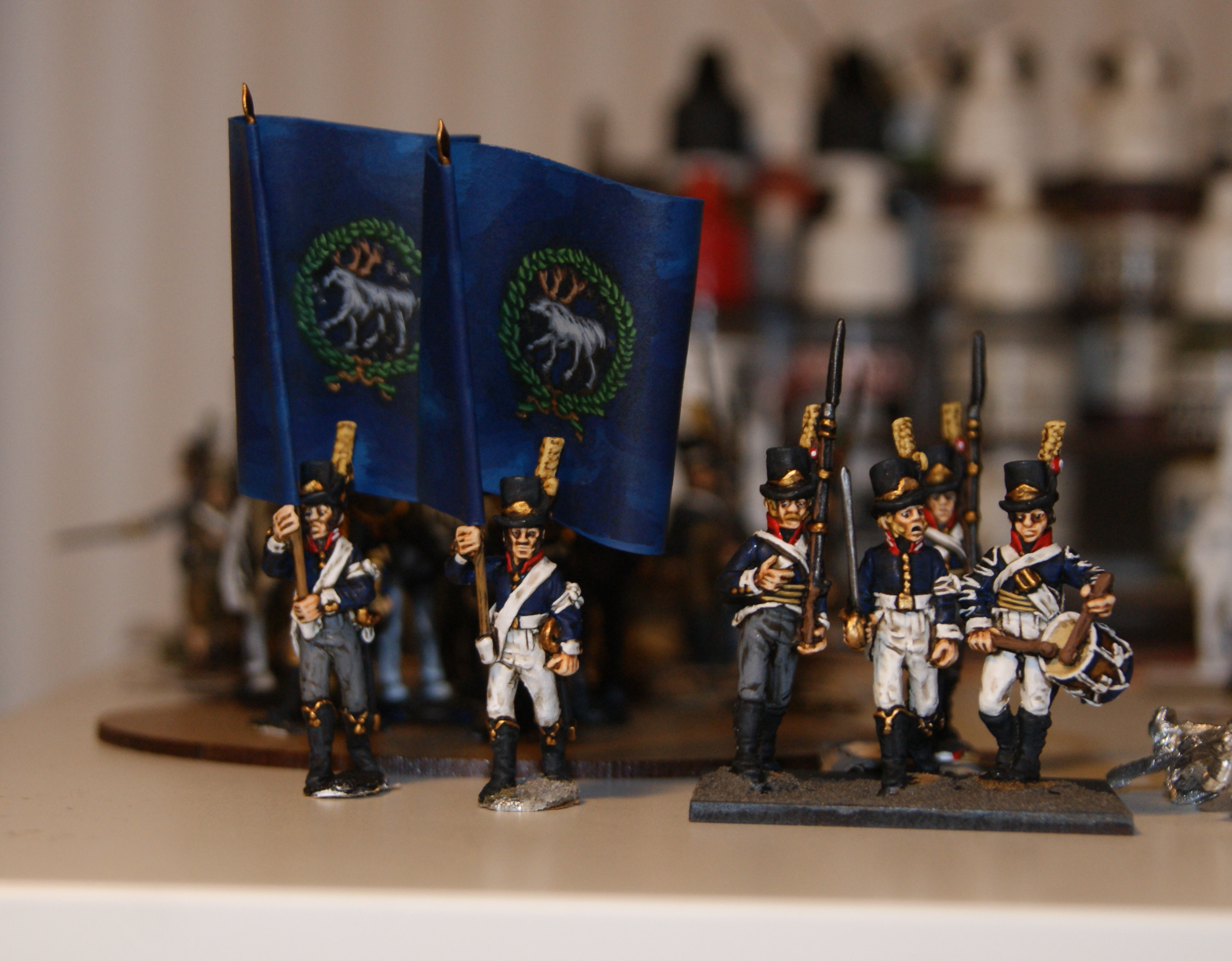
I recently added new flags to the second battalion of the Västerbotten regiment which I have now completed apart from the basing. These flags correspond better to the historical information that I have gathered. I managed to salvage the old flag, which I painted after the old 17th century model. It may come in handy one day, as I do indeed have some appropriate 17th century miniatures in my unpainted pile…
Ive been meaning to do this for a long time. As I make my own flags for my Swedish and Finnish figures for 1808, I thought that Itd be a nice thing to share these. Especially since these flags are not available from many commercial outlets, and those that are available do not necessarily have the correct details and do not cover all regiments. Below youll find a few flags I have done recently, the idea being that the collection will grow over time. Feel free to use them in any way you like. I suspect that it could work quite well if one were to adjust the size, and print them with a good color printer on standard printer paper. Then cut them out and mount them onto the figures with PVA glue as you would ready made flags from GMB (or any other maker).
Nyland dragoon regt., company colors (proposal, ca 1725).Västerbotten regt., company colors, model 1686BTavastehus regt., company colors, model 1766Björneborg regt., company colors, model 1686Swedish king’s colors model 1766.Nyland regiment, company colors, model 1766.Åbo regiment, company colors, model 1766.Hälsinge regiment, company colors model 1686 variant.
The flags are far from perfect, and I am afraid that the scans arent either. The 1766 king’s color has at least been updated with a better scan. For the rest of the regiments, Ill upload all the flags that I make as soon as I paint them.
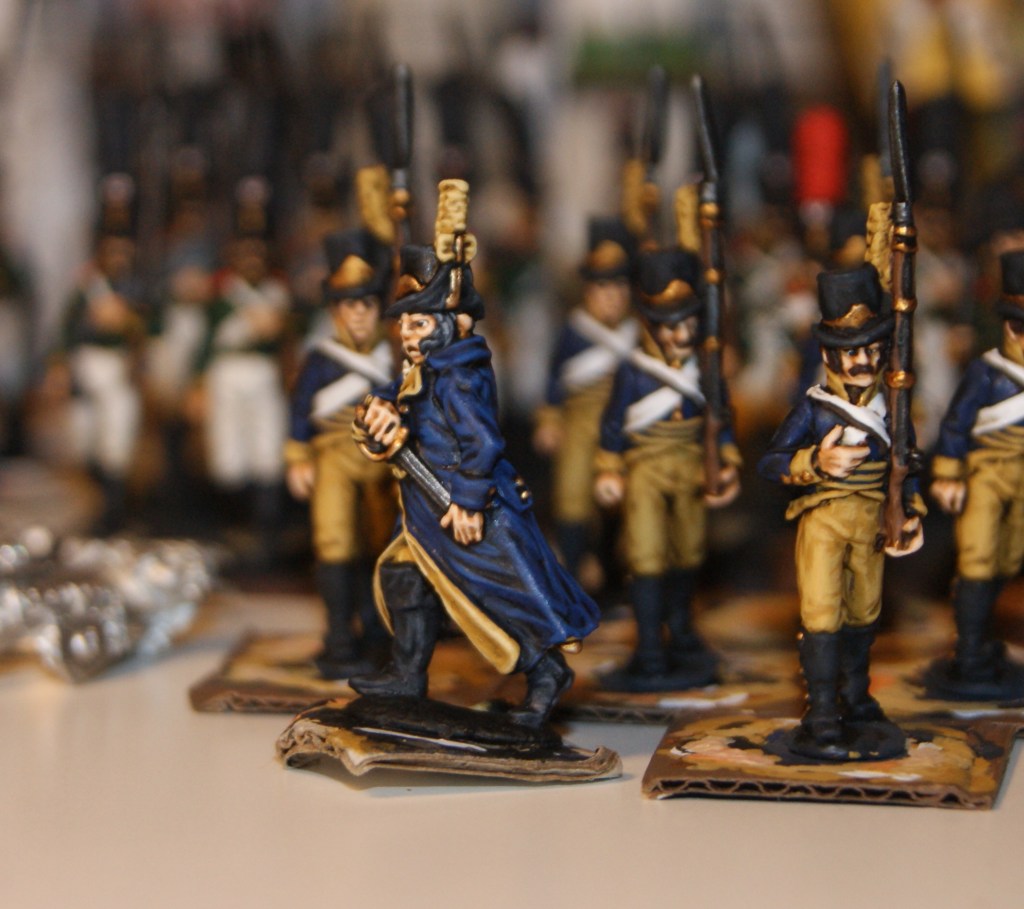
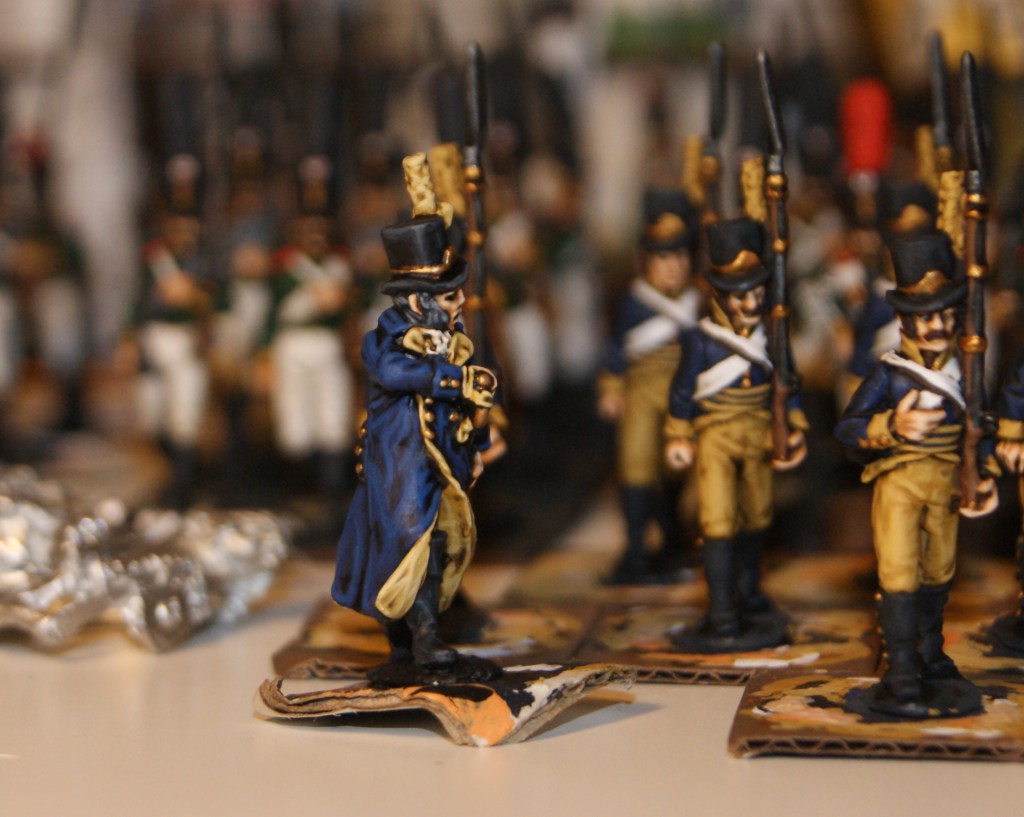
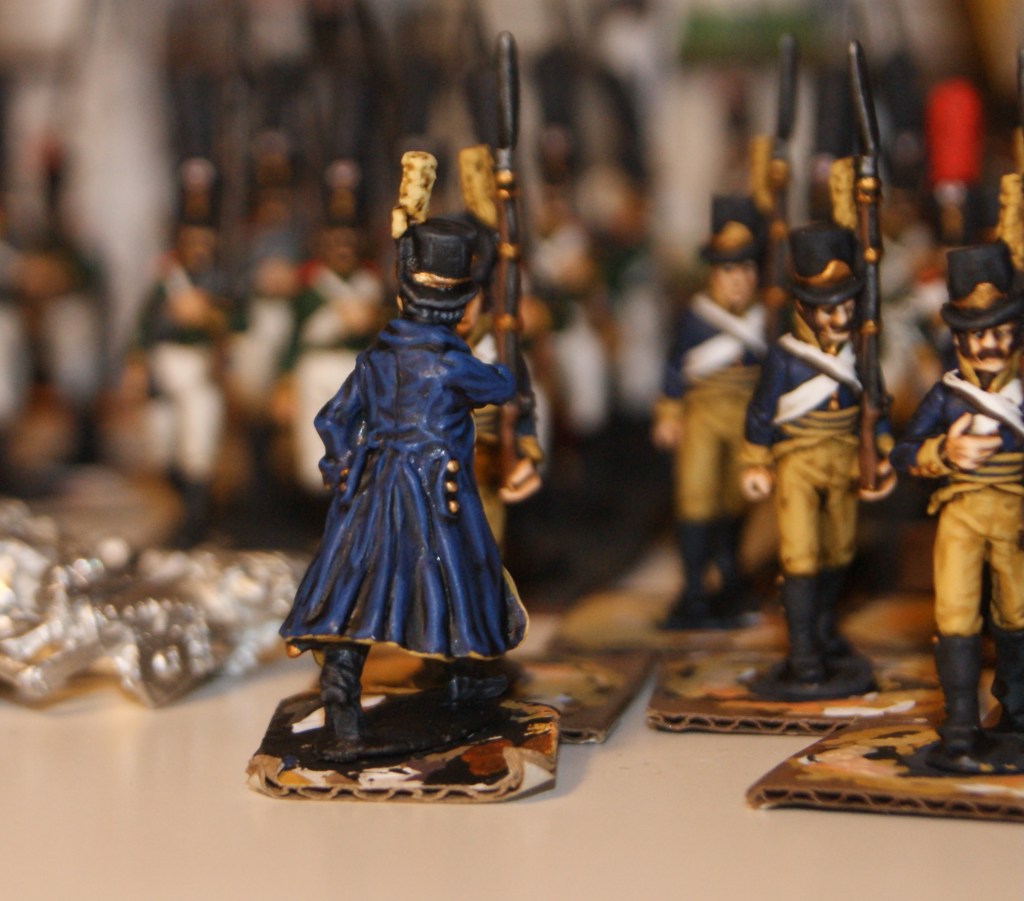
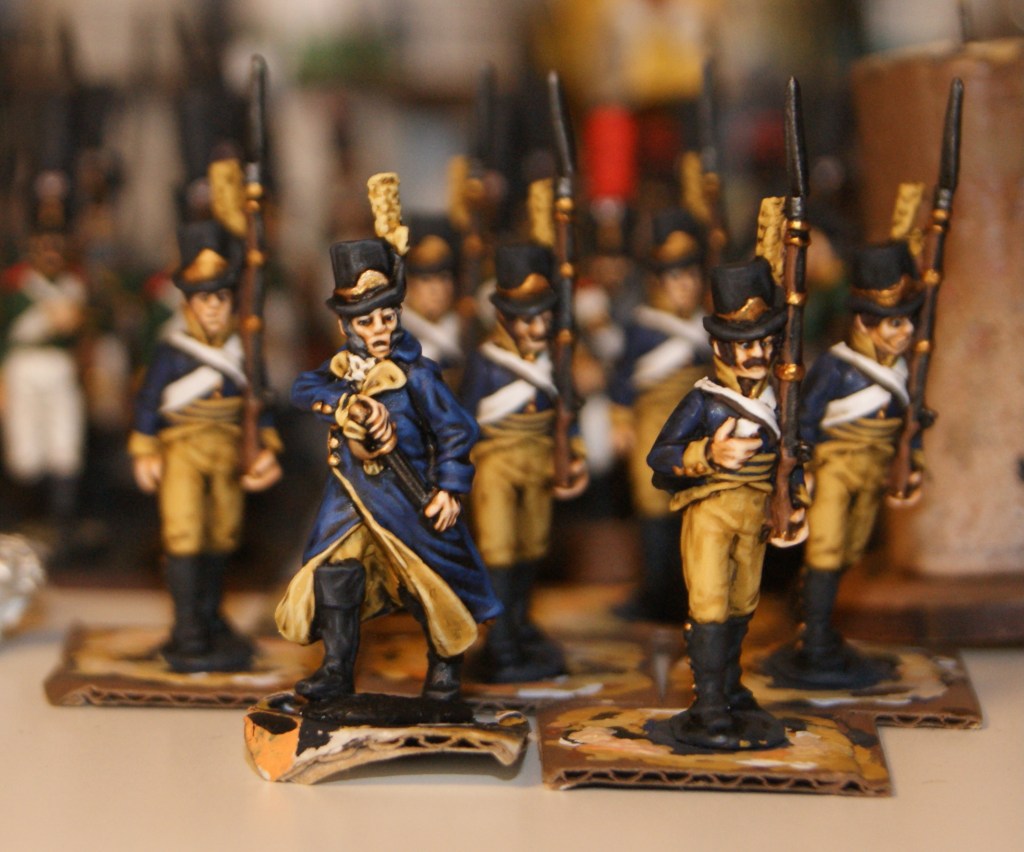
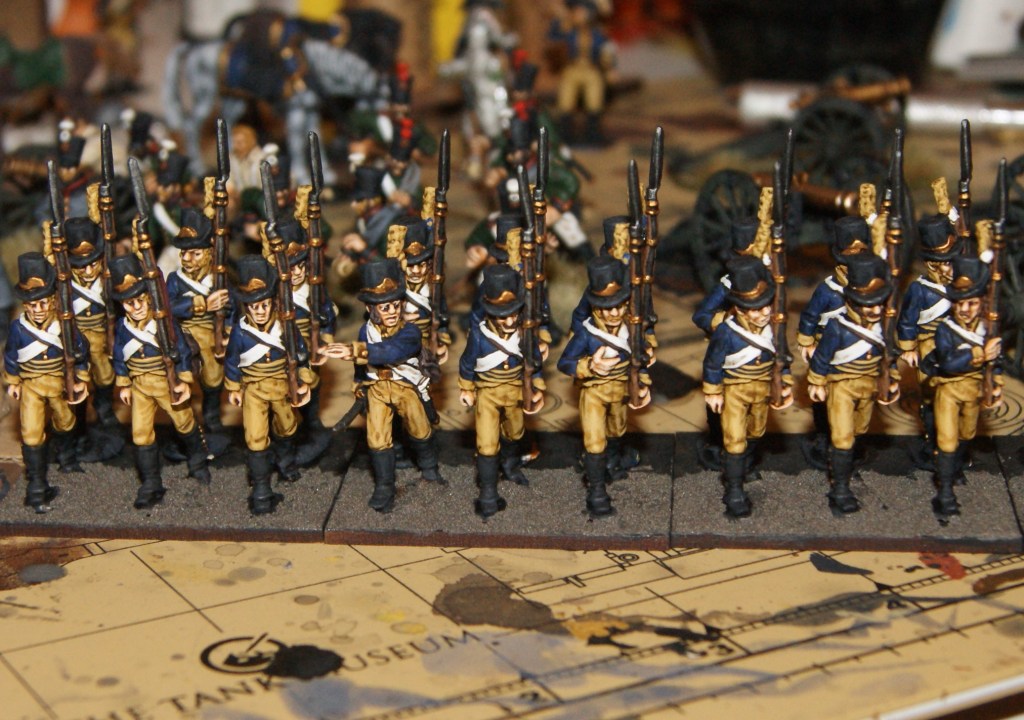
Moving forward with more troops for my 1808 Swedes. This is the last of the Finnish regular regiments. I will need one large battalion of 30 or 36 figures plus som skirmishers. Painting six at a time go is a good way of working away at large numbers of miniatures at a reasonable pace.
Having painted around 300 of these Perry Swedish infantry, I have found a few tricks to speed up painting. First, I try to let the shading wash do as much of the work as possible. Highlighting makes figures look better, but it takes time – there is a definite trade-off. So if there is anything that can be done to minimize highlighting, that will be necessary, especially for rank-and-file figures, such as these. At the same time, one does not want to omit those effects that really make the figures look good. My solution to this is to use highlights where they really make a difference, and to leave them out where they dont.
Areas such as the blue of the coat, the dark grey of the gaiters and boots, leather straps, dark leather of the shoulder bag, dark hair, and also the musket wood and all metal fittings, buttons etc, work pretty well without further highlighting. When batch painting, I also do all of one batch with the same color of the hair. Next batch will have light hair!
As for the metal parts, I used to paint these black before painting in the metal color. Ive found that this step is unnecessary if you shade them with a wash as dark as AP strong tone, which is the one I use. For gun metal/steel, I mix the metal color with black. I also add one highlight to the steel of the musket. This is because I actually leave the top of the bayonet unpainted until the last moment. This is simply because I need to hold the figure, putting my finger on top of the bayonet while painting, which will inevitably lead to paint chipping off. So, better to leave that and do it at the very end, so that I dont have to re-paint the bayonet on every figure.
Yellow is a color that really needs highlights to look good, and on these particular figures, that means a large part of the clothing! The skin of the face and hands also look a lot better with highlights and they give the figures a great deal of their character. The black of the hat is also highlighted, as are the light patches on the shoulder bag. Over time, I have tried and tested which areas can do without highlighting, and which cant, but its still a learning process. On these Perry figures, I also paint the eyes, which I dont normally do on their counterparts, the Brigade Games Russians. This is because of how the figures are scuplted. On the BG figures the eyes are pretty much in shade by the hat, but also very difficult to get right. The conclusion is that painting the eyes on them is just not worth the effort The Perry minis have very well sculpted eyes which are extremely easy to paint. Painting the eyes on these six figures probably took less than five minutes. In many cases, the eyes, just like skin tones, contribute much to the overall character of the figures – but that is not always the case.
Model drawing for the uniform model 1802 of the Österbotten regt. The plastron was later removed (presumably) so that the coat only had one row of buttons by the time of the war of 1808. In contrast to the Swedish regiments, Österbotten seems to have kept their disinctive yellow trousers (described by Ljunggren at the time). Perhaps they were somewhat less difficult to keep clean than the white trousers the Swedish regiments used.
Quick painting guide:
After cleaning with a knife, I first primed the figures with Army painter’s (AP) Leather Brown (spray can). The base colors were then painted in. Areas of flesh were painted with Vallejo (Va) Dark Sand before painting the flesh color (it does not cover well). Over the base colors, a wash of AP strong tone was applied. I diluted it somewhat with water over the trousers. After highlighting, the figures were varnished with Winsor & Newton’s Galeria Matt Varnish.
Base colors (with highlights) were as follows:
Coat: Coat d’arms (Cda) Royal Blue
Trousers and facings: Va Gold Brown (highlight 1: Gold Brown; highlight 2: Gold Brown+White)
Gaiters and boots: Va Black Grey
Hat: Black (highlight 1: Black+Black Grey; highlight 2: Black Grey)
























 Pancratist