Petrovsk regiment – converting Warlord plastics for the 1808 campaign

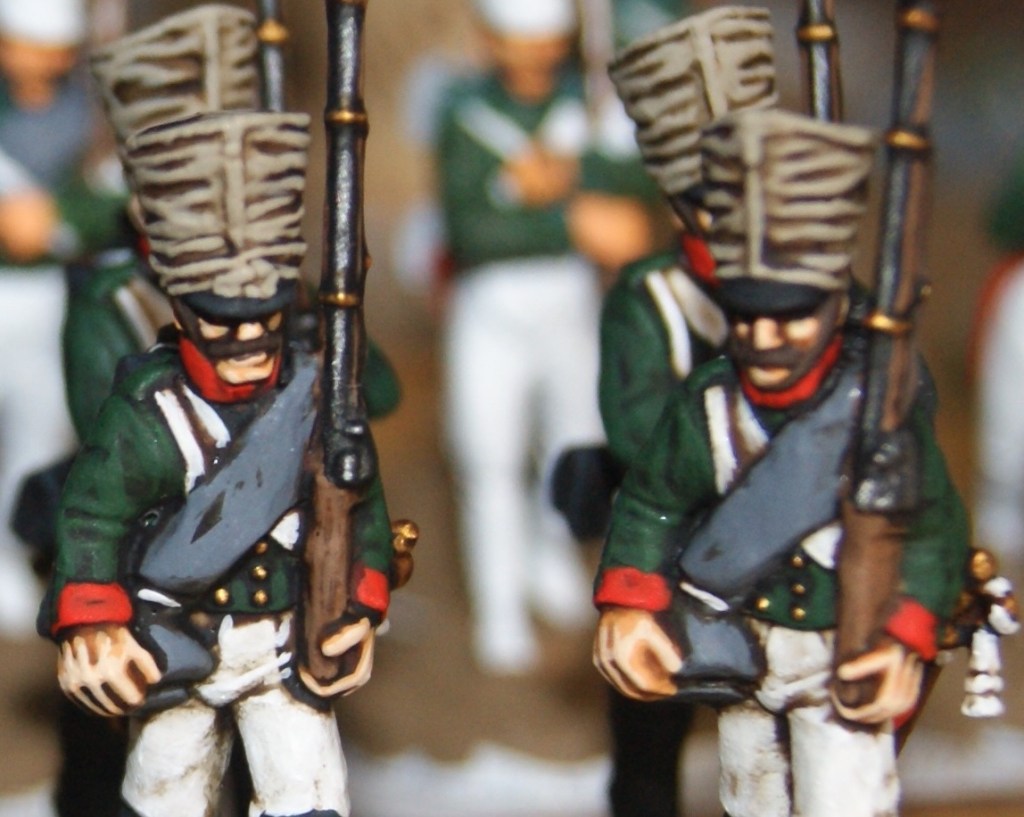
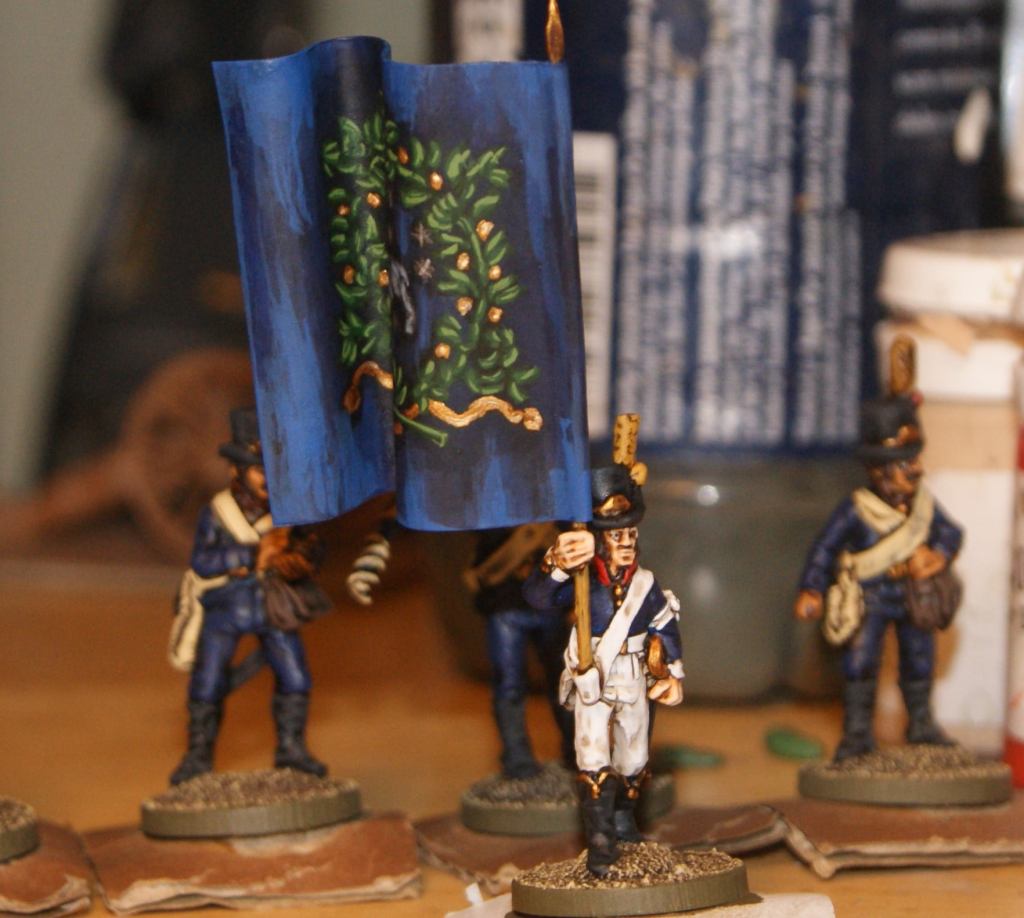
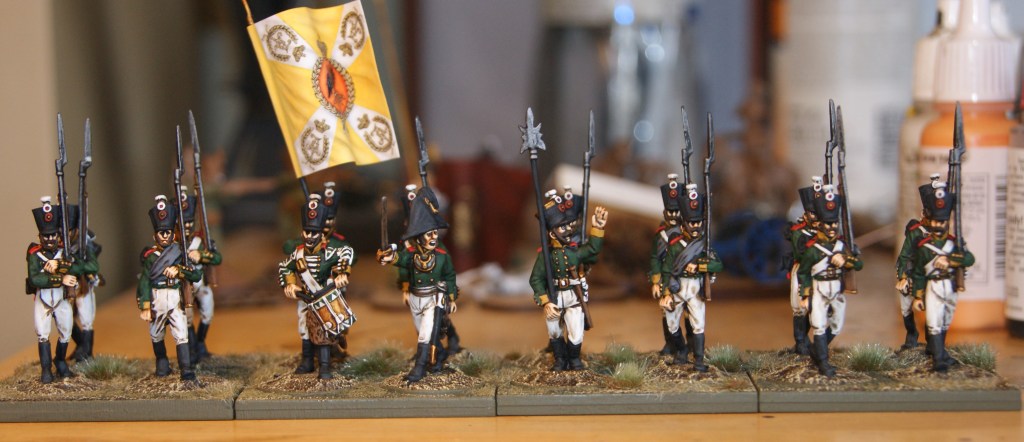
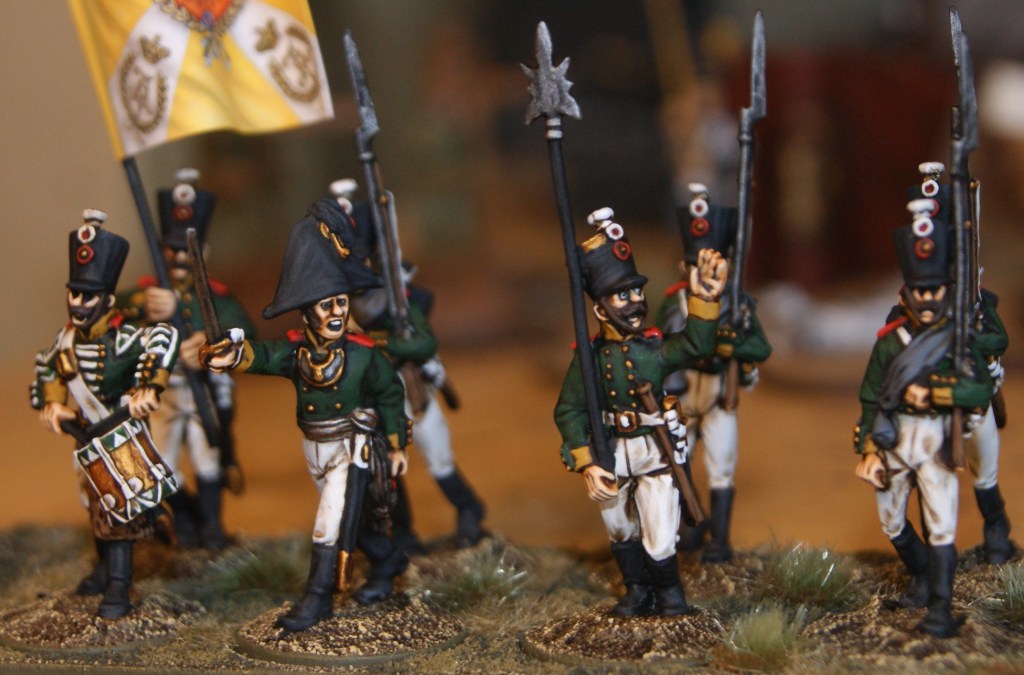
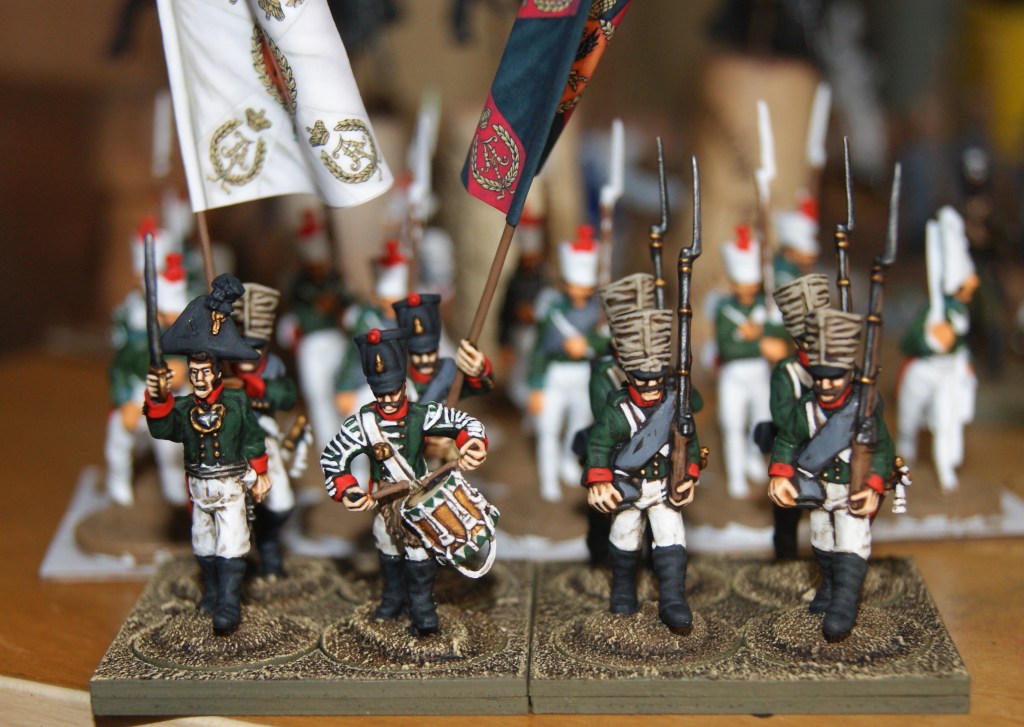
These are some figures from Warlord Games’ plastic Russian Napoleonic Line Infantry 1809–1814 set. As Warlord advertise, they are sculpted with the 1809 style uniform. I am painting my Russians to fit the 1808 campaign in Russia. So can the Warlord plastics be used for this campaign? Yes and no. At the time of the Finnish war, the Russian uniforms and equipment were changing. Basically, they were still in the model 1805 uniform, as seen in other posts featuring the Brigade Games minis, but they had dropped the waist belt and queue (“pig tail” hair style).

The Warlord set is slightly different from the Brigade Games figures in three important aspects: the shako, the belts, and the backpack. To be 100% historically accurate, you would need to do quite a few modifications to the Warlord figures. I have made these as a compromise, doing some simple changes to make the Warlord figures work better for 1808, although purists would perhaps disapprove!

Shakos

The Shako on the Warlord figures is the reinforced shako which was just coming into use in 1808. This has leather reinforcing bands around the top and bottom as well as diagonally across the shako. The shako also features a grenade badge on the front, which was also new at the time. Before that, the shako had a round cockade on the front instead, as seen clearly on the Brigade minis. Most problematic are the attached white cords which hang from the shako. These were only used from 1809 onwards. Fortunately, the grenadier shakos in the Warlord set do not have any cords (unclear why?) so these can be used, and the plume is easily removed if you want to do regular musketeers as I have done. I have also used the heads with shako covers. Shako covers were not officially issued to Russian troops until later in the Napoleonic wars, but improvised covers may have been used to some extent. It does seem to me to be a very reasonable thing to do, as the weather in Finland was terrible at times, and the shakos quite flimsy. That was indeed the reason why the reinforced bands were added. So in my view, having a few musketeers with shako covers is quite OK even for 1808. Of course, you could also remove the grenade badge and green-stuff a round cockade in place of it instead.

Belts
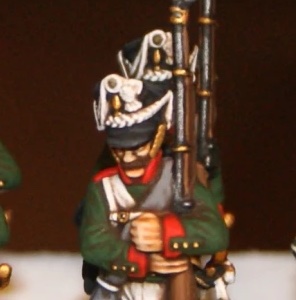
In 1809, the Russians started wearing cross-belts which tie the backpack straps together across the chest and distribute the load. The Warlord figures are sculpted with this detail, but it can be easily removed with a knife. On some of the figures it may be a good idea to fill in with some green-stuff or something like that, but that is also quite easily done.

Backpacks (the difficult bit…)
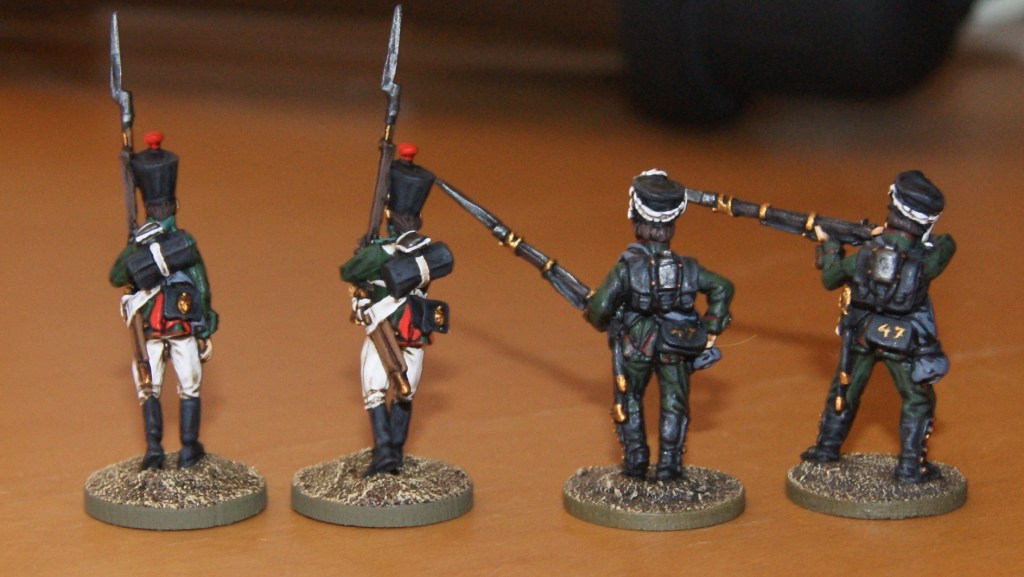
Brigade Games musketeers on the left, with cylindrical packs. Perry 1812 jägers with new square backpacks on the right.

Lastly, we come to the backpacks. In the summer of 1808, the Russian army started to issue square-shaped backpacks. Before that, they used a cylindrical pack carried diagonally on the back. This looks completely different to the newer version. Most Napoleonic figures available (such as Perry, Front Rank, Foundry, Warlord, etc.) have the new backpack. The Brigade Games figures do have the old style backpack, and so does the old Casting Room range sold by Foundry. Despite the fact that the new backpacks were regulation issue from mid 1808, few, if any, Russian troops in Finland would probably have worn them. Most of the regiments had been on the march from the early spring, although some also arrived as reinforcements later on (including my example, Petrovsk, if I am not mistaken). So, to be perfectly correct, the Warlord figures should have their backpacks removed and exchanged with cylindrical ones. I havent tried this yet, maybe I will in the future. However, I do feel that converting a whole units’ worth of figures in this way may just be unrealistically laborious.

Soon after writing this post, I did try to make a cylindrical backpack out of green stuff. I am not good at modelling green stuff. I struggled for an hour or so, but was not pleased with the result. And to do that 100 times over? No thanks…
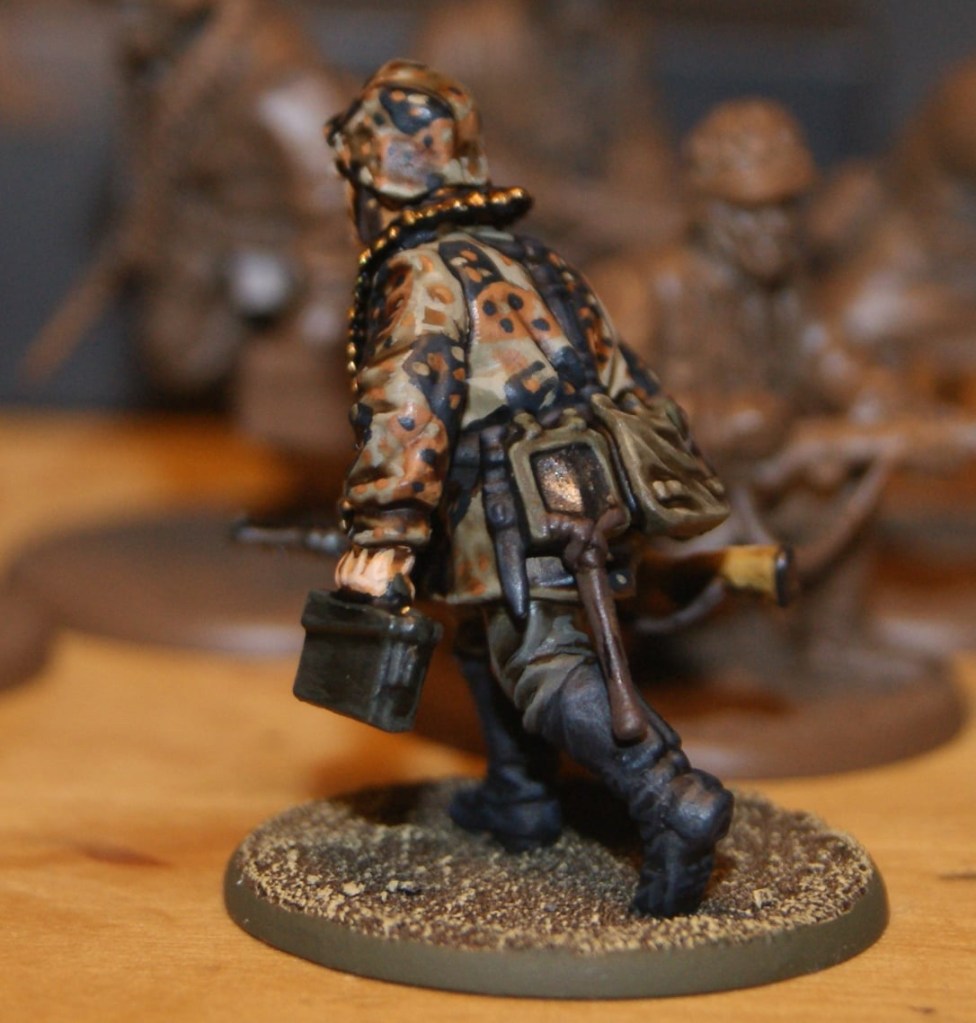
Some more Germans

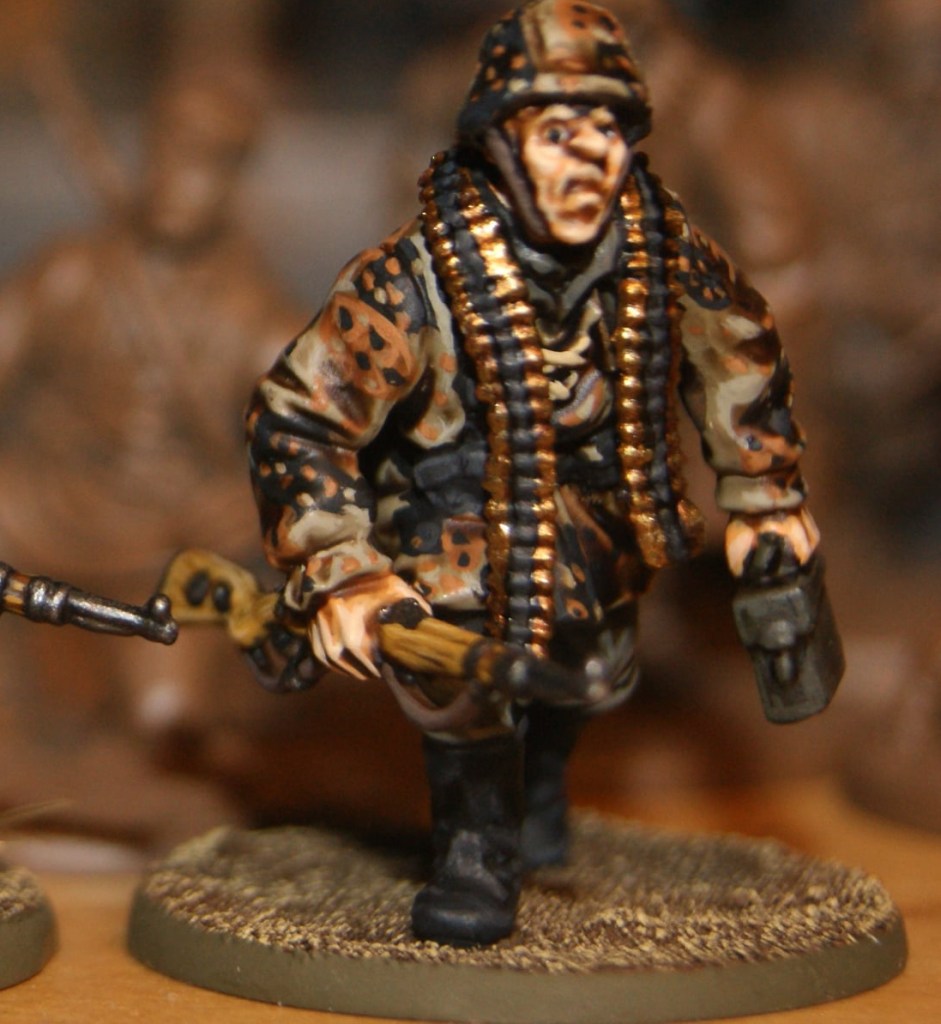
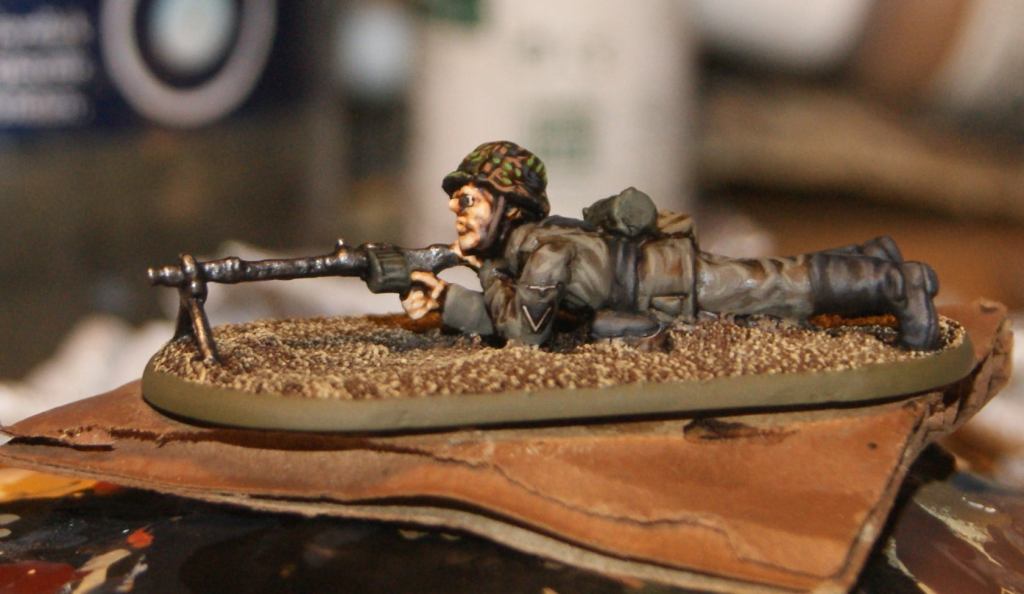
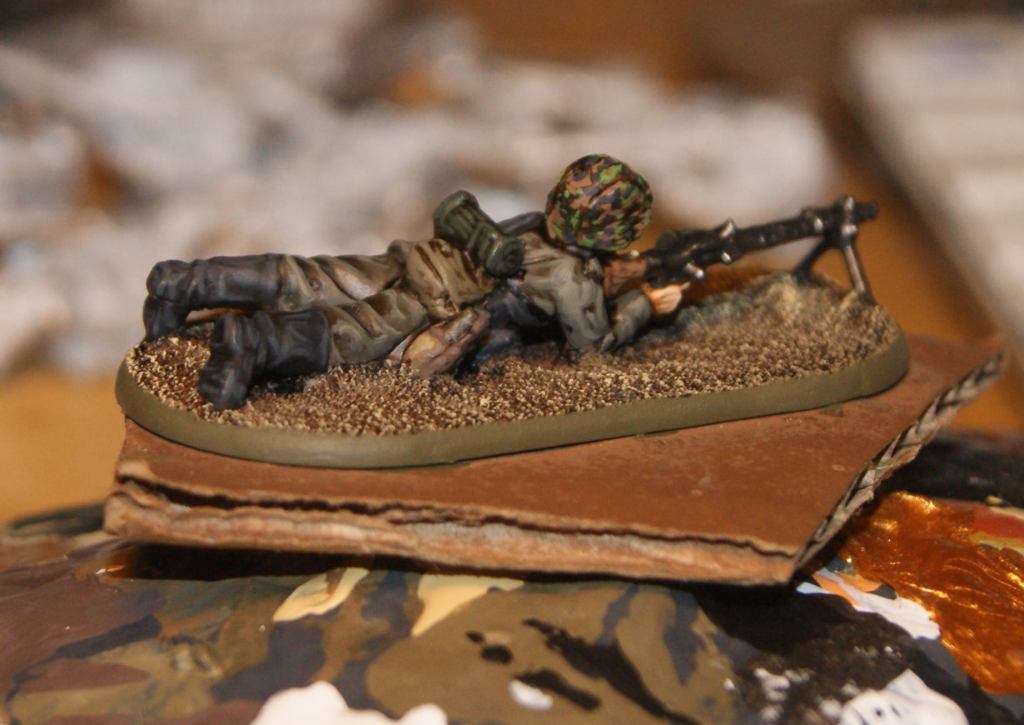
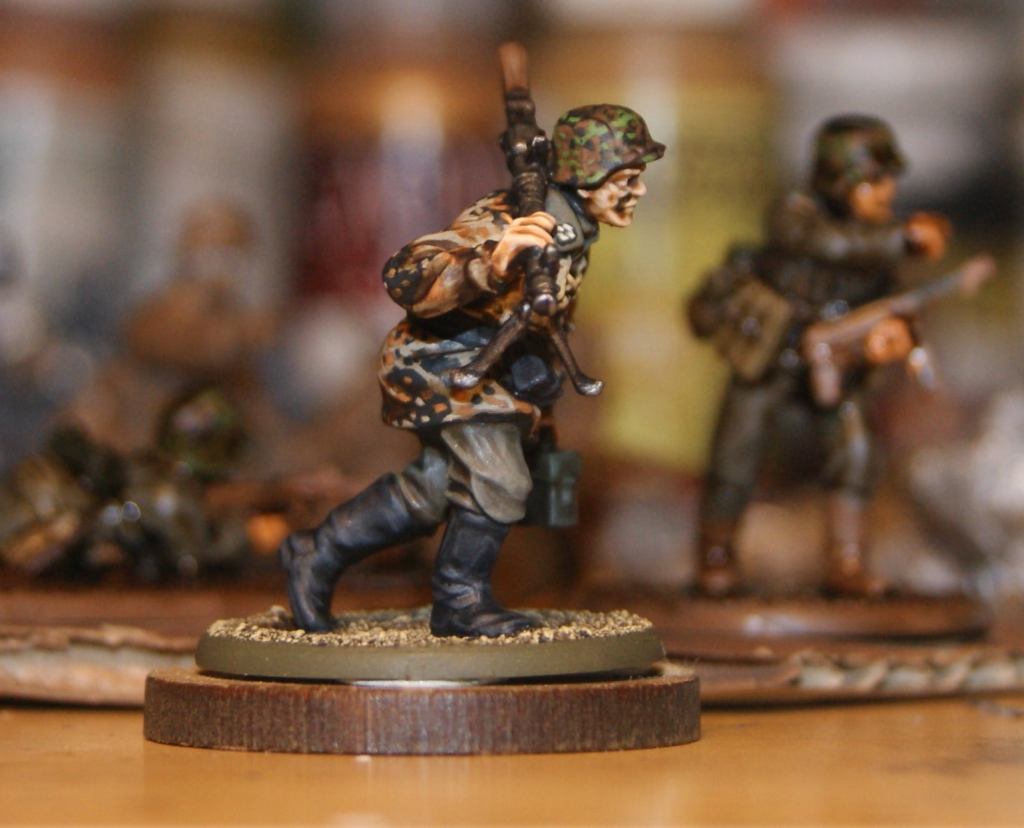
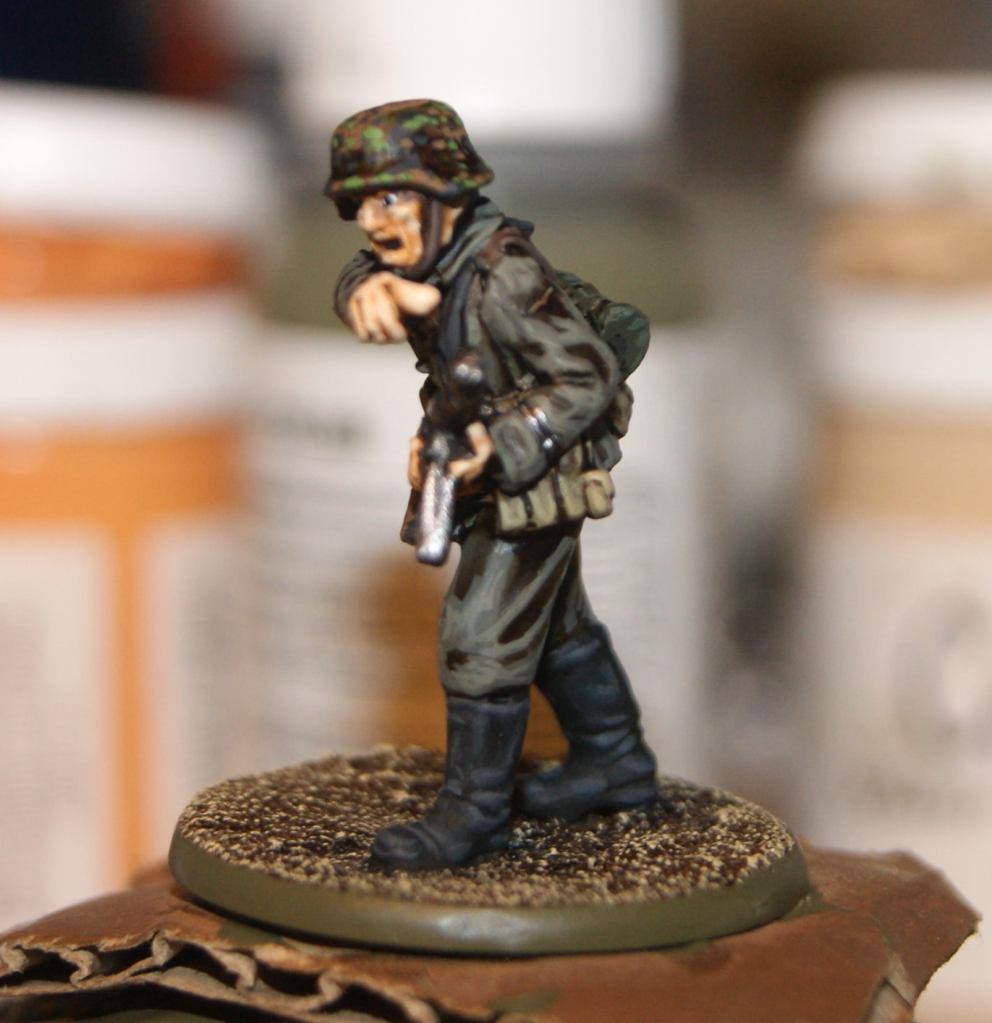
These are a few more additions to my slowly growing Kursk project. The figures are slightly modified Warlord and Perry miniatures. The Perry figures are from the Afrika Korps range, but I replaced the heads and boots with Warlord pieces. One nice detail on the Afrika Korps minis is that the MGs have the round magazine fitted rather than a belt. The magazine would have been used quite often, especially by panzer grenadiers and other troops who MGs offensively, but miniature makers seem to prefer the belt-fed set up.

I now have 10 of these fully painted and 10-15 more modelled and primed, but I am in no rush.

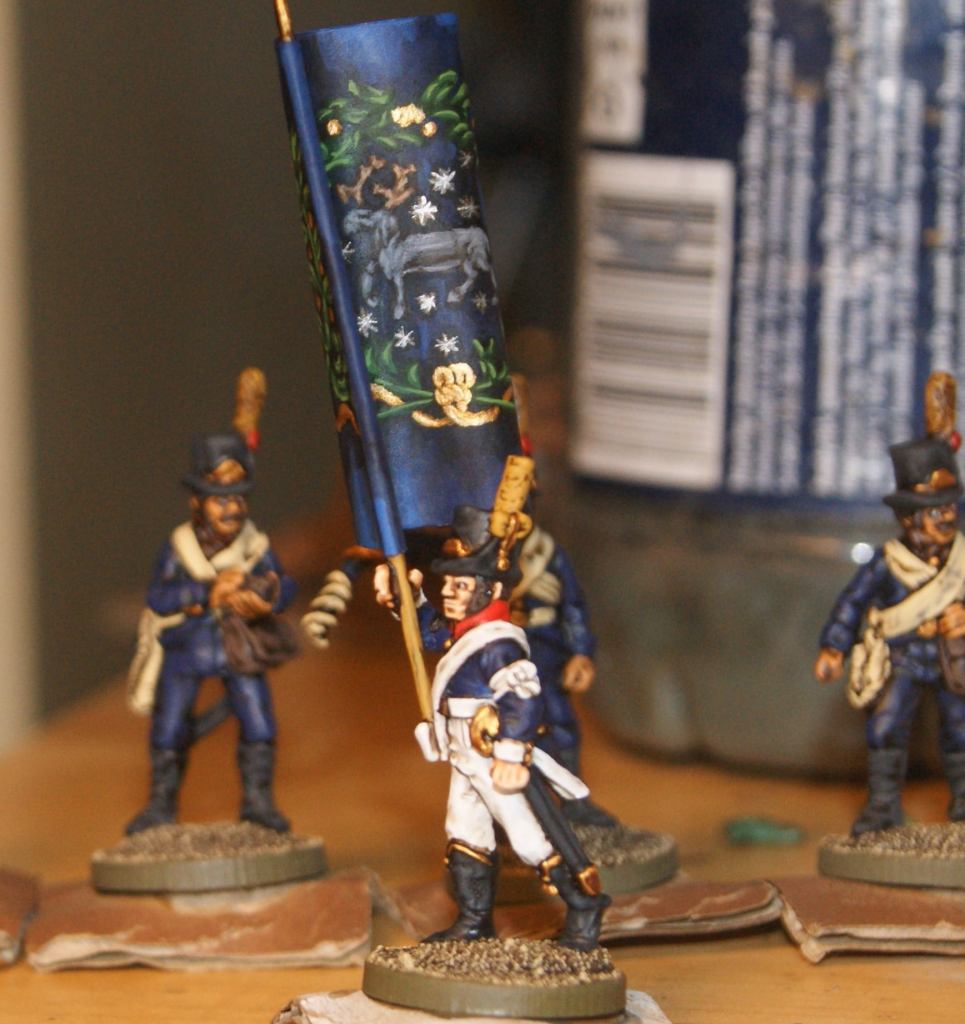
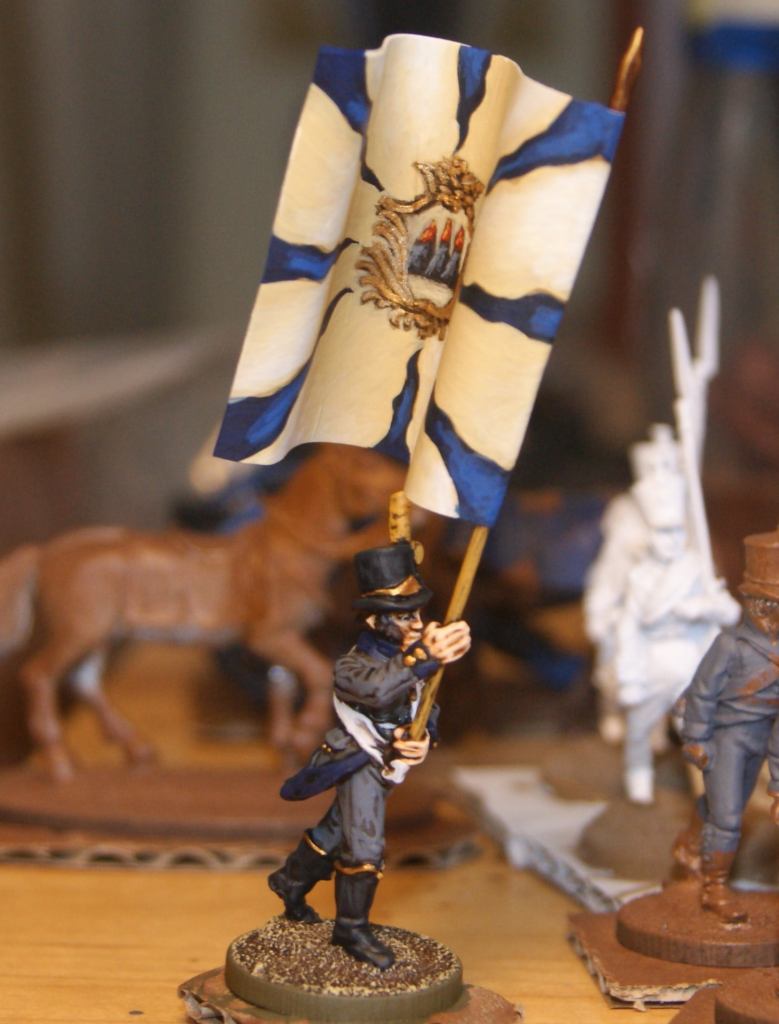
Västmanland and Västerbotten regimental colors

I recently painted up the flags for these two regiments, but I have’nt yet painted the actual foot soldiers. The Västerbotten flag is of the 1686 model, the Västmanland flag is model 1766. The Västerbotten regiment (1st btn) was the only Swedish infantry regiment present in Finland at the outbreak of the war (not counting the regiments garrisoned at Sveaborg fortress, which surrendered in the late spring despite being quite intact and having suffered minimal losses). It participated at Virta bro, Pulkkila, Alavo, Ruona-Salmi and Oravais. In 1809 the second battalion defended Lejonströmsbron in the regiment’s home county of Västerbotten.

Since I did these I have also realized that the Västmanland regiment (with the flaming mountains in the flag!) probably did not wear the grey 1807 uniform in 1808 – they received it only in 1809 or so. That means that their uniform was in fact blue with yellow facings (piped white) and yellow trousers and not grey/blue as I have painted this ensign. But those are also nice colors!

Sevsk regiment 1808

Just a few musketeers of the Sevsk regiment. I am working on some more of these, including grenadiers (with their huge busch-plumes!), but havent been able to paint very much lately due to work. I really need to paint 4-5 units worth of Russian infantry as soon as possible, so am slightly depressed that things are moving so slowly…

Russian commanders

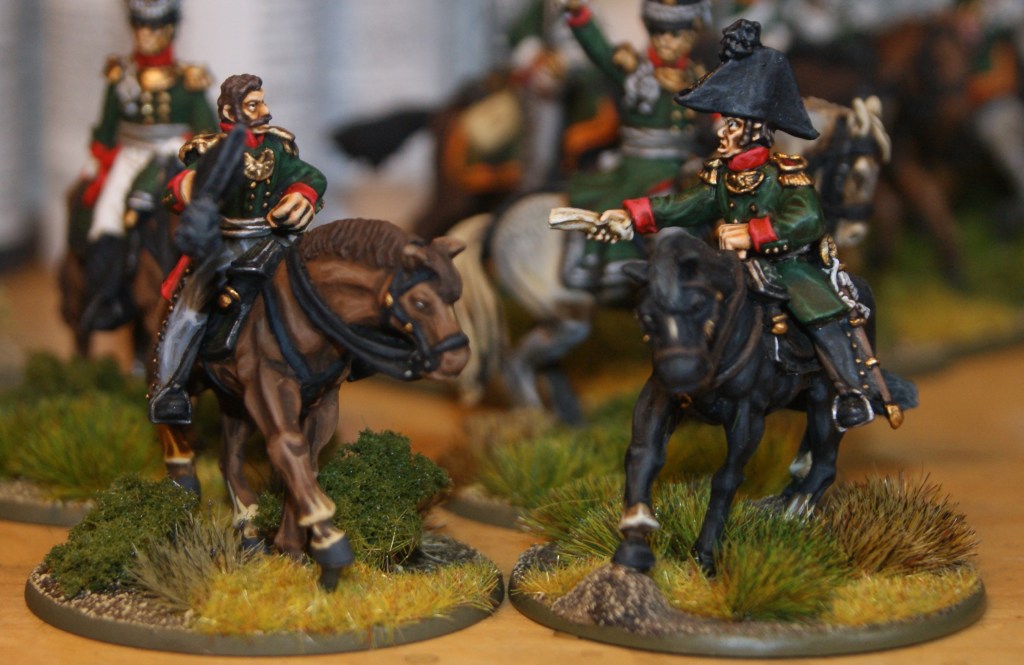
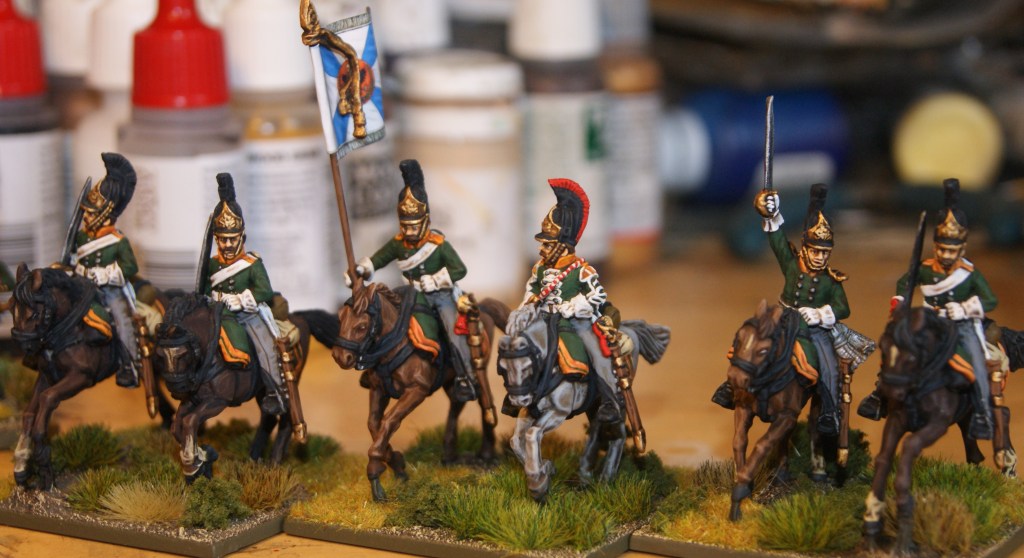
These are Russian generals by Warlord Games. They are very nice figures, just a shame they didnt bother to sculpt different horses – there are various head and arm options, but only one horse to choose from. As far as I know these are compatible with both the 1808-1809 and 1812 campaigns, or even later.

1808 Russians

Actually, they are more like 1805 Russians, but this uniform version is very nice. And they are great sculpts by Paul Hicks, available from Brigade Games (formerly they were sold by Victrix). I have painted them as the Velikiye Luki regt. but the facing colors on the Asov regt. are very close (“straw” instead of yellow, whatever that means), so they can be used to represent them too. That’s a good thing as both regts. were active in the Finnish campaign. These are of course meant as opponents of the Swedish/Finnish that I have shown in other posts!

Georg Carl von Döbeln

This is my interpretation of the most famous Swedish personality of the Finnish war of 1808, colonel Georg Carl von Döbeln. He was a brigade commander and won important victories at Lappo and Jutas among other battles. Famously, Döbeln had an old injury to his forehead which never healed. For that reason he always wore a black band around his head as you can see. Many pictures of him portray him as a general, but at these battles he was still a colonel. I have painted him in a grey and blue uniform, as I think he would have worn the uniform of the Åbo regiment at this time. The figure was converted from Foundry’s Austrian Archduke Charles miniature with some knife work and a little green stuff.

Swedish general for 1808

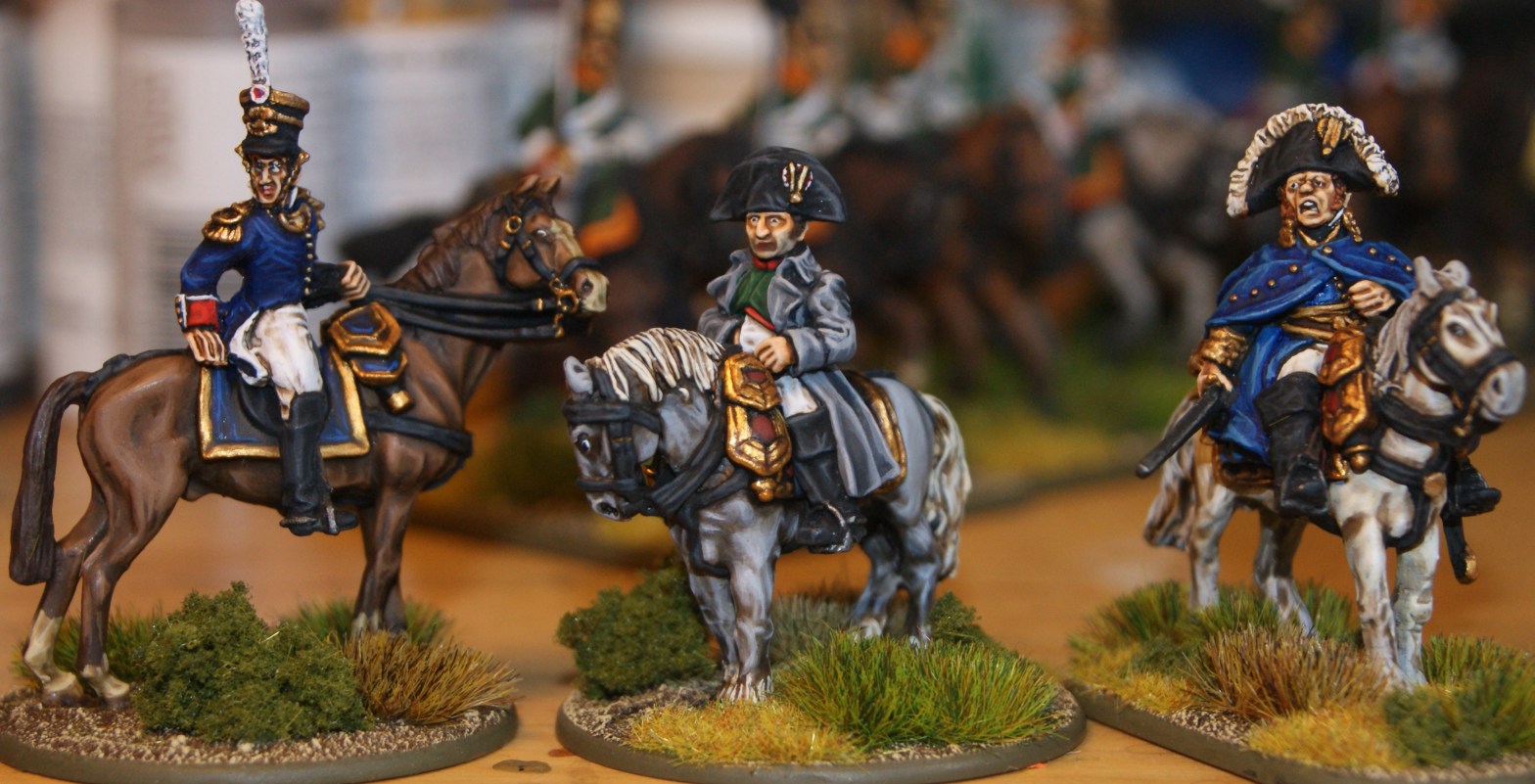
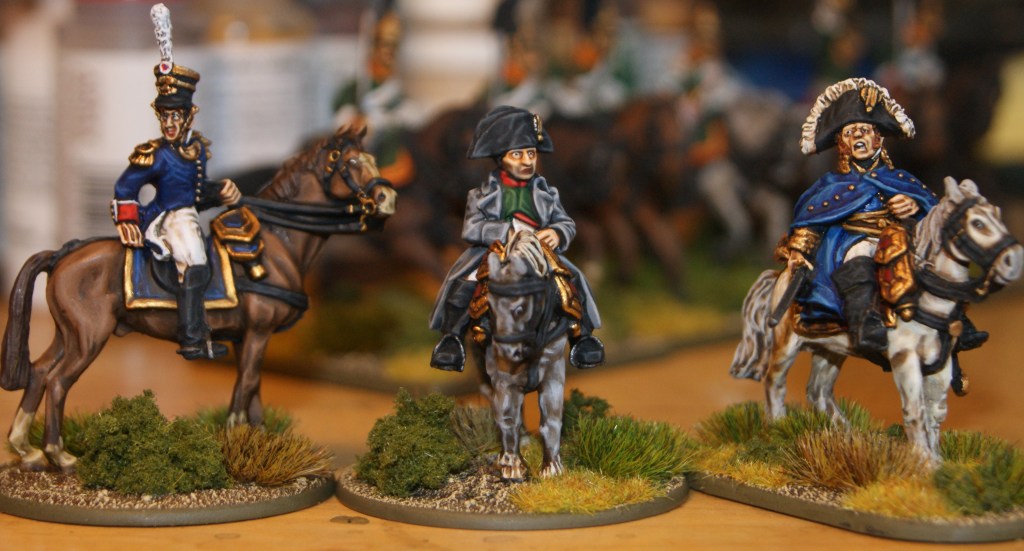
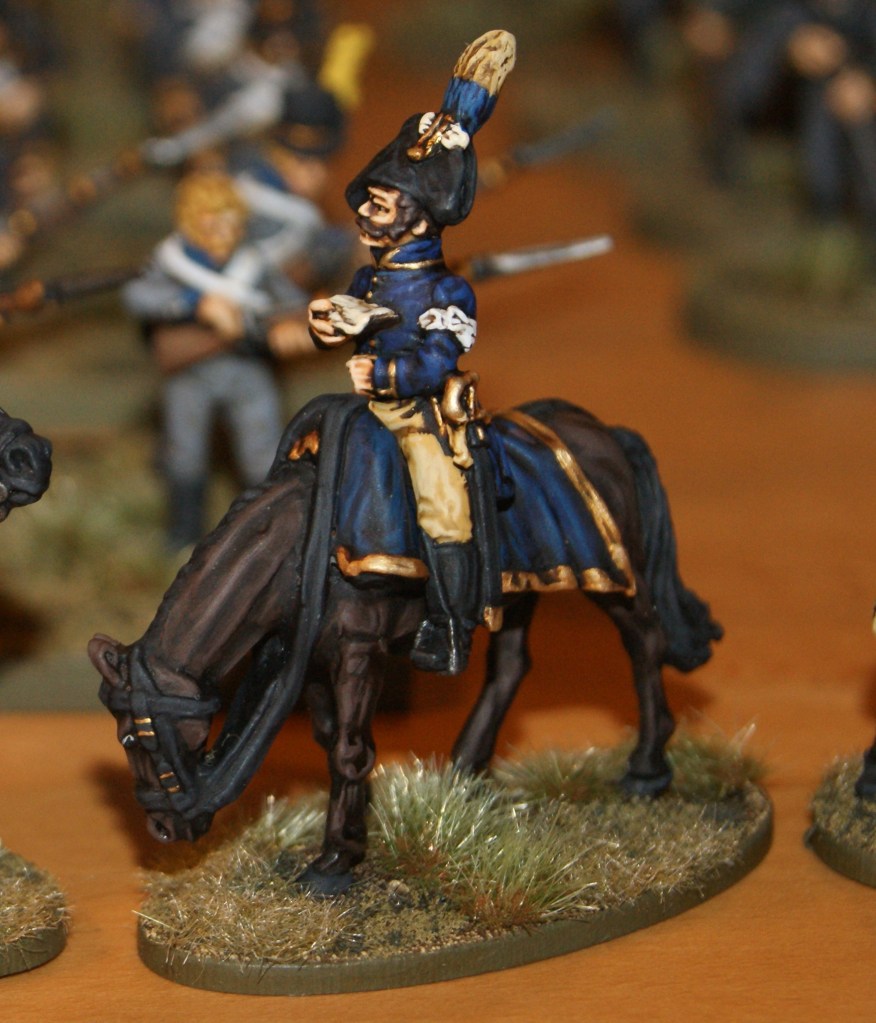
This figure was converted from a Bavarian colonel made by Perry and the head of a Swedish dragoon officer. The horse is from a set of British generals. I think it looks similar enough to the model 1801 uniform which Swedish generals wore at the time.