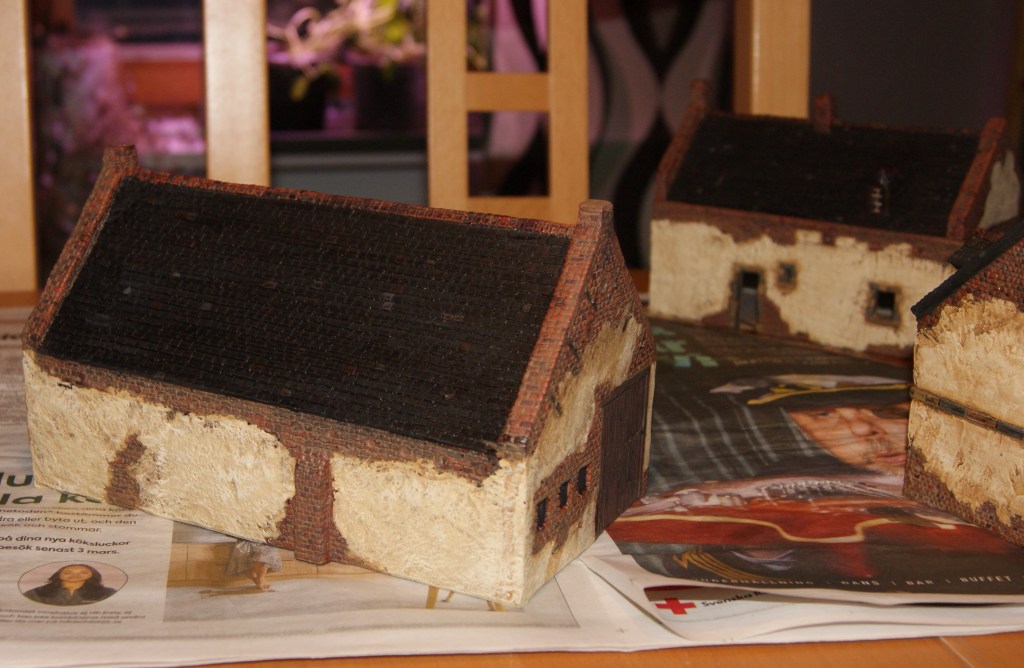
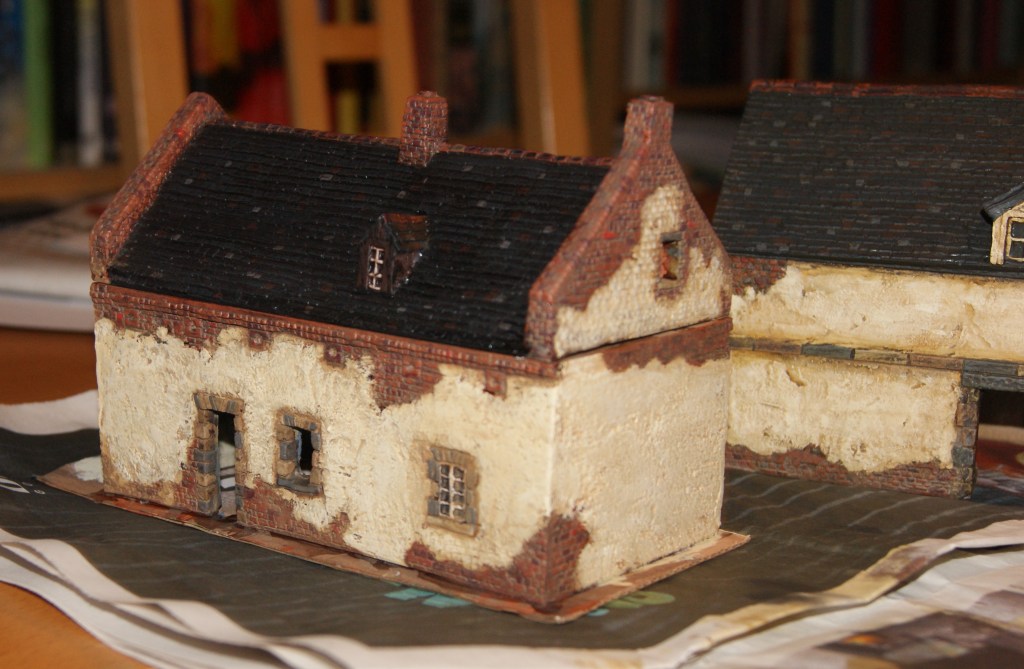
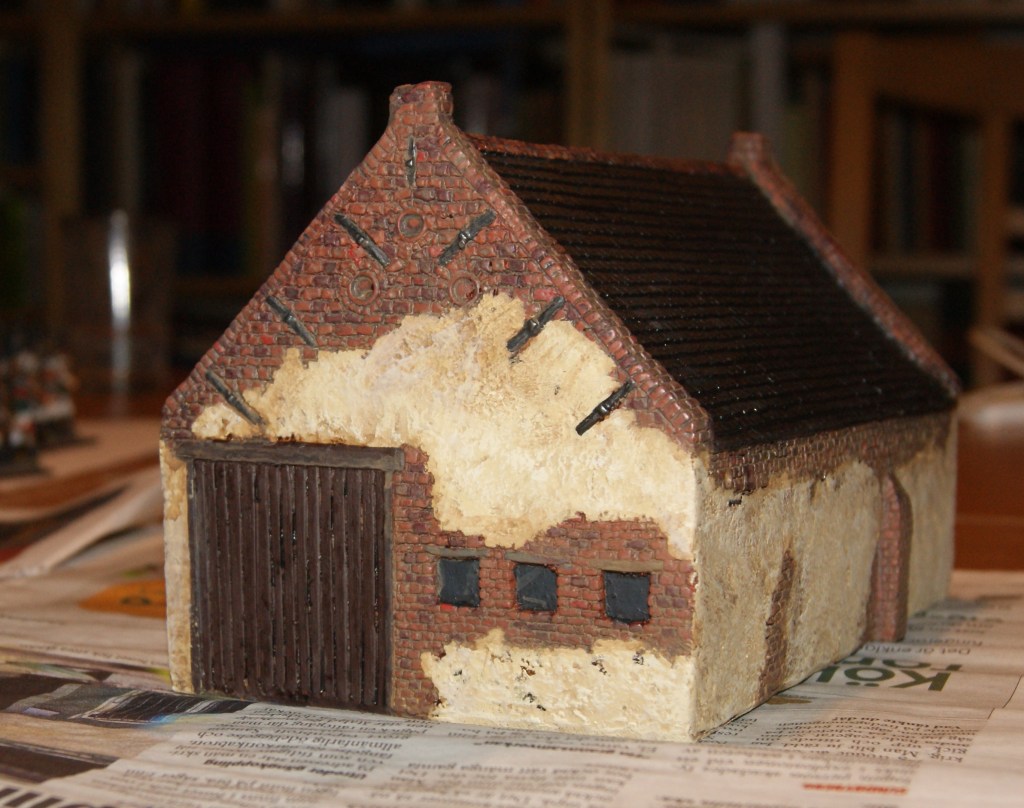
Some recent paint work, a few Belgian farm houses by Hovels model buildings. Excellent detail on these resin models, and a somewhat underappreciated maker. Prices are as low as mdf, which in itself is remarkable.



Dedicated to the fine art of historical miniature painting
Some recent paint work, a few Belgian farm houses by Hovels model buildings. Excellent detail on these resin models, and a somewhat underappreciated maker. Prices are as low as mdf, which in itself is remarkable.
Some more Prussian infantry, this time its regular line infantry of the 1st regiment (1st East Prussians). The facings for this regiment is described as “Brick red”. Maybe that color ought to be more orange in tone, but i did them as orange-red. This give them a look which is close to some other regiments, which I see as a good thing, as I am not planning on painting all Prussian regiments 🙂 The Perry miniatures figures are lovely and well suited to a speed painted “campaign” look.


With the new year Im starting a new project. I chose to do Prussians for the Napoleonic period. To a large part I chose them because they seem to be easy to paint en masse and quickly because they have simple, unadorned uniforms. They should be a good choice for speed painting.
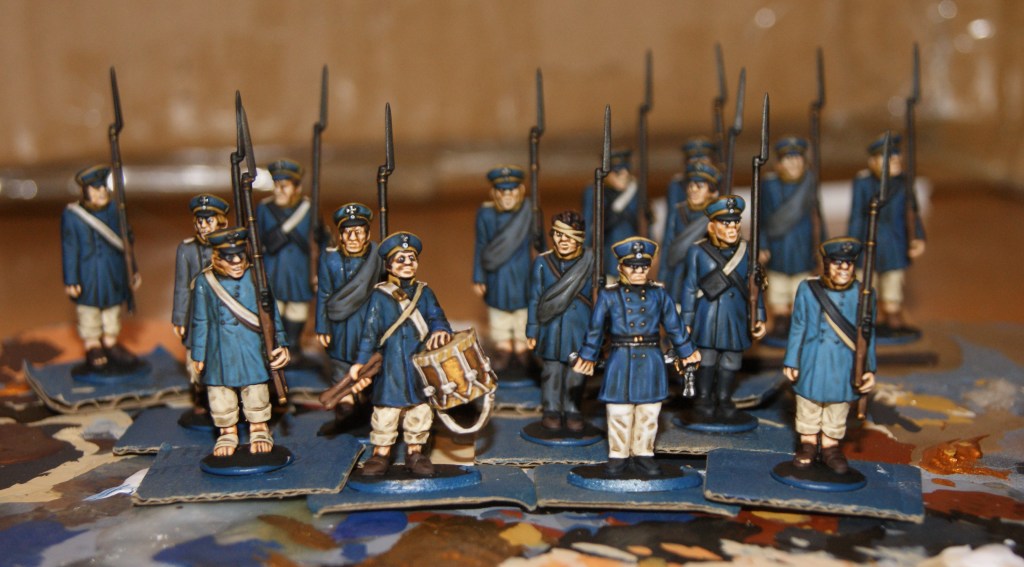


Another reason for doing these as a speed painting project is that these will be based in a more traditional way, i e close together, than the 1808 project I also work on (and no, I am not abandoning that!). So these will be in 32-man battalions with the same frontage (!) as 20-man units of my 1808 Swedes and Russians. The plan is to start with 5 battalions of regular line infantry of the 1st and 2d East Prussian regt. using the Perrys’ metal figures in greatcoats (especially suited for speed painting!). But I happened to have some Warlord Games Landwehr lying around, so I used them to test my speed painting strategy first. Id say they took around half the time, if not less, compared to other typical Napoleonic figures. And the Landwehr has more detail with the caps, legs and bare feet etc to do which the regular infantry dont.
I am very happy with them. Obviously, the clothes have a very simple appearance, but I think that works well on these. The secret to the speed painting is that I simply cut down on the highlighting, apart for some strategic areas such as flesh and black (black cant be shaded with a wash; because there just isnt anything darker than black!). I used the same wash all over (AP strong tone), but over the white/linen areas I watered it down quite a bit. More to come soon I hope!
Heres another Russian commander figure, this time a jäger colonel, if I remember correctly he wears the colors of the 26th jäger regiment. The figure himself has a very simple color scheme as you can see; the horse took quite a while to do, and even now Im not entirely pleased with it. It looks good enough from the one side, not so good on the other… The figure is made by Brigade Games.


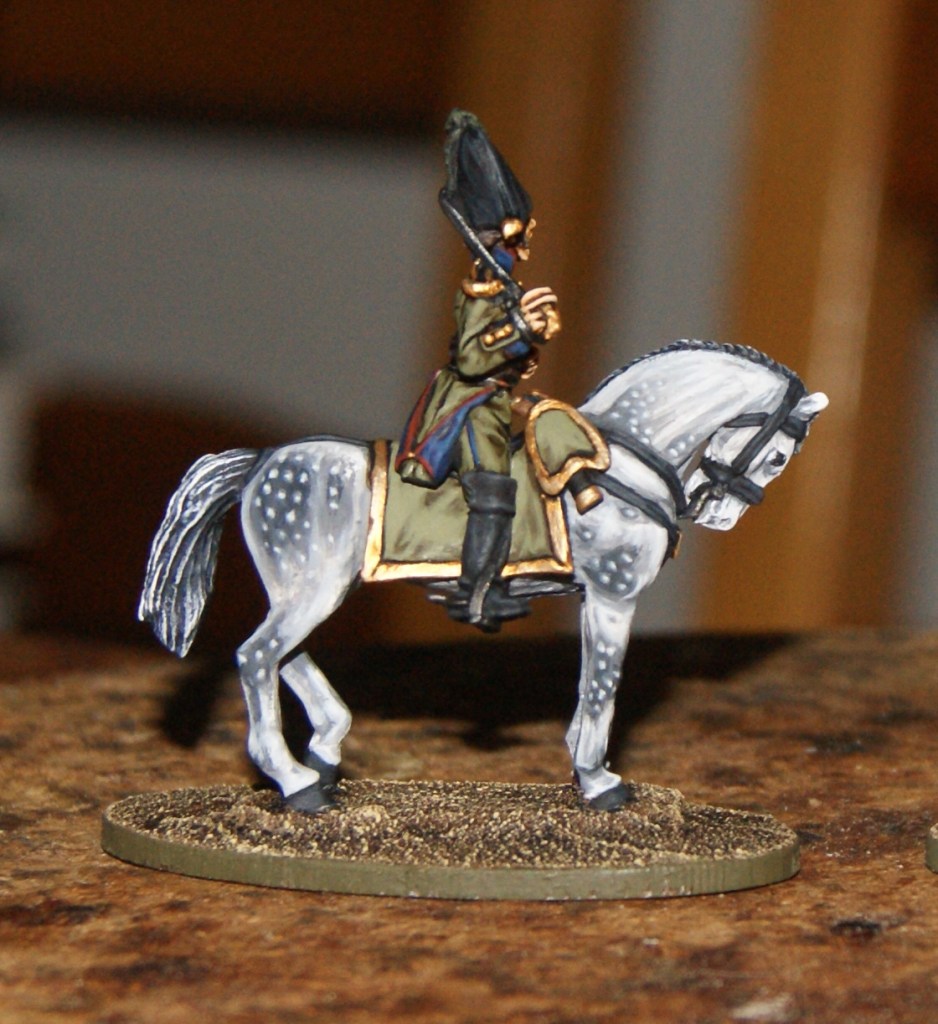
I have started painting a few generals and officer figures, as I only had the bare minimum of what was needed to play. This one is a relatively recent release from Perry. Not entirely happy with my painting of the horse, but it will do.
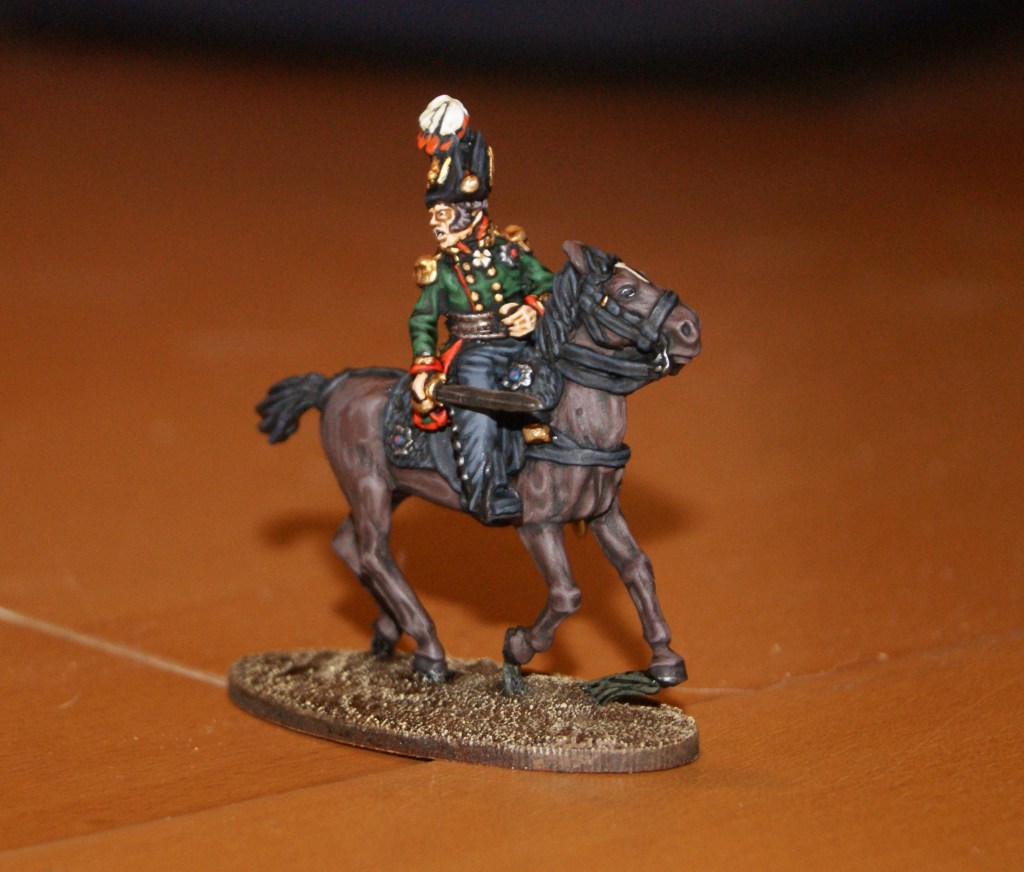
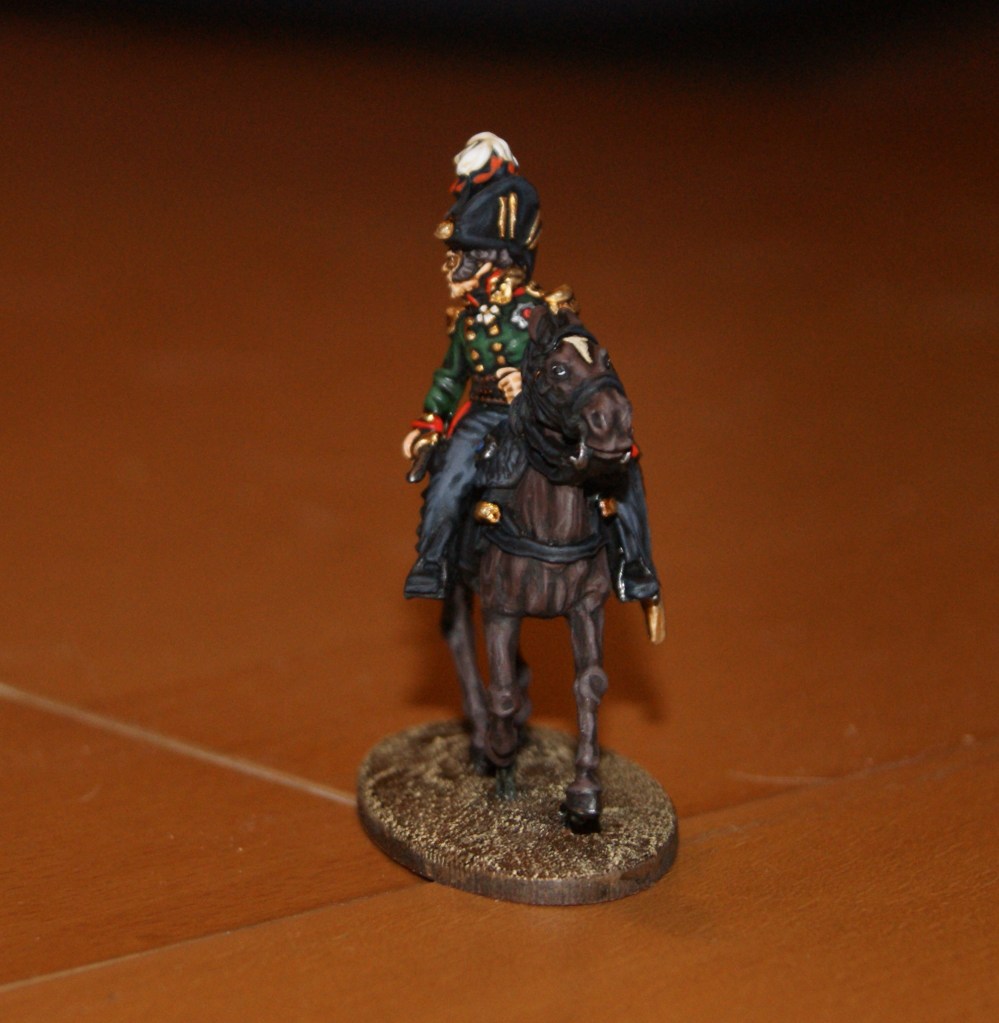


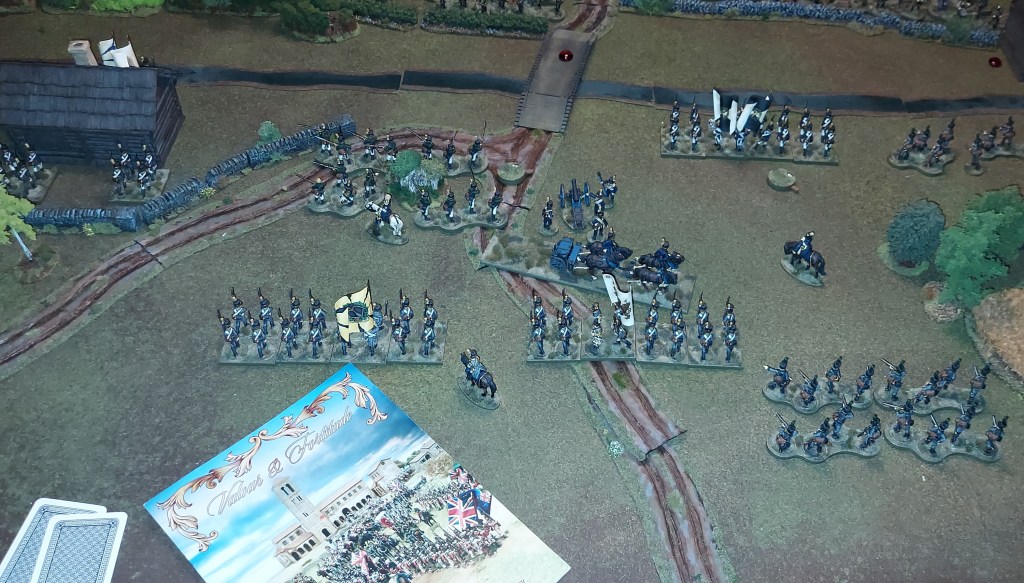
I dont often write about rules, because I am not really that kind of gamer. I paint the figures and will be happy whenever there is an opportunity to put them on the table – and I will try any rules set at least once! But precisely for that reason, I tend to like simple rules sets which enable you to play a game in a few hours. This is the time frame that we are restricted to, and we know from experience that many a game has been ruined by constantly flipping through a poorly structured rulebook. Also, there are many rules sets for wargaming the Napoleonic period. Some may see this as a sign that this hobby is flourishing. That may partly be true, but sometimes it seems to me that there is almost as many rules sets as there are players (at least in a country like Sweden, where I live). This is not a good thing for players, I think, as many find it hard enough to find a group who play as it is.
Now all this makes the recent effort from renowned games designer Jervis Johnson and miniature makers extraordinaire, the Perry brothers, very interesting. Before you even look at the rules themselves, there are many advantages with the Valour & Fortitude set of rules, released in 2022 and then revised for a second edition in 2023.
To me, this is promising in itself. As anyone reading this blog will be aware, Perry miniatures are one of my favorites figure manufacturers. Less obvious perhaps is that Jervis Johnson has designed a number of games that have been particular favorites of mine: the second edition of Blood Bowl (1994) was the first Games Workshop game I really enjoyed playing, and the 2004 edition of the Epic game (Epic Armageddon) was likewise a very good rules set (I never really played it back then, but have tried it out more recently). Ironically, both games, by many, including Johnson himself, regarded as some of GW:s best, were soon phased out by the company. Probably because they didnt sell enough models I would imagine. Blood Bowl is now back however, and the current rules are the same as the 1994 edition with a few small alterations. Epic has also been revived recently, but in that case the game is quite different, which is a shame. However, it is quite clear that Warlord Games’ Bolt Action (2012) was heavily inspired by the Epic Armageddon rules. The basic mechanic for activation, shooting, and close combat is the same, with the addition of the dice bag, which provides more unpredictability.

To return to the V&F rules, they do also have some intrinsic advantages. First of all, the rules themselves, including army lists and scenarios, are free. They can be downloaded from the Perry miniatures website, right here: https://www.perry-miniatures.com/valour-fortitude/. This is great in itself, and it will likely attract many who paint and collect Perry miniatures to the game – perhaps even reconcile some of the differences dividing players of the major Napoleonics rules sets, so that more people can come together and actually play some games rather than discuss which rules set is the best…

Second, the leading principle behind these rules is that they are designed to be simple and concise. The basic rules fit on four pages. Admittedly these are quite densely packed pages, but nonetheless, they do meet the objective: the rules are simple, in a very good way. In many ways they work as a tweaked and streamlined version of the Black Powder rules (written by Jervis Johnson & Rick Priestly). One example of the simplification is that shooting and close combat attacks have been condensed into one and the same mechanic. You use the same basic procedure for attacks, with somewhat different modifiers.
As with Black Powder, units and brigades will be quite fragile. Shooting and close combat will both soon wear down battalions, and as soon as battalions start to route, the whole brigade will be in trouble. This happens through valour and fortitude tests, hence the name. And for all casualities you accrue over the level that your troops can take, you will be required to take a test. Once they start piling up, you will take multiple successive tests, making it more and more likely that you will fail. In a recent test game we played, this seemed to work well. The game was decided after a few turns and a somewhat over-optimistic offensive move on my part. The attacking troops were just too few in number and soon routed.

Another interesting feature, which is also an innovation compared to Black Powder, is the fate cards. Using regular playing cards, each player gets a deck of 13 cards of a particular color. The army lists will then tell you what effect each card has, and these will partly be generic, and partly specific to the nation that you play. For instance a card may allow you to re-roll a morale test or a to-hit roll in an attack, or it may make your opponents activation of units more difficult.
Command is handled in a way that is similar to Black Powder. Your side will have a commander in chief in command of the whole army, and a number of brigades consisting of several individual units (battalions of infantry, squadrons of cavalry, artillery pieces, etc), each commanded by a brigade commander. The brigades are activated one at a time. Activating a brigade has a greater chance of success than, for example, an order test in Black Powder. But the chance will decrease as the morale of your brigade deteriorates and units within the brigade will be more difficult to command if they are far away from the commander.
Furthermore, the Valour & Fortitude rules are obviously designed to be flexible, encouraging people to tinker with the rules in whatever way suits them and the particular style, period or campaign they like to play. The website already has generic army lists and points values tables available, so that one can create ones on preferred lists. In the same way, there are suggestions on how to adapt distances for those of us who have more normal sized tables and smaller units (the Perrys of course tending to play on surfaces of 3×6 meters and the like, with thousands of figures). The size of units can be adapted in different ways: either you used the sizes in the rulebook and play some units as “understrength” (i e half as many figures), or you just use whatever size units you have, and adapt the rules after that. The army lists as they are provided on the website give a range, so that a standard line infantry unit is 24-36 figures, with an understrength unit consequently being 12-18.
One significant difference from many other rules sets is the way attacks are handled. As I mentioned above, shooting and close combat are both basically handled in the same way. You pick a target and roll the number of dice appropriate for the units that is attacking. So far everything is like in any other wargame. However, the difference lies in how multiple attacks are handled. If you want to attack the same target unit with several different units from your own side, additional units just add dice to the attack rather than attack separately. They add “fire support”, “melee support” or “brigade support”, depending on the situation. Obviously, once you get the hang of this, it contributes to the speed of the game. Also, it can make “ganging up” less effective, which is probably intentional. In pre-modern linear warfare the normal situation would be that one battalion from either side lined up face to face with one another and exchanged fire until one side had enough.
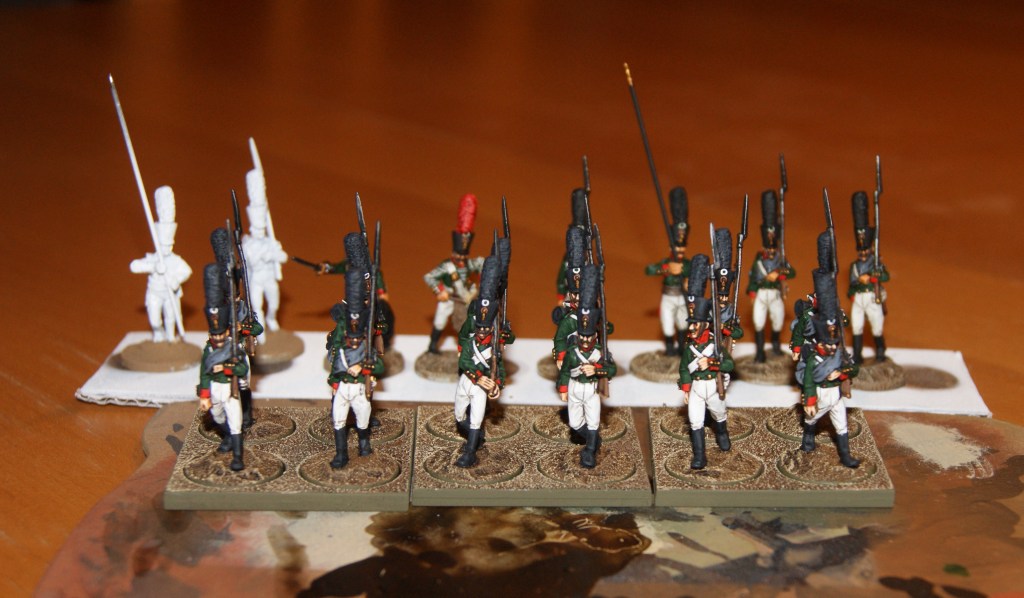
Trying to keep the momentum going with my napoleonic stuff. The first battalion of the Petrovsk regiment is soon to be finished at 20 figures. This regiment served in many of the battles in Finland, and would really have been a good place to start the whole project. They wear a uniform which is similar to what a couple of years later became the standard uniform for all Russian regiments. In addition, they are very similar to a few other important regiments, namely the Lithuanian, the Bielosersk and the Tenginsk regts. These were all very much active in Finland and they all belonged to the same inspection, i e, carried the same red and-black colored flags. The only difference was in the shoulder straps (these were dark green, light green, red and rose). To me it seems reasonable to play these as interchangeable with one another, so that the Petrovsk may represent the Tenginsk or Lithuanian if needed for a particular scenario. Hopefully, I will be able to paint up the 3rd (musketeer) battalion of the Petrovsk and both battalions of the Bielosersk as well in the near future.
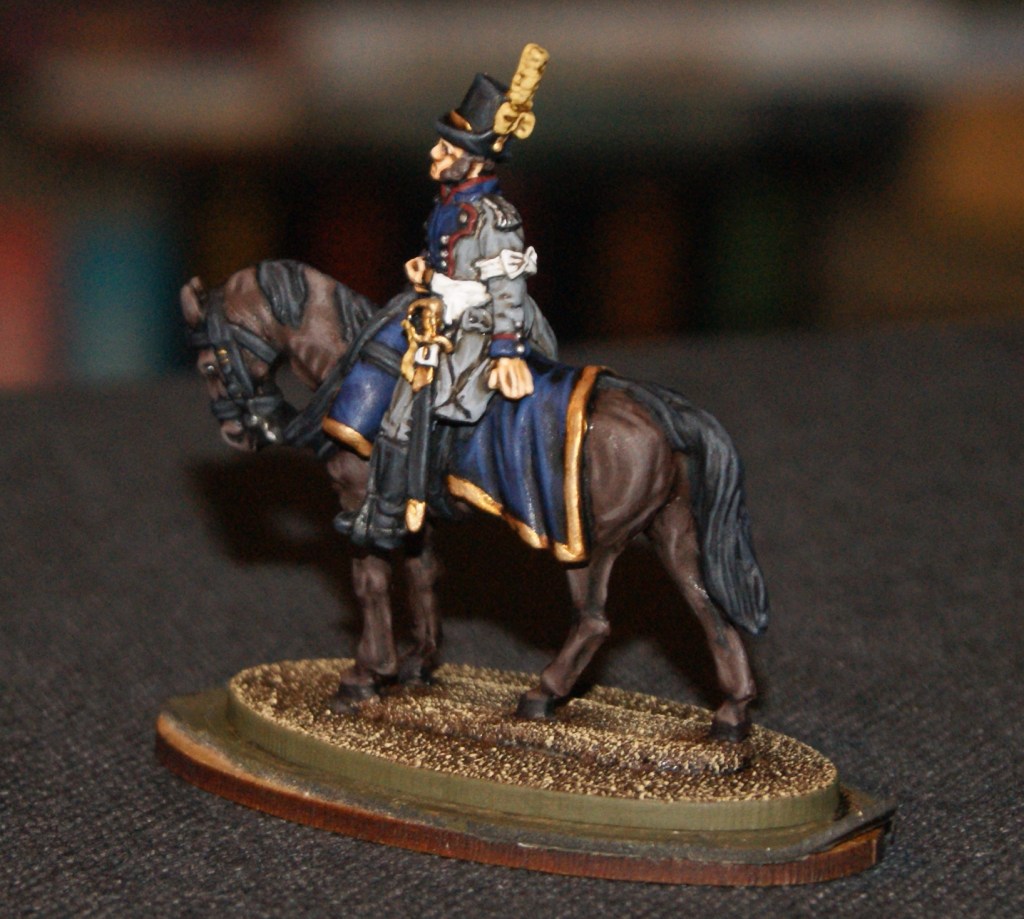

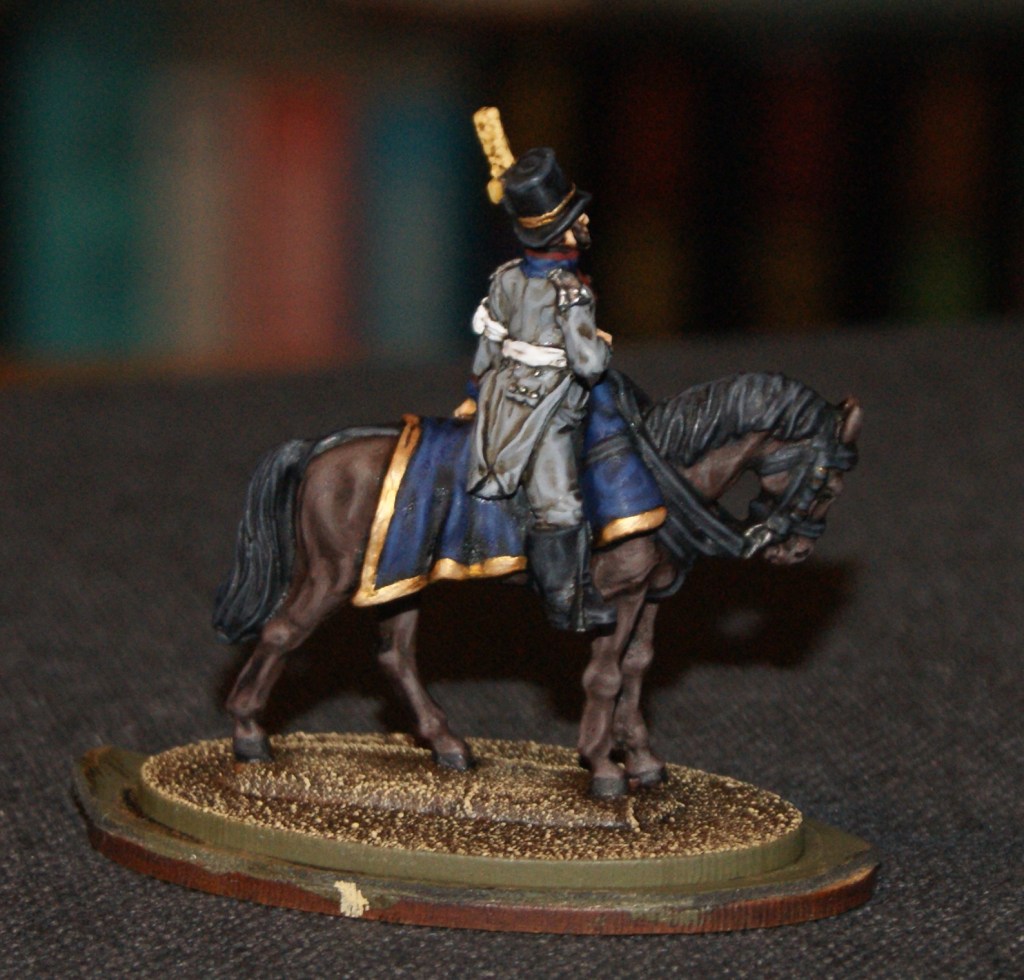
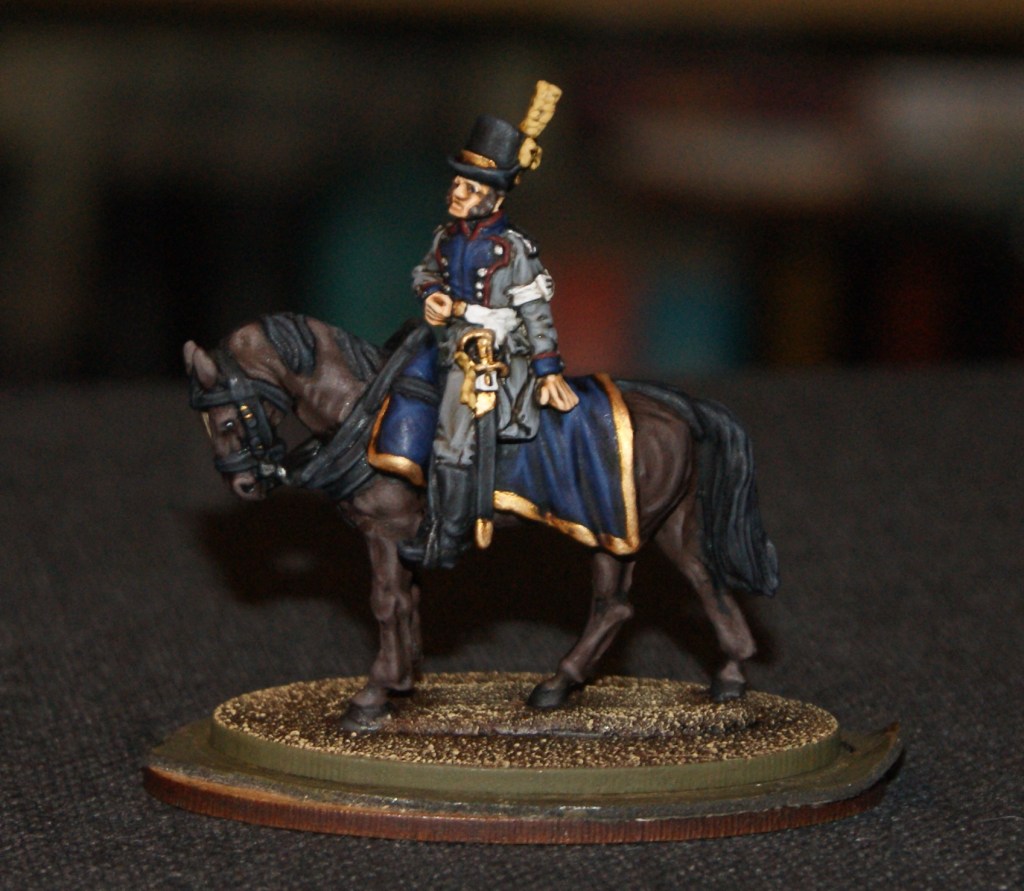
A further addition to my Swedish collection is this colonel of the Tavastehus (Häme) regiment, based in central Finland. The figure is a slightly altered Bavarian colonel with a Swedish head. The Tavastehus regiment itself is also in the works…
This is a first test figure which is meant to represent the Swedish Horse Lifeguard regiment as they would have appeared in 1808. First, here are some images of the completed and fully painted model.


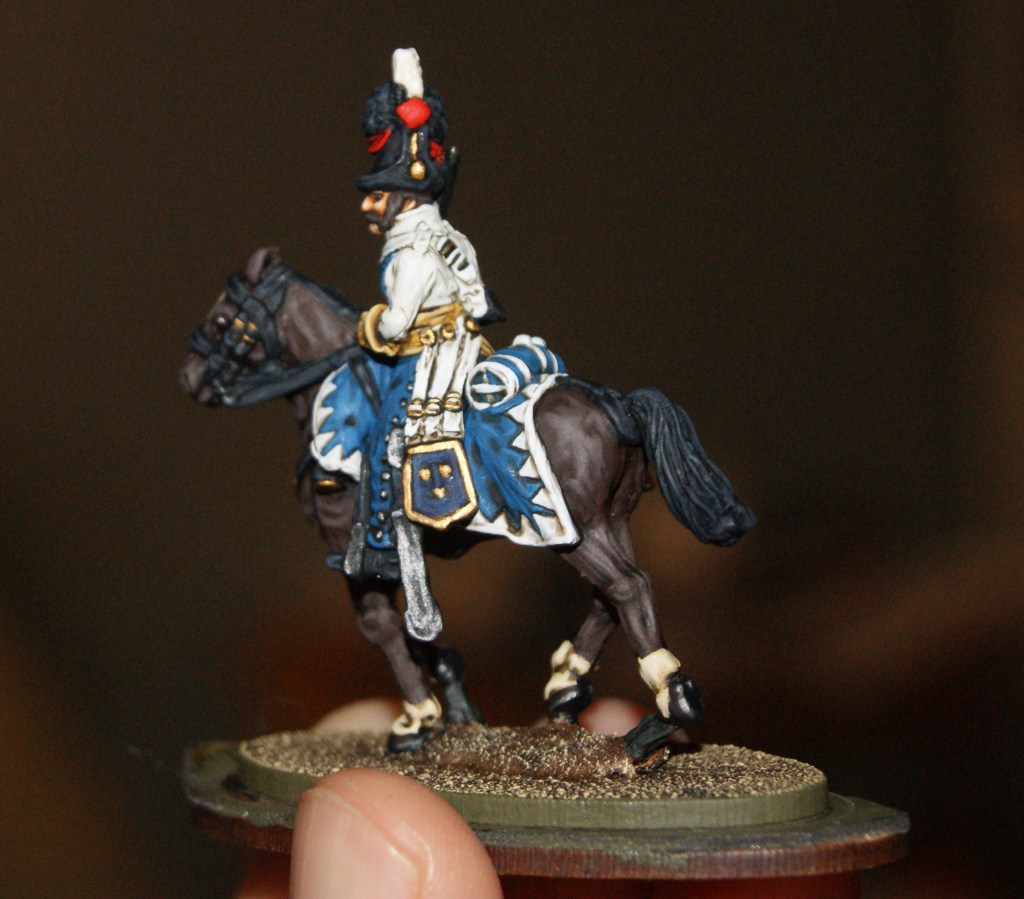


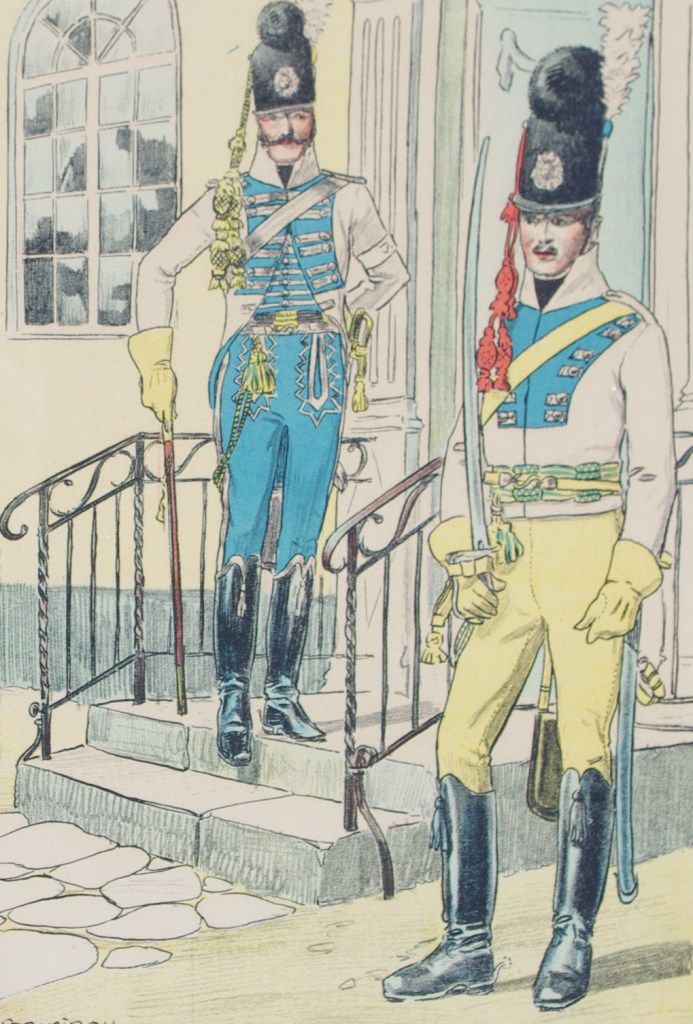
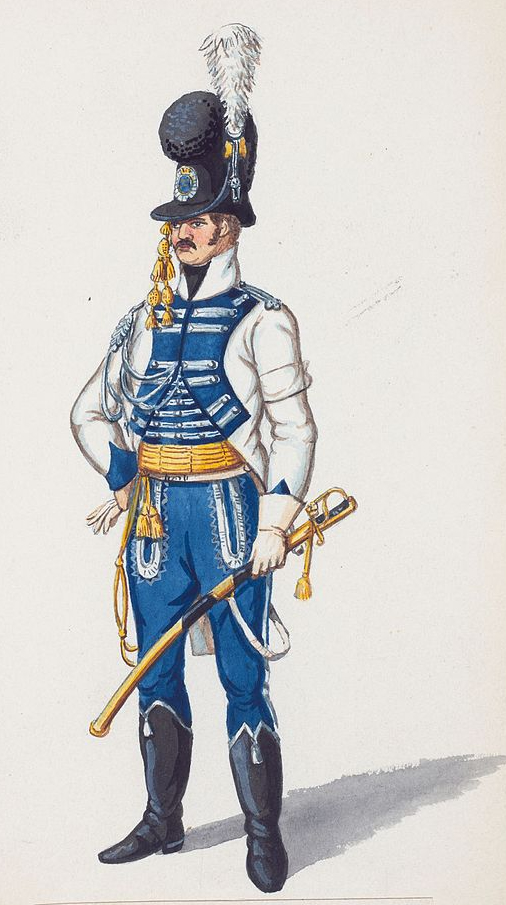
As many of you know, Swedish uniforms of this particular period changed several times. The changes came in quick succession, and often regiments had not had time to sew new uniforms (or re-sew old ones, as was often the case) according to the latest regulations when another new uniform model was introduced. Consequently, in 1808, many regiments wore uniforms that were 10-15 years old or more, some re-sewn to a new standard, some, apparently not.
The Horse Lifeguards (Livgardet till häst) originally wore a white uniform with a blue plastron, first introduced in 1792. It seems that this uniform was adjusted somewhat in 1802, but it was still of the same general design, white with blue plastron. A new and quite different uniform was introduced in 1806, which was all blue with white facings. However, according to Martin Markelius, “Bestämmelser och verklighet – uniformeringen i von Vegesacks kår”, in Kronans kläder (Armemuseums årsbok 2010), ed. Anna Fredholm & Martin Skog, the new blue uniform did not reach the troops before they transported to Finland in the autumn of 1808. By that time they did wear the new hat though, and according to Markelius they probably had the blue riding overalls on campaign. To make things more complicated, a part of the regiment was outfitted as mounted jägers; these troops had a green uniform with different headgear (as seen above).
The Lifeguard participated in the battle of Oravais, and would have most likely worn the white uniform then. When they fought in the battle of Sävar in Northern Sweden about a year later, they may well have worn the blue uniform.
The look of these troops can be seen quite well in period depictions that are not dress regulations. There is one painting of the troop review conducted by the king on Åland shortly before the Lifeguard were transferred to Finland. There are also a couple of very detalied portraits of junior officers, one with the earlier and one wearing the later uniform type.


Despite, or perhaps because of, the wealth of different sources, a couple of details are still very difficult to determine definitively. The sabretache is depicted slightly differently in each illustration. I tried to replicate the one from the troop review, as it is closest to the battles in Finland; it is likely that officers had a more elegant version. Also, the red cord worn on the hat is shown hanging across the front of the hat in some illustrations, but not in others. I chose to have it across the front, partly because it looks better, but partly also because it seemed logical. I must admit I am very unsure about that particular detail though.

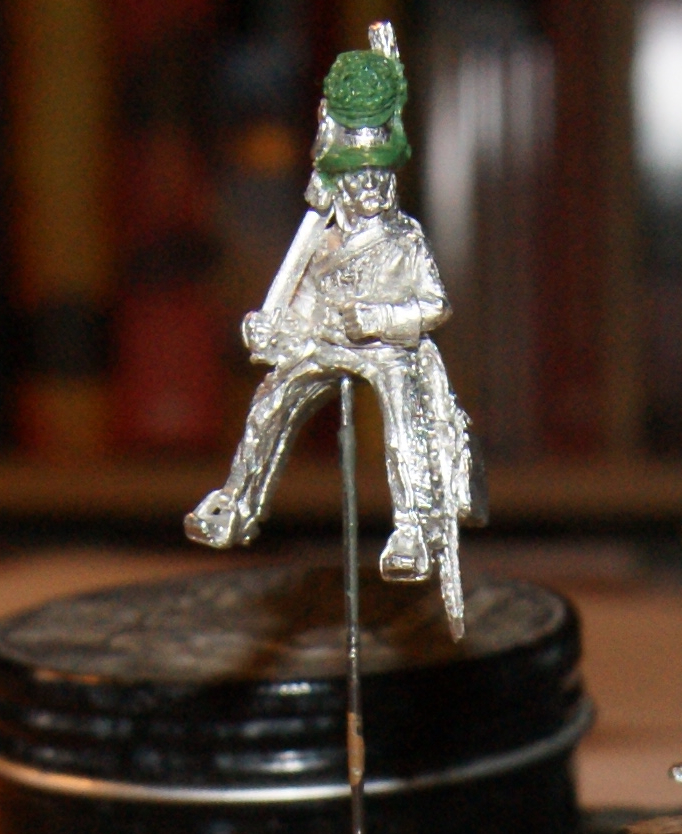
Perry miniatures do only two types of Swedish cavalry, the Nyland and the Carelian dragoons. The Nyland dragoons wore a hat which is not entirely dissimilar to the ones worn by the Lifeguards. Being a guard regiment however, the Lifeguards have a added a large plume to their hat, which also seems to have been more rounded. The Guards hat is also turned up on the left hand side in a similar way to the Swedish infantry hats, and it has a fastening cord, company pompom etc of the same type as other Swedish hats of the period, which the Nyland hat does not have. But apart from the greenstuffing of the hat, there was very little modification to do. The only thing I recall was that the middle row of buttons on the jacket needs to be removed. Apart from that, everything is down to painting. Whatever doubts one may have over the uniform details, I am very happy with the way the figure turned out. The challenge that remains is to duplicate the same greenstuffing on enough models to make up a unit. To begin with, that means no more than 6 figures, eventually maybe 8 or 12.
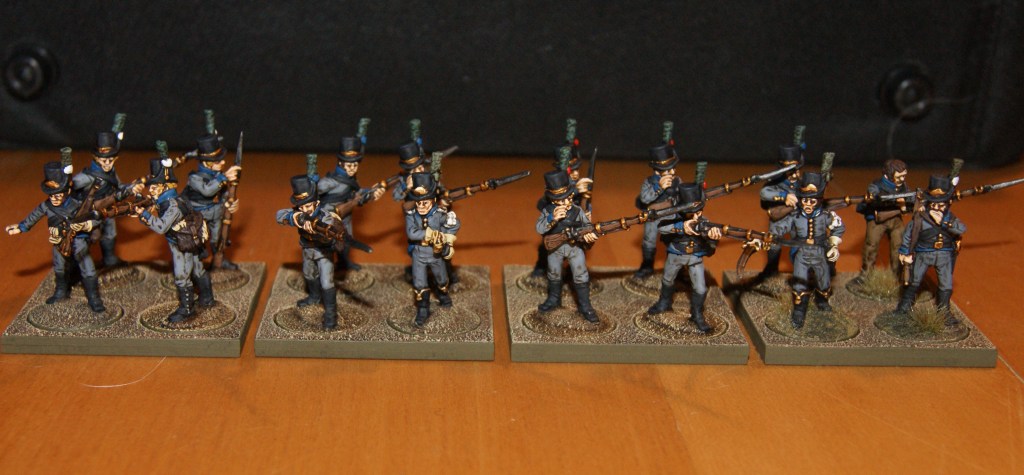
Just finished this set of 16 figures of Finnish jägers. The uniform corresponds to the Nyland, Björneborg or Åbo regiments. Nyland and Björneborg wore light blue facings, Åbo dark blue. To make things simple, I chose a mid-blue color, and will use them to represent any of these regiments as I need them to! The Perrys sell a set of “Nyland jäger” figures with shakos. I used these to make the command figures here, but as I have seen no source or other reference to the Nyland jägers actually wearing shakos, I exchanged them for regular hats. If I am wrong on this point, I can always go back and paint a few more…
These figures represent so-called “regimental jägers”. These were selected on campaign from across the regiments. They wore the regular uniform but modified them in the field: they blackened the leather and exhanged their small yellow plumes for green ones. Whatever happened to their company pompoms, I dont exactly know, but I have painted these with a selection of different colors (I have seen claims that they should all have green; if that is correct, it is easily changed).
 Pancratist