

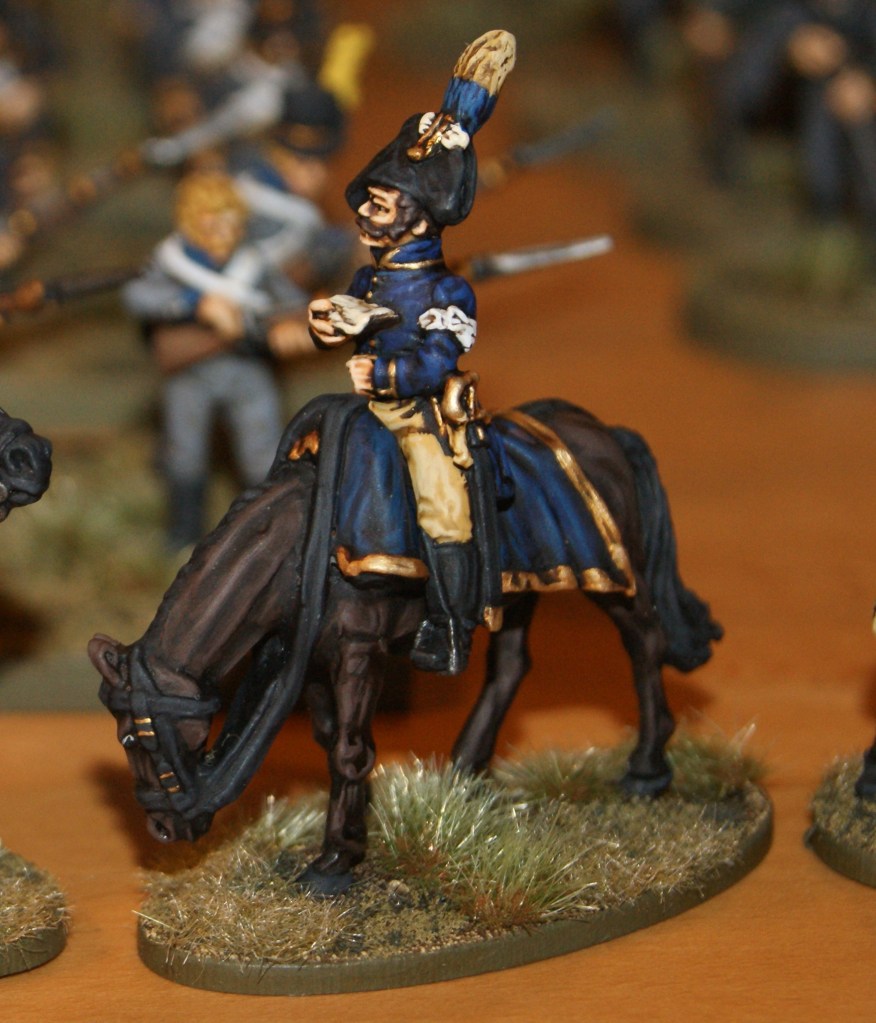
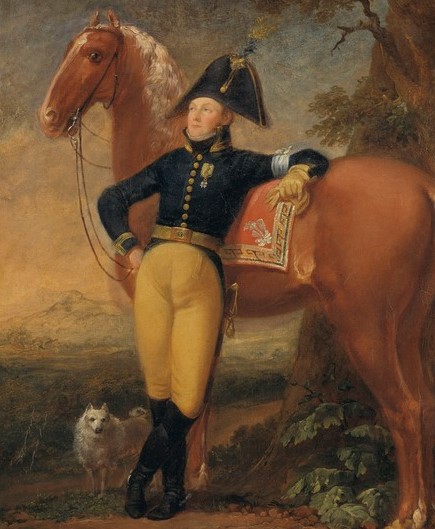
This figure was converted from a Bavarian colonel made by Perry and the head of a Swedish dragoon officer. The horse is from a set of British generals. I think it looks similar enough to the model 1801 uniform which Swedish generals wore at the time.
Swedish casualties…
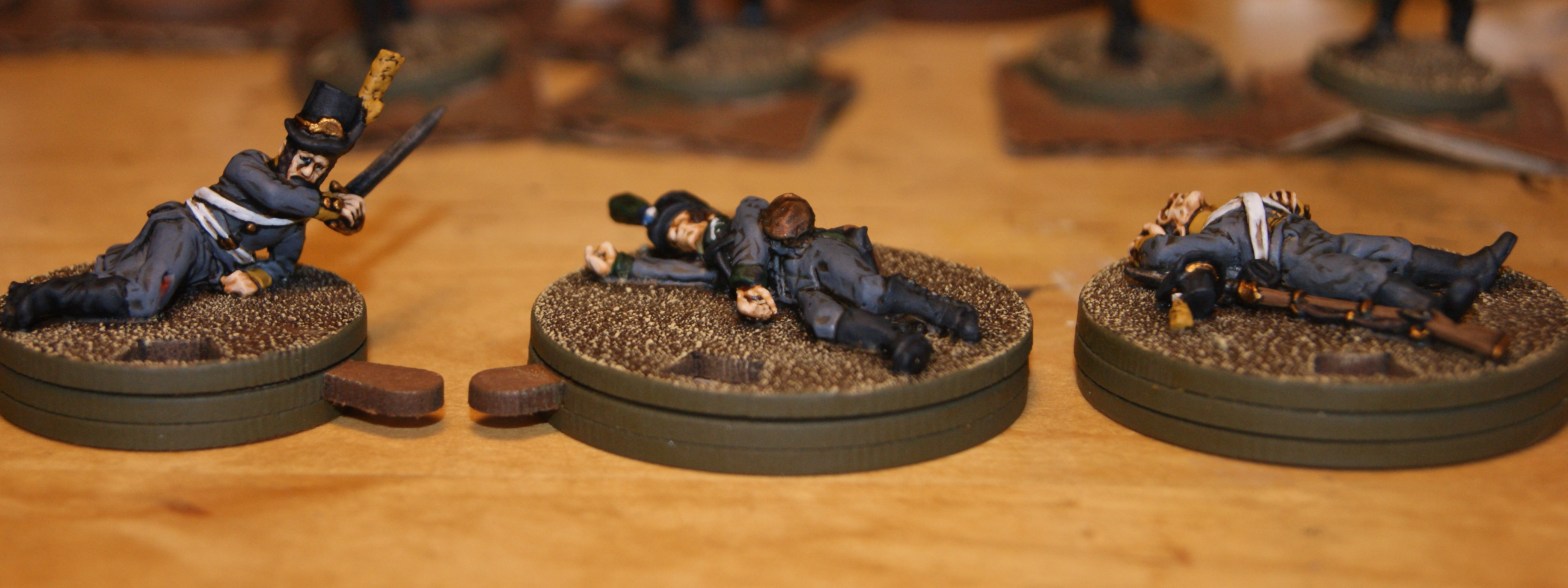
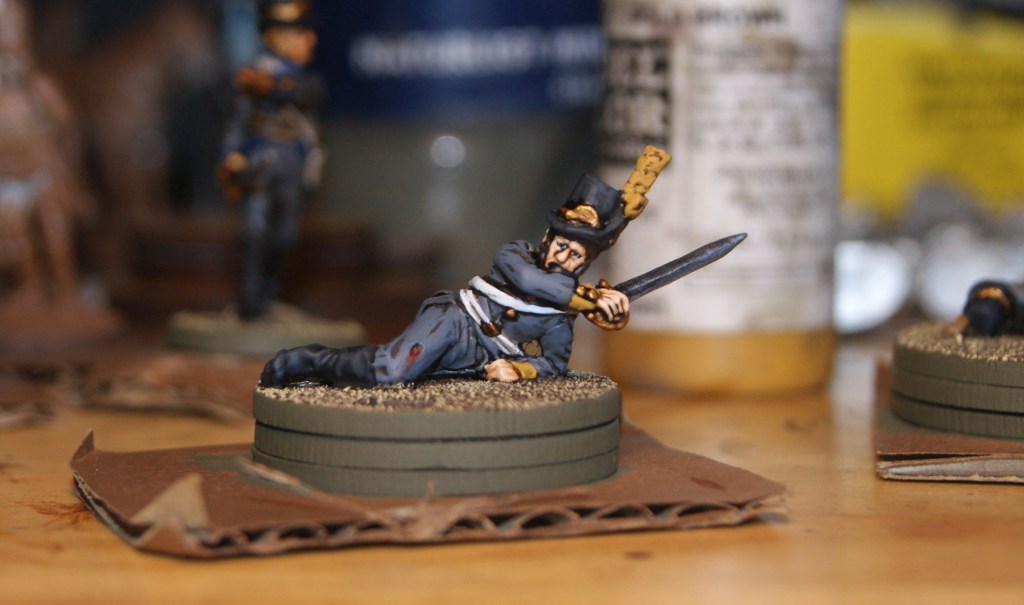

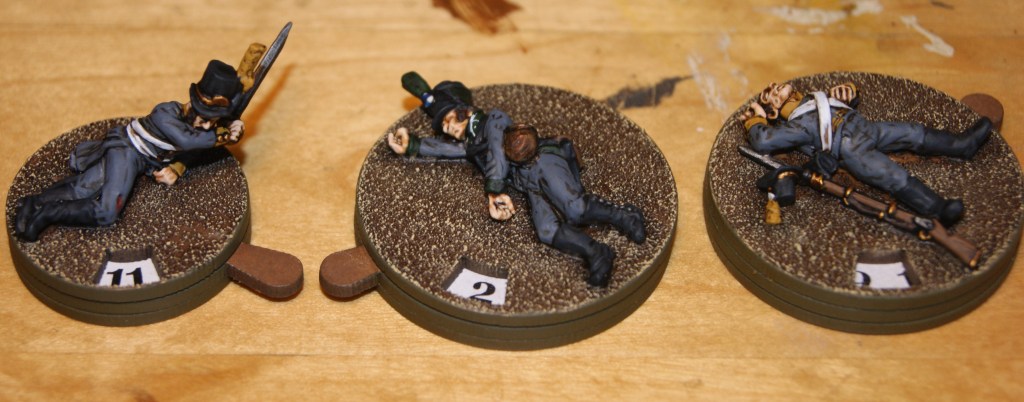
These were based on figures from Perry’s and Foundry’s Austrian casualty packs. The Austrian uniforms are very similar to the Swedish m/1806 and m/1807. The differences are in the hats, backpacks (the Swedes didnt have backpacks in 1808) and the officers’ sash (which again the Swedes didnt use). The heads were simply exchanged for spare heads from Perry Swedes. The other details were fairly easy to remove with a knife. The copper “kruka” (some sort of cooking pot?) was done with some very simple greenstuffing. The musket is from a French casualty pack by Warlord and the hat was taken from a Brigade games pack of British navy heads.
The officer ended up looking like an ensign. I had the idea while I was finishing these that it might look nice to add a broken or tattered flag to his base. But that would perhaps be easier on a larger base. I have more of these figures, so maybe Ill try that later on. I will be needing a few more of these.
Björneborg (Pori) regiment, 1808

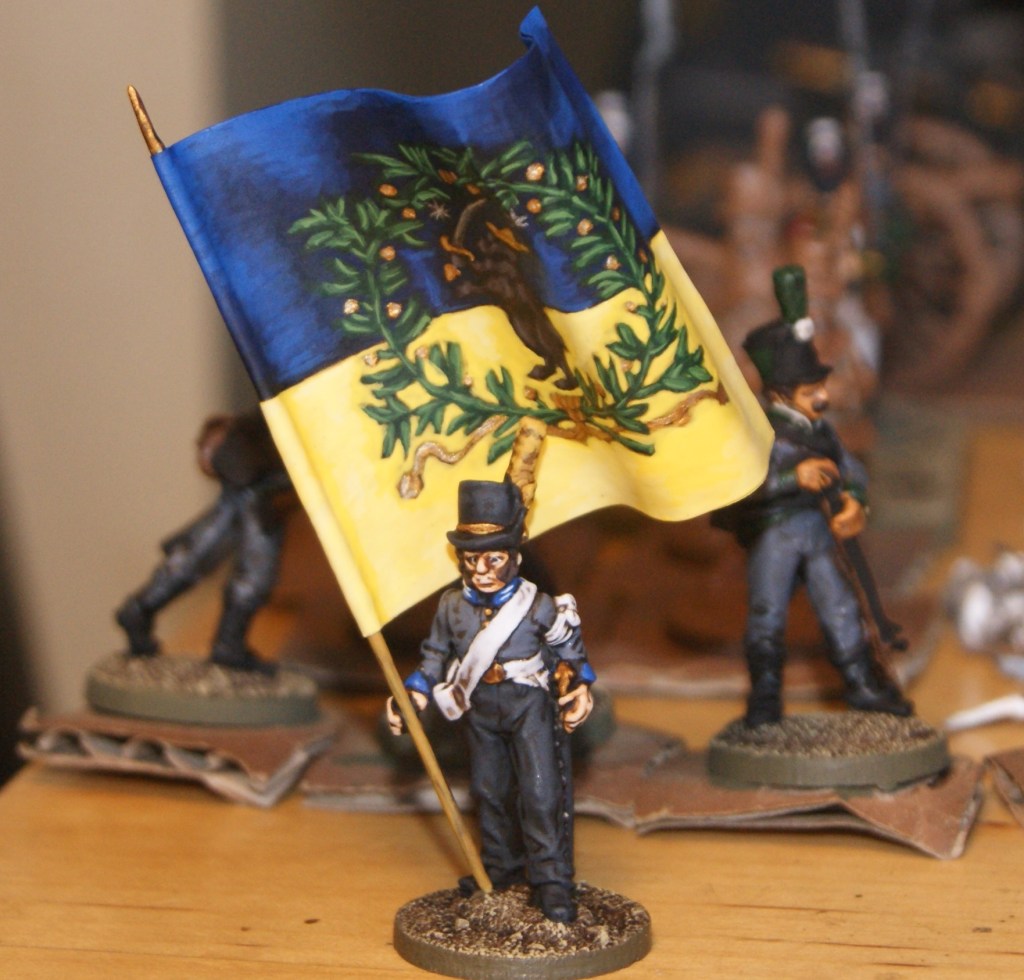

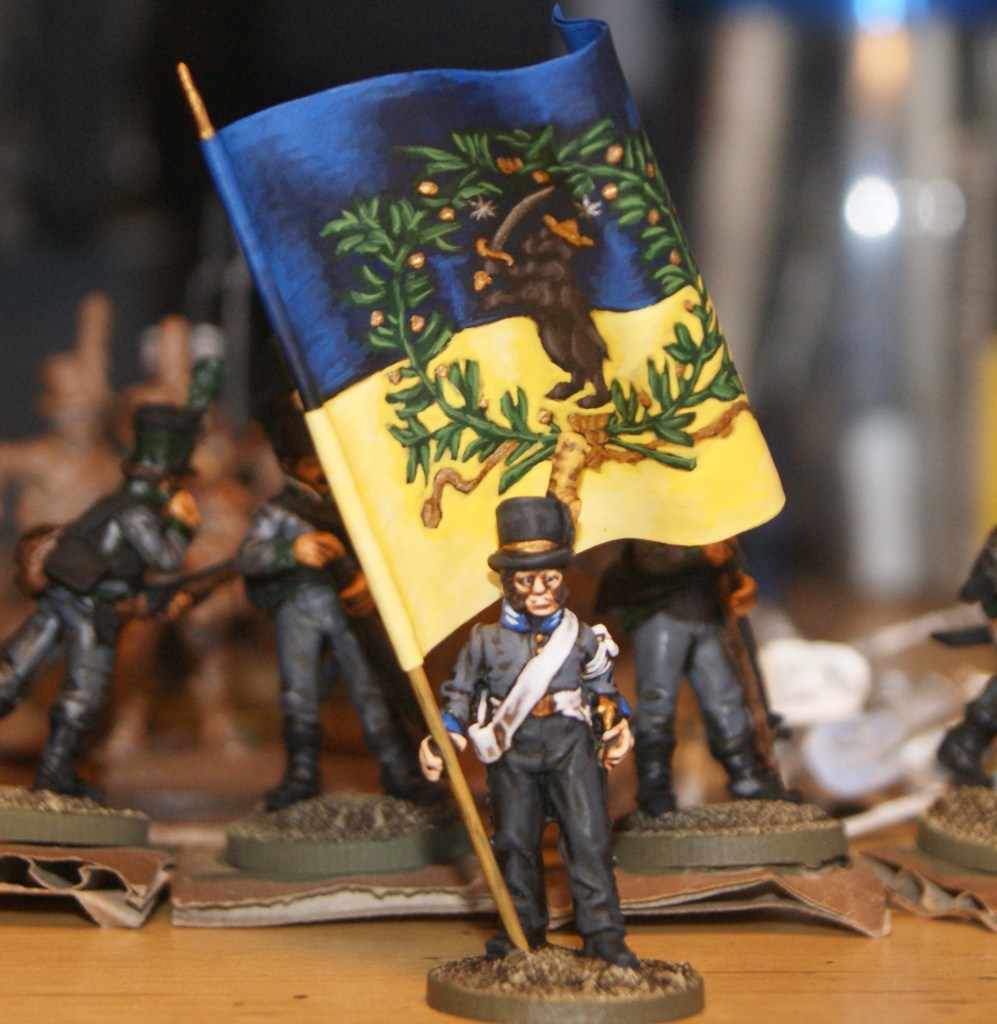
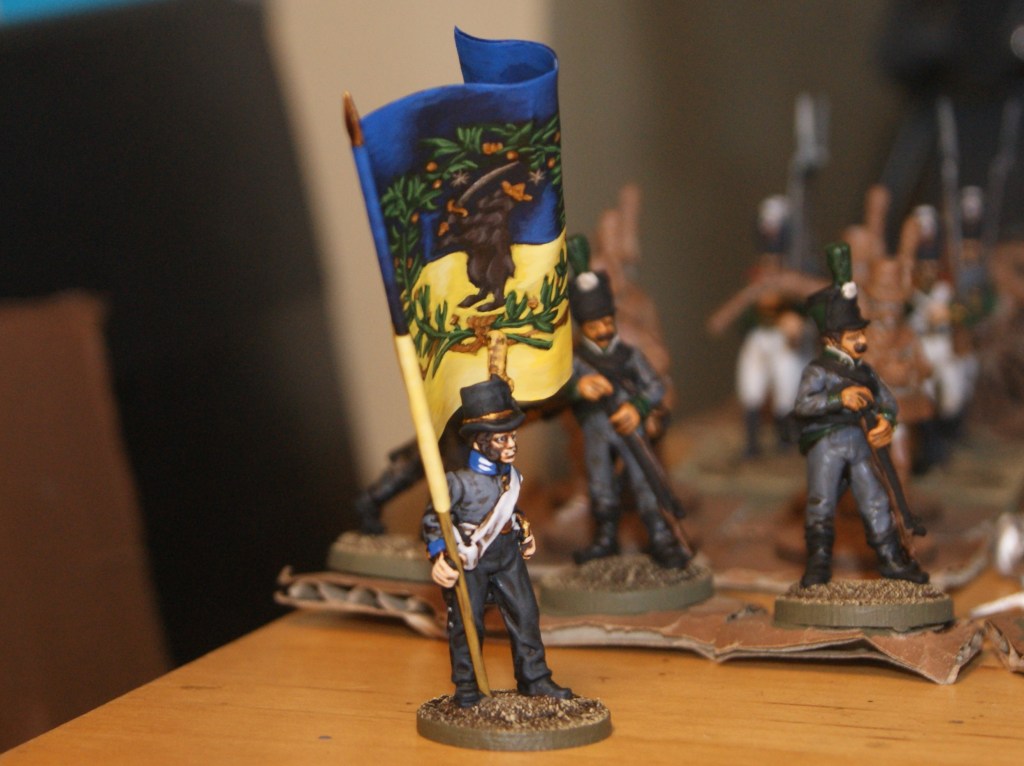
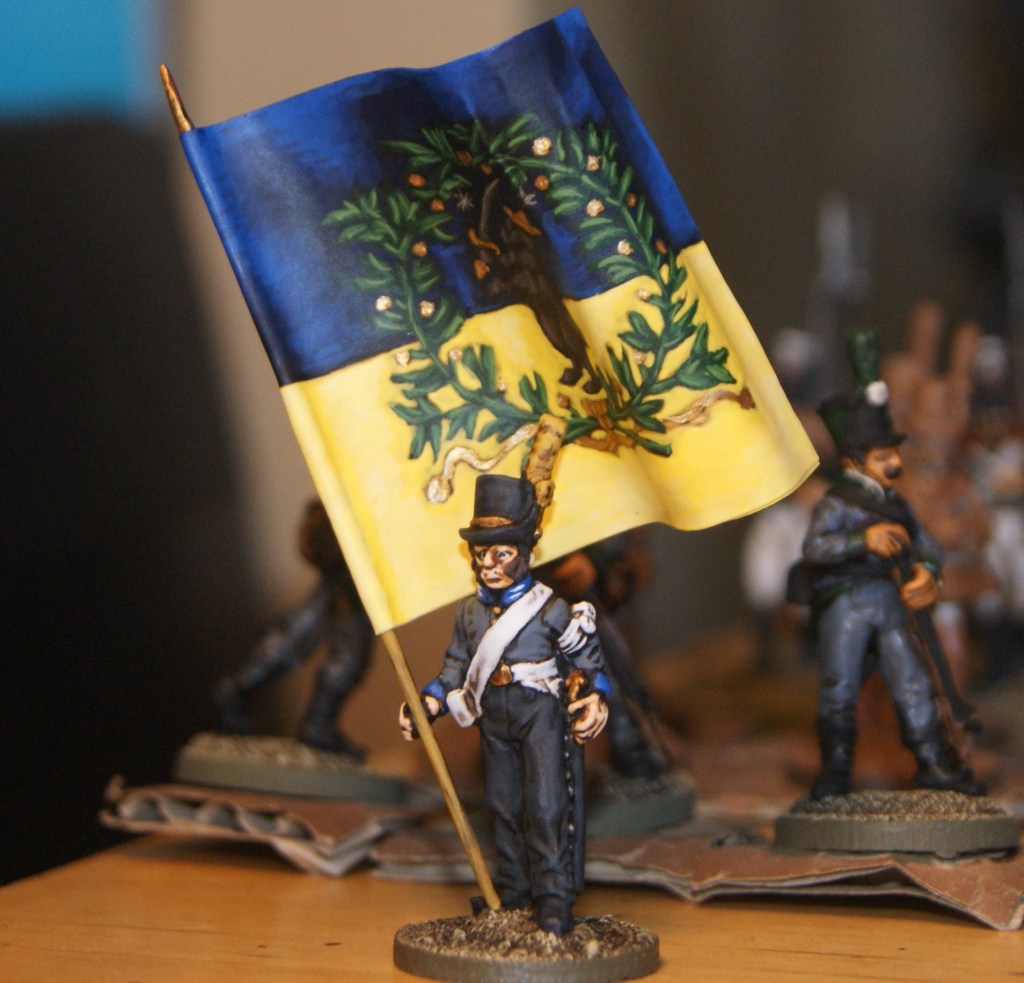
When I first started painting 1808 Swedes, I started with the Åbo regiment (red flag, elsewhere on the blog). In Perry’s command packs, you get two ensigns, so I painted both. But in the end I decided to have only one flag per unit, so I had one painted ensign left over. As I was going to do the Björneborg regiment at some point anyway, I did the flag and repainted cuffs, turnbacks and collar in a lighter blue (the only difference between the uniforms of those regiments).
The Björneborg regiment is famous for its heroic actions in the war in Finland, especially under the command of Georg Carl von Döbeln, the most well-known Swedish commander of the war. I have ordered some Austrian command figures from Foundry. One of them looks like he could fit as the basis for a von Döbeln character… The figures are probably arriving next week. We’ll see how they turn out.
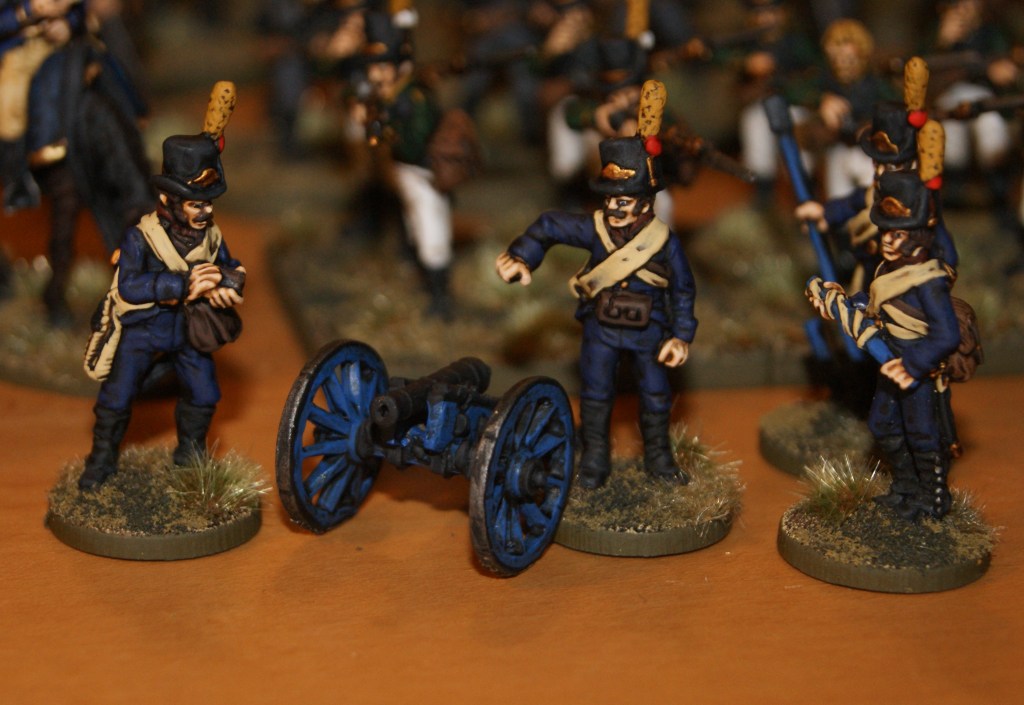
Finnish artillery
Some Perry miniatures Swedish napoleonic artillerymen, painted in the uniforms of the Finnish artillery regiment. There is a 6-pdr gun and a 3-pdr. The 3-pdrs were on their way out, but they were nonetheless used extensively in Finland. In the difficult terrain the lighter pieces were more useful than they would have been in other regions of the Napoleonic wars. The 3-pdrs are heavily converted AWI pieces by Foundry which I greenstuffed into the likeness of a piece in the Army museum in Stockholm which supposedly saw service with the Savolax brigade in 1808. The limbers and ammunition wagon are Perry AWI models.


Russian jägers 1805
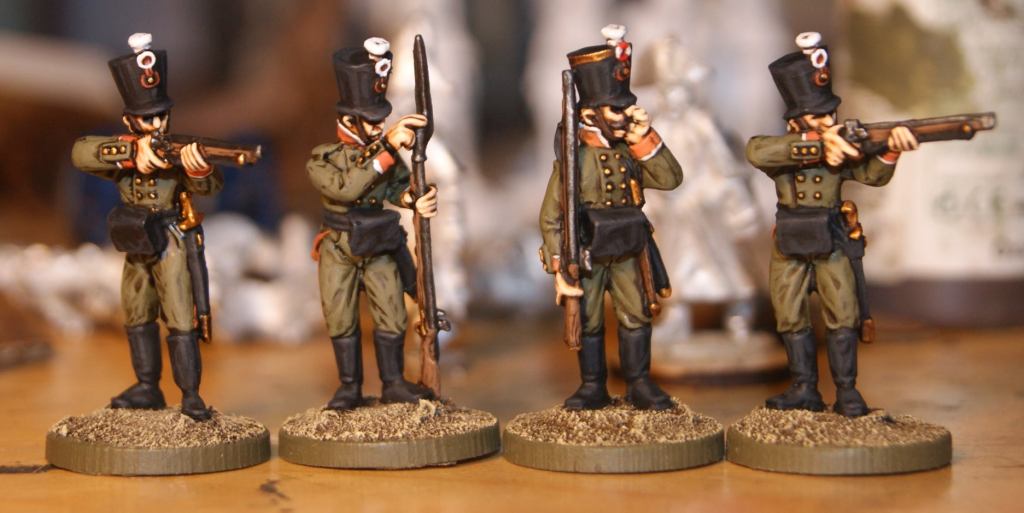
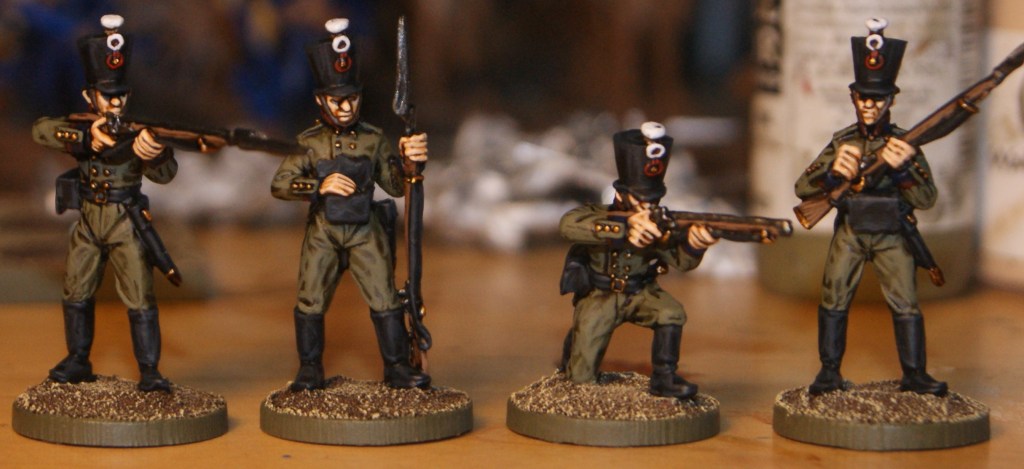

I am painting these Russian jägers for the war in Finland of 1808. It was only after having ordered many and painted some of them that I understood that the figures are not perfectly ideal for that campaign. By 1808, it had been decreed that the waist belt be worn over the shoulder rather than around the waist. If all units adhered to this order, I dont know. There is not much to do about it, as I cant just remove the waist belt on these as I have done with the musketeers, because these guys carry their cartridge box on the waist belt.
Also, apparently, the peculiar hat with a visor in the back (!) was never really used by the regiments active in Finland. Fortunately, these figures are sculpted so that the hat doesnt look that different from the regular shako that they did actually use. Especially if you cut away the visor in the back, which should be easy enough.
Having said that, the figures (by Brigade Games) are excellent and I really like them. And as these are the figures I have, I am sticking with them, although will perhaps not buy any more. The Brigade Games regular musketeers in firing line poses are probably better for representing jägers for 1808.
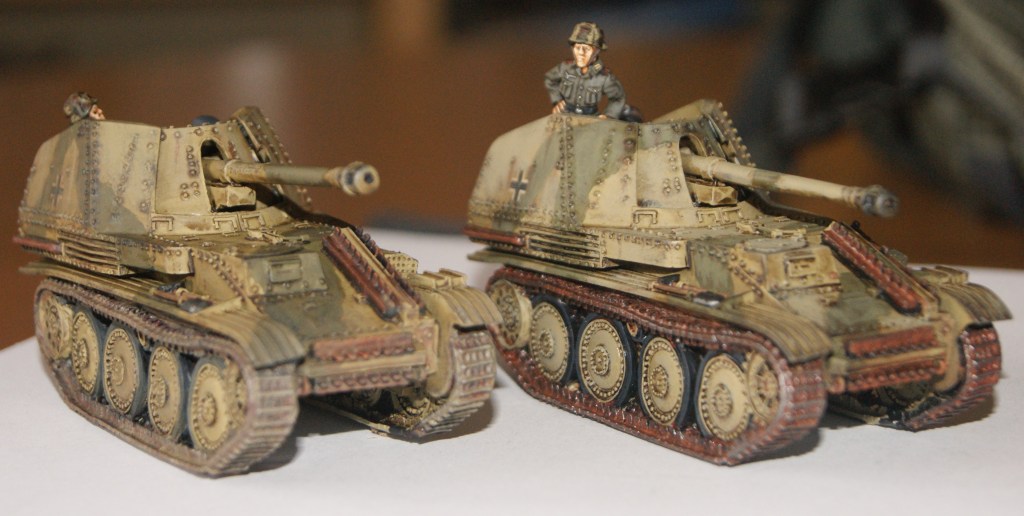
Marder III:s (ausf. M)

A couple of Marder III tank destroyers to be used in Chain of Command games. Both are Warlord games kits with heads from West Wind thrown in for variation.


Colors of the Savolax infantry regiment


In the pictures above is an ensign carrying the colors of the Savolax infantry regiment. I painted the flag over a black-and-white printout with a scaled down image I found online. I must say I am very pleased with the result, as I have always found painting flags to be difficult. One thing I have found is that the flags really need highlighting to look good, that makes all the difference.
The yellow flag with the bow and arrow-motif was the “company”-flag. The first company of every regiment carried a white flag instead, the “life colors” (livfana). This flag sported a pretty elegant Swedish national (royal) emblem instead of the regional emblem on the company flags. In the top left hand corner there was a small Savolax emblem. In all other respects, the life colors were the same for all regiments, although they varied by pattern. With the 1766 pattern even the small regional emblem was removed, so that all life colors were exactly the same – an advantage for us modellers!
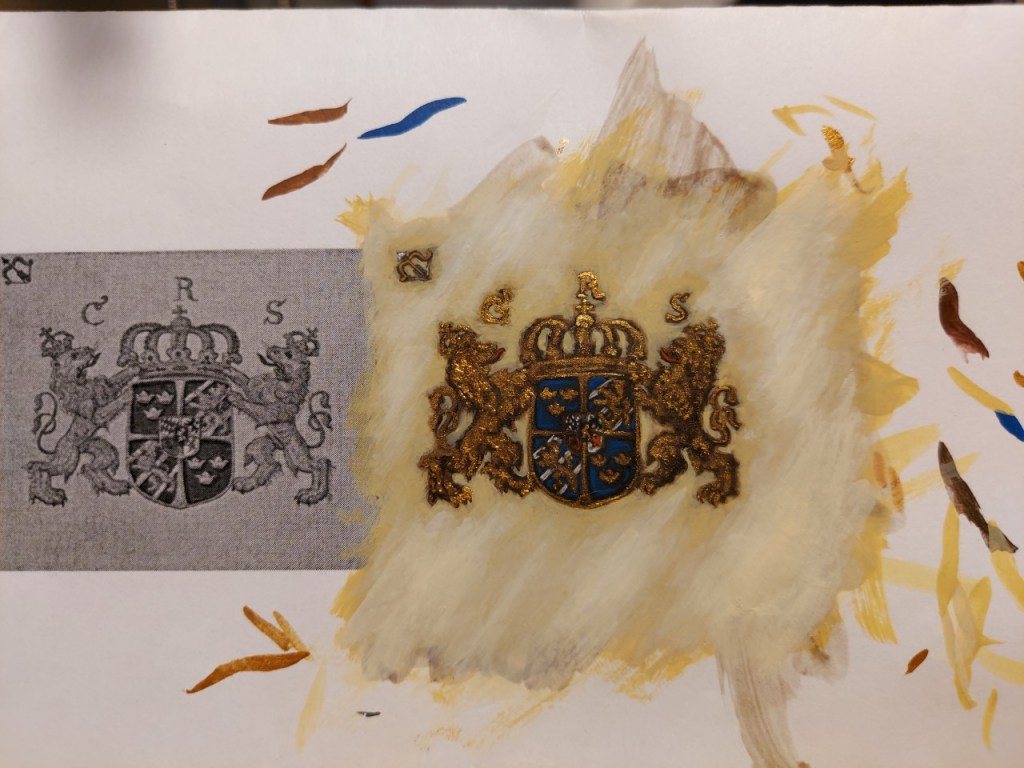


In 1808, several patterns of flags were in use. These had been issued at different dates during the 18th century, as detalied by Leif Törnquist (“Colours, Standards, Guidons and Uniforms, 1788–1815”, in Between the Imperial Eagles: Swedens Armed Forces during the Revolutionary and the Napoleonic Wars 1780–1820, ed. by Fred Sandstedt, Stockholm: Army Museum, 2000).
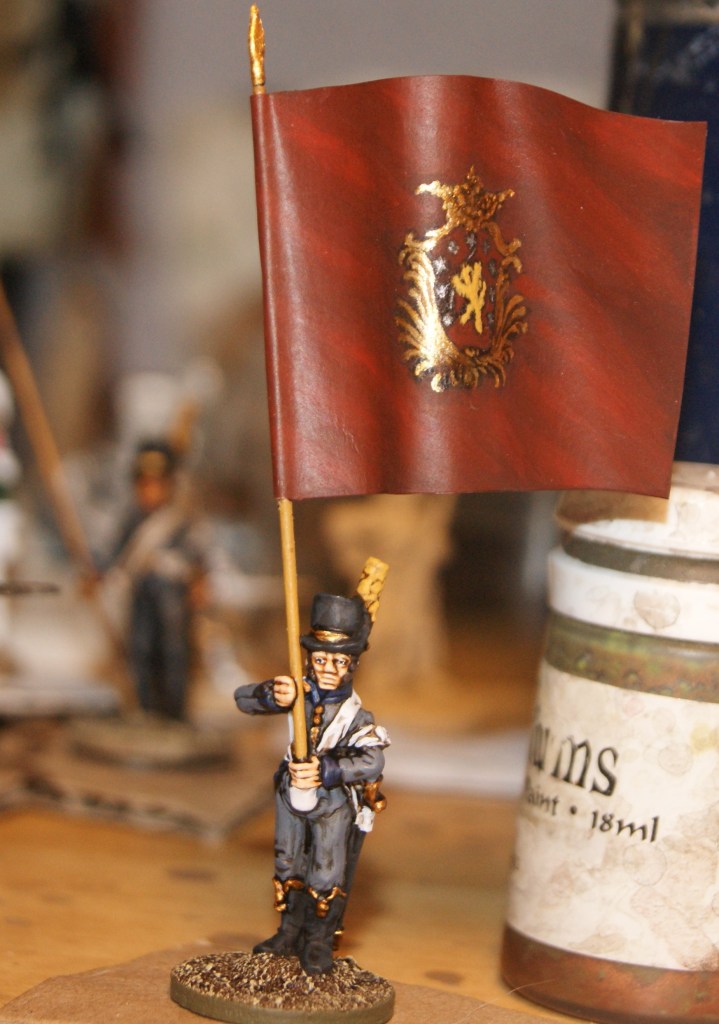
The flags were of two main types: on the one hand the old 1686 pattern and the newer 1766 pattern. The motifs were basically the same, but the 1766 version included a crowned golden frame instead of the laurel wreath on the 1686 pattern. Over time, the emblem also became smaller. I must say that from a modelling standpoint, the older (1686) pattern is visually more striking and also easier to paint, because the emblem is larger.
Karelian jägers

The Karelian jägers were a small professional regiment active in the war in Finland in 1808. The green and white uniform was noted as being very similar to those of the Russians, to the point that they were occasionally mistaken for Russian soldiers.


Swedish officer for 1808
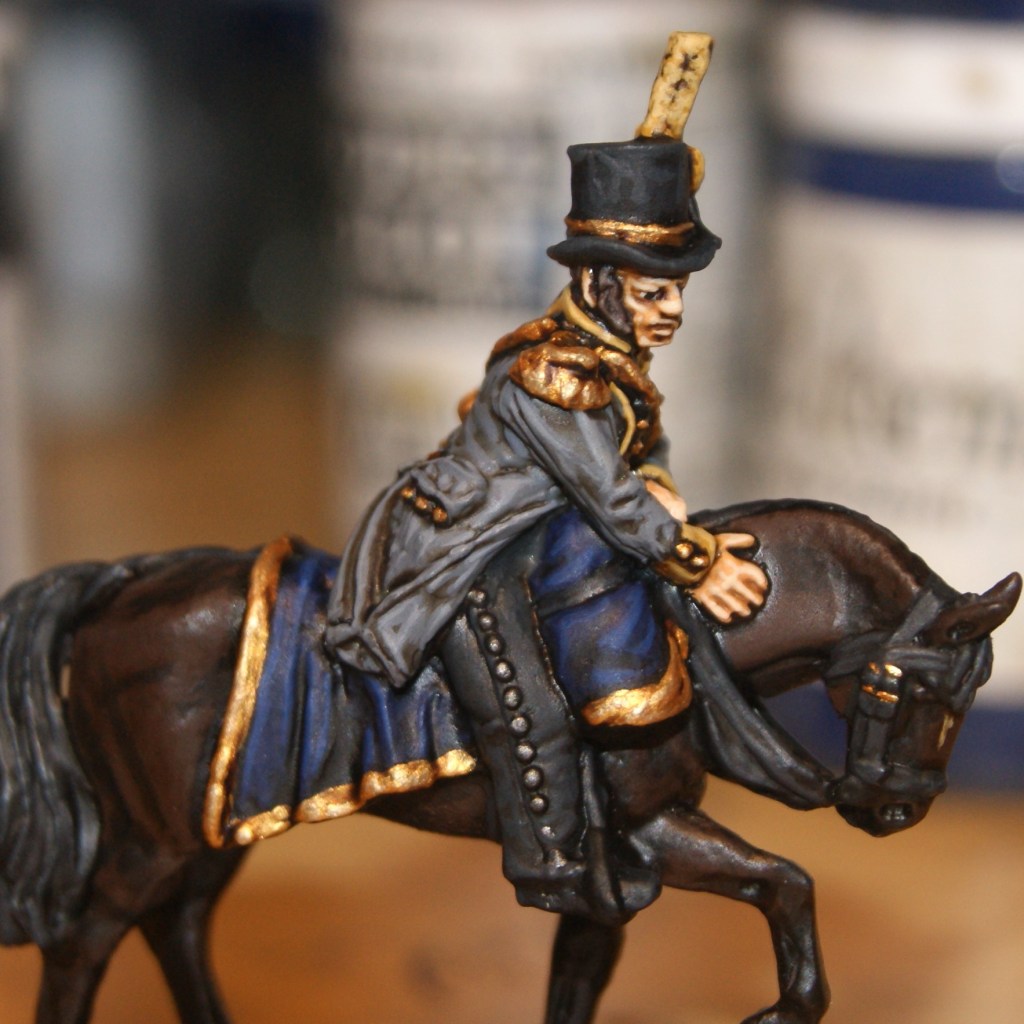


This is supposed to look like a Swedish officer (colonel or something like that) in the war in Finland in 1808. He belongs to the Savolax infantry regiment, who wore grey uniforms with yellow collars and cuffs. The figure was orginally a napoleonic Spanish colonel from Perry miniatures, only I exchanged his head for that of a Swedish foot officer (also from Perry). I also added the white arm-band with green stuff. I dont do much sculpting but this turned out OK and I hope to learn more (doing napoleonic Swedish-Finnish I suspect I will to need to). The white arm-band was worn by Swedish officers in remembrance of the coup d’etat of king Gustav III in 1772, when the supporters of the king wore such armbands as a sign of loyalty. The uniform on this model was similar to the model 1802, which was still in use at the time of the war.

Savolax jägers
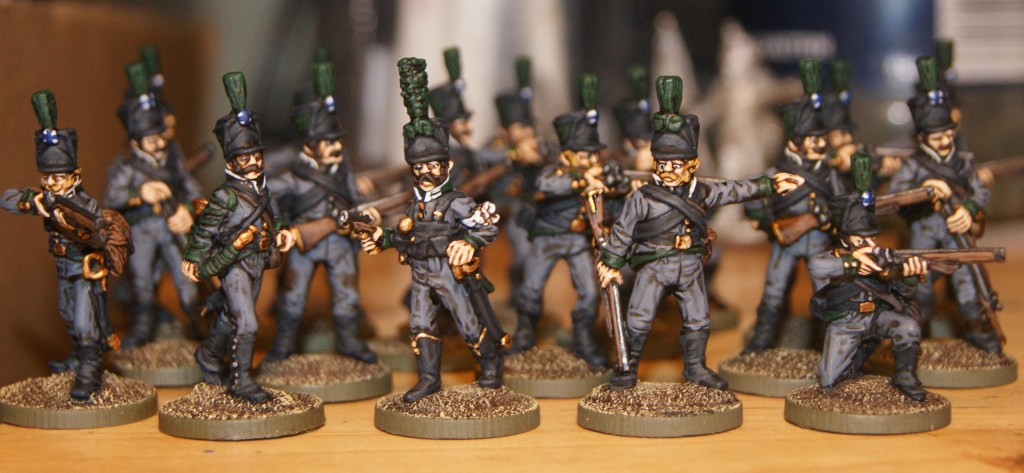
These are some very nice Perry miniatures for the 1808 Finnish war. The Savolax jägers were an important unit in the war for the Swedish side. The regiment consisted of enlisted men, as opposed to the main part of the Swedish army which was based on a form of militia system (the allotment system or indelningsverket). The militia system had been neglected for a long time and the alloted soldiers had received little training. In this situation, professional soldiers such as the Savolax jägers became central to the Swedish army in Finland.

The nature of the terrain also favoured jägers. Finland was, then as now, covered by large areas of forests, but also much marshy ground and both small and larger lakes. The fighting occurred along the major roads and line infantry could only operate effectively in open fields, which were relatively rare and always interspersed with wooded areas. It was therefore common to see “chains” of jägers moving slowly through the woods in front of a main body of line infantry. All infantry in Finland had to learn to move in open order to some extent, but professional jägers such as the Savolax jäger regiment certainly excelled in that respect.
 Pancratist